
Home » Podcasts » Silicon Valley Laughed at His Business Idea: Now He’s in 4 Million Stores (Here’s how)
Video version of full episode.
Video version of full episode.
October 22, 2026
51:07
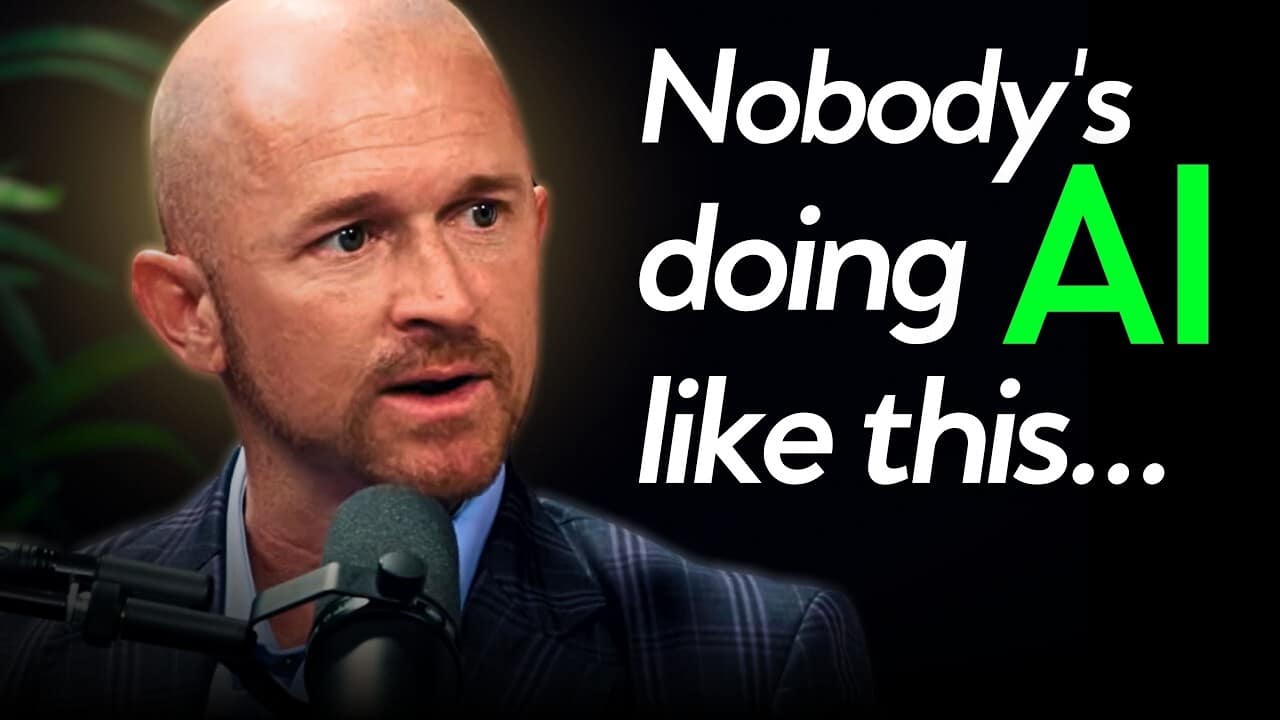
0:00 My guest today, Alex Smith, has spent nearly two decades building companies and one of the hardest, most heavily regulated industries in America.
0:08 Today, he is the CEO founder of My Instant AI, a company with the mission of putting real artificial intelligence into the hands of everyone, everywhere,
0:19 Alex, welcome to the show. Thanks for having me.
0:21 You grew up here in Arizona.
0:23 Were you always an entrepreneur? What were you like as a kid and what was your family like?
0:28 So growing up, I was always interested in building things. Model airplanes. If you remember, when we were kids growing up, there was a show called Gundam Wing. I used to build those models all the time. I was brought up with parents that catered to my, mental growth on a daily basis, whether it was listening to literally classical music in the crib, whether it was giving me models, sending me to private schools.
0:59 I was blessed.
1:01 Talk a little bit about that for sure. So yeah, right before I turned 18, my dad was diagnosed with pancreatic cancer and I was overseas playing soccer. We would talk frequently, but it went downhill pretty fast. Within six months, he passed away, and that was what I would call a major turning point in my life and what shaped the trajectory of something new.
1:39 Yeah.
1:41 A lot of people will say that you don’t truly become a man and driven.
1:54 Oh, absolutely. It,
1:56 It’s funny, it gave me a new outlook on life with respect to life being so fleeting. So my perspective became like, you know, full on adrenaline, 24 over seven. And then it started to hone over time. Right after my motorcycle accident around 21, it started to hone into reading entrepreneurial books. Reading about the Rockefellers, you know, the world’s richest families, the the secrets, if you will.
2:23 And that’s when it really started to propel into. I don’t just want to be a bystander. I want to build things. Yeah, yeah.
2:33 Professional soccer overseas. That’s also something that must do. Do you think your athletic background has really shaped your outlook in business? Absolutely. I did learn consistency. I did learn dedication. I learned what it was like to do three, four practices a day between stretching, weight training, you know, running actual practice with multiple different teams. I also was always the smallest player on the field, so I got my butt handed to me on a regular basis, which forged a underdog mentality.
3:12 Love that. Yeah, yeah. I am so grateful. It’s military. I see a lot of those skill sets. Transition. Absolutely. I just make friendships through some kind of activity, like sports, whatever. Whatever that was. Now that molder, it’s business is the activity I love to to make friends in the business world, bring friends into to
3:58 business.
3:59 Do you ever work with friends in the business
4:02 world, and have you had successes with that or failures and partnerships?
4:06 I absolutely love bringing friends into business. I know a lot of people are against it.
4:12 I personally love it. Has it bitten me in the ass a few times? Yeah, yeah. But what I would say is
4:19 you get a real understanding of who somebody is, what their follow through is. Are they consistent? And
4:25 I always say two words consistency and constants because they’re not necessarily the same.
4:30 And so it’s given me an outlook of who are my actual friends. How are they going to show up. How are they going to follow through, especially when the chips are down or things are not going according to plan? That’s when you really see people. Yeah.
4:45 The company actually does. So maybe start with just an overview of the business, and then we can come back to the inspiration and build it.
5:04 Yeah, absolutely. So I you know, I spent close to 18 years in cannabis. Started as like a trailblazer in Arizona. Built one of the first groves in Arizona. You know, one of the largest dispensary chains.
5:16 It did the bell curve when it went up, did great, went down, got super saturated, was very tough, obviously overly regulated. It takes a lot of money to do anything in the cannabis space.
5:28 And it came to a point where I was just overly stressed, putting out fires on a constant basis. Underfunded, like you name it, the problems were there. And one of my best friends came to me and he was like, you’re going to literally kill yourself from stress. And he wanted to start a new business as well, because he felt similar with respect to his contracting business.
5:52 And that is what actually spurred the jump into AI, which we had started a separate AI business, which then pivoted into my instant AI. And it was a luck of the draw. So what was what was the original business? The original business was a business builder tool, so we wanted to help people that had an idea in their head take it and turn it into a business overnight.
6:14 And we wanted to use AI to do that.
6:16 not a very good market fit because everybody has ideas. Very few people are willing to spend money on it, but their hard earned time into it and AI was not quite there yet. This was, you know, last year in July. So the the open clause, the autonomous agents, they weren’t quite where they are now.
6:34 And I had gone on podcast to market the product and it was divine timing, literally, in my opinion, that the podcast host that I was on, we wrapped, he turned off and he was like, I used to be in the pre-paid telecom space. Nobody’s doing AI the way that they did prepaid telecom back in the days. Have you thought about that?
6:58 And as a a kid who grew up where after my dad passed away, my mom went through a divorce with her husband at the time we were when I say broke like it was me, my little brother and my mom living in a one bedroom apartment. I was about 1718 at the time. Make a big impact. Yeah. And then after that.
7:21 So I saw the the going from like, the good life to the really, really bad life and what a prepaid phone was, which I feel like not a lot of people in the US actually know about that. So it hit me like a train. That and then I started connecting the dots of statistics around AI usage, consumption, spending.
7:41 And it just it was like the road was laid out in front of me.
7:46 Yeah, I doing some prep for this. I looked at some of the people in states and that’s predominantly focused on young Americans.
8:17 So people that were seven, there seems to be this loss of the American dream. I think every generation previously felt like this next generation is going to be better. And I think there’s a real contagion today where people feel like it’s not as good as their parents. And in many cases, that’s that’s the truth. Based on inflation, they’re not able to buy a home.
8:41 They’re still living. With their parents or in the basement. And so why AI and why prepaid? Was that because of your personal experience? And were you the avatar that you were trying to serve?
8:57 It real quick before we get back into it. We just opened up a few new slots for clients at Parkland Capital Partners, and if you’re running a lower middle market business, doing 700,000 to 7 million in EBITDA, and you’re seriously starting to think about your exit or how to scale to the next level. Tap the link in the show notes.
9:20 Let’s talk back to the show.
9:23 So I don’t know if it was,
9:25 I sort it out so much as it sought me out kind of divine. It literally divine in the sense that the idea was given to me by somebody else.
9:34 And it just it all collapsed at one moment into that, like, oh, this actually could work. This is real. And not just inside of the US. The statistics in the US are crazy, but even outside of the US. Yeah, almost. You know what I would say a quarter of the world does not have access to or is underbanked in some way, shape and form.
9:54 And when I looked at the AI statistics, especially where, you know, I think as of late 2025, close to 2 billion people were using AI on a monthly basis, but less than 5% were paying for it. That’s a crazy statistic. And then I looked at, oh, well, everything’s denominated in US dollars. It’s all subscription based, which most of the world does not pay subscriptions for things.
10:20 It it was just like right there in front of you and very hard to deny. And it just so happened that I had a lot of experience in, you know, growing up with certain hindrances like this, growing up and being in business around distribution, that I was like, oh, I almost was made for this. And it just you jump.
10:41 Yeah, yeah. Exactly what the company does and where you’re at today from a scale standpoint. Absolutely. So we took all of the different AI platforms and we aggregated them, combine them. So instead of bouncing from ChatGPT to anthropic to Google, we put it all in one place. We backed it with its own memory system. We created an a framework that sits on top of all of these different llms for you to pick from.
11:19 We call that sidekick. So we basically dumbed it all down. We wanted to make it as consumer user friendly as possible, and we wanted to give anybody, anywhere, the option to go into a retail store, go through your telecom company, buy online by a card, redeem that, and now you have access to literally everything across the whole AI industry.
11:44 More about that for me. Absolutely. So there’s you know, on one hand, there’s this big open source, closed source war going on right now. 99% of the world is never going to use an open source tool to go on GitHub, download code, go back it against a GPU. That’s very technical for most people. Yeah, and not only that, but using some of these platforms, even anthropic at certain times or ChatGPT at certain times is not user friendly.
12:27 So we looked at it, and I specifically looked at it from a perspective of
12:31 I want a 65 year old to be able to use this the same way. I want a 12 year old to use it,
12:38 and thankfully I don’t have a technical background, so I could look at it from a fresh set of eyes of hey, I’m just a business owner.
12:46 I try to keep things as simple as possible. The the kiss rule, and I think it’s allowed us to create something that is easier to use. And we’ve also done some cool things as far as, you know, like gamified YouTube channels, our own podcast, Gamified Education, to give incentives to give free tokens, get users rewarded as opposed to just the Silicon Valley mentality of freemium like, hey, we’re going to give you a free product.
13:14 We’re going to hope that you turn into a subscription. We went a different way. We wanted to gamify the whole thing. Okay. And I think from a scale standpoint, I saw as accurate.
13:28 We’ve grown a little bit since then. We’re we’re getting ready to update, but we’re going to be in close to 4 million stores by probably the end of summer, a little bit more than a little bit a significant amount of growth. Significant. Yeah. And it’s interesting because we’re the only company in the world that does this. I took this to Silicon Valley over the course of the first six months and basically got laughed at.
13:50 Nobody wanted to touch it.
13:51 That’s when I realized, oh, you you might be onto something serious, because if the whole world is telling you that this is crazy and stupid, and then you start to look at the actual value around gift cards, the value around prepaid vouchers, we’re talking trillions of dollars a year. Okay.
14:09 Might be something. There might be.
14:11 Larry Ellis. Right. And if you’re right, you could make a lot of money. Exactly. Yeah, exactly. Okay. And where where are you taking the business over the next 1 to 5 years. What is the roadmap and vision? So the big vision right now is get it into as many retail stores as possible before this holiday season. It’s very likely that we’re going to be the only company in the world providing this and holiday season specifically for gift cards.
14:40 Prepaid vouchers is big, so I don’t want to say monopoly because that’s like a people don’t like that word. But for the most part, we may get 1 or 2 holiday seasons where we’re just the only actor in the space, which would be really cool. From there, it’s potentially developed some hardware, which we’re looking at. It’s partnerships with big brands.
15:03 I have one specific brand in mind. I’m a big F1 fan. I love F1 Max.
15:10 Oh that’s that’s that’s my guy. Listen to the acquired talking about Bernie. No I have to listen to it.
15:25 Those rules, those don’t apply to me. I’m going to do it my way. Basically, was able to scale F1 in a meaningful way that needed to happen. He basically buys and sells a business like 3 or 4 times like no money,
15:39 is just keep this control over it. Just a 40 years. Wow. Until finally
15:46 growth, which we’re seeing with the Netflix documentary, are seeing amazing growth here in the United States.
15:57 I think following this World Cup, hopefully we’ll see some additional growth and interest in soccer. But tell me more about your interest in F1 and a potential partnership. Oh, I the sport I love the sport. What I will say is have been following Max for a while and his personality is just one that I connect to. And he’s he’s a riot.
16:21 You know, I’m a fan of a few other people as well, but I think it’s just for me, the the speed at which they operate, the detail they have to operate in, like, you’ve, you obviously know where they’re taking corners, where there’s maybe a centimeter between the tire and the wall. And that’s the difference between life or death and a race.
16:41 You know, that type of, detail, that type of expertise is something I have a lot of respect for. And, you know, I kind of look at building businesses as very similar to war or to racing cars because, you know, one centimeter off means the difference between winning and losing. Yeah. It’s intense precision. Yeah. And I love it.
17:07 Yeah. You you saw another story I saw talking about a bodega. Kind of small retailers and not just the consumers. Can you tell me more about that? Yeah, I’m glad you asked that. A big part of why we built my insane AI is to help the business owners all over the world, which, to be fair, through AI, are kind of being squeezed out.
17:30 You have a lot of liquidity being sucked out of these communities all over the world. That’s going straight to Silicon Valley, because their entire sales process is direct to consumer, get subscriptions, pull money into Silicon Valley. Whereas I think that leaves a lot of opportunity on the table for business owners that want to take part in AI, but they necessarily can’t without starting a brand new business.
17:53 So whether you own a shop in the Bronx or South Africa or Nigeria or Brazil, we are trying to put money back into those communities, make money as a company. Yes, absolutely. And then also use that to build up these communities, because at the end of the day, the US is an amazing place to live. I look at it like it is in part our job to lift up everybody else.
18:17 And I think that that’s kind of been lost on us over the last couple of decades. There’s been a lot of, globalization in more of a negative format that it’s it’s kind of made us be a little bit more solitary.
18:55 And I think that that gives us actually an opportunity, especially our generation, to step back up to the plate and say, hey, we don’t necessarily need to police everybody. But if we build businesses that are, you know, capitalistic in nature, make a lot of money, instead of hoarding that money, we use it to build things up. That’s that’s what I want to do.
19:15 Yeah,
19:37 not necessarily policing from a military standpoint, although I do think we need a strong military but don’t necessarily need to be everyone’s babysitter but can invest in these other countries, like in El Salvador and the South America.
19:50 There’s a lot of work we can do. And this has been a little bit of China’s playbook. Let let us build out.
19:58 We’ll give you this debt and then basically owe us, I think we could do that in more of a Western version. That, that that uplifts the world significantly. Completely agree. Yeah.
20:12 To other markets. I have started traveling again recently. I do like traveling, but it’s been, to be fair, a decade plus of very nose to the to the grindstone and not a lot of traveling and cannabis didn’t really because it was so
20:27 focused on like a state specific. So I was very focused in cannabis on Arizona solely.
20:33 So travel wasn’t necessary. It wasn’t part of the game plan. Now that I’m building something that’s global in nature, I am traveling all the time. And I realized kind of what I had been missing out on. It’s fun. Too much travel can be a little exhausting. Yeah. Talking about the cannabis background, there’s probably some stigma. Oh, yeah.
20:54 Cannabis? Oh, yeah. Were there any times working in that industry where the stigma or just the unregulated aspect of the industry was challenging, or that you felt like you didn’t want to be in the industry any longer because of that stigma? Every day, every day, every single dealing with with banking issues, dealing with cash, dealing with really, really bad people.
21:19 Because the worst part about cannabis is that it’s not black, it’s not fully illegal, and it’s not fully legal. So it’s this gray zone and the worst illegal though. Yeah. At one point it was. And frankly, as long as you can live with the idea of looking over your shoulder and having to do certain things and live certain ways to do this illegal thing, it’s easier.
21:42 But it’s this gray zone where you’re kind of doing things that are legal. You also could very easily do something illegal without even realizing it. And the people that go into those gray zones are typically
21:56 go over the line of being a shark to being a snake. And so you’re dealing with very nefarious people. You’re working in Miami, you’re you are working in Miami.
22:06 And not only that, but like just from a financing perspective, like you probably understand this, they’re giving out loans for real estate at 20, 30% interest rates. It’s like you’re going out of business from day one if you’re taking debt. And if you take on partners, you’re having to raise tens of millions of dollars. And these partners are not people that have your long term interest or the business as long term interest at heart.
22:27 So why did you choose cannabis?
22:30 In part, it was because I went down the rabbit hole after my dad’s passing. I learned about, you know, the pharmaceutical industries stranglehold on health. I learned about, you know, the government’s patents around cannabinoids. And that’s what actually led me to this place where I can affect change if I work with cannabis.
22:49 And it very quickly went from that to it’s now recreational. And then it almost turned into something that I looked at more as like, and maybe I’ll be a hypocrite for saying this, but like almost a sin where it it went from being something that I was using to uplift people to just some product that I’m trying to sell, that people are using on a daily basis and abusing.
23:11 Yeah. And it as I grew older and I experienced life and gained more wisdom, it was like, this doesn’t sit well with me. Colorado first state legalized. Yep. Right. Change the culture a lot. But I also got to see how the the layout of who was in Colorado and the culture of Colorado that 13 when I left.
23:44 Yep. Long people. And I think there’s absolutely a use case for, for cannabis, especially in many,
23:53 medical areas. Absolutely. I think a lot of people can can use it recreationally and can be fine. But I found for me that when I used it in college, my motivation, worse is alcohol, which is legal.
24:17 I’ve had even more problems with and there’s a lot of pharmaceutical drugs that are recognizing that and shifting from an industry that you’ve been involved in for so long had to been extremely difficult.
24:36 You know, it it actually wasn’t as difficult as I had imagined it would be. I think right place, right time, right opportunity, and a really good group of friends, specifically my core group of friends that were extremely supportive in the change.
24:54 And I’m also dogged and persistent and stubborn that the harder a challenge is, the more I’m, you know, going to run through that wall.
25:03 So yeah, I would say it wasn’t as difficult as I would have expected.
25:20 Them releasing fable and meet those. And then it was a 2 or 3 days ago or after the US government said, no, you can’t do that. There was some serious concerns around cyber attacks. I
25:32 Where do you see AI going more broadly over the next year? I think it’s going to become something that’s more of a national security issue than it already has been.
25:43 It’s, you know, behind closed doors. AI is a huge national security issue, but now it’s becoming more public. This race between us and China, this growing AI war, if you will, between us and China, is going to become more mainstream, more public. And there’s a lot of crazy things that go on that the public doesn’t realize. I think that the next year and a half specific to cybersecurity threats is going to be very interesting.
26:12 I’ll leave it at that, because, you know, we talked about this yesterday on another podcast, but you have this ability now to shut off water, shut off power, do all kinds of things from a single computer. And while that was possible before, it’s now easy
26:33 before you probably have to be one of the smartest hackers with the right equipment, said a one who is is not the best with AI and technology.
26:44 Could could figure it out.
26:45 If you’re smart enough and you want to figure it out. You now have the ability.
27:12 A deceased parent leaving a ChatGPT was doing this more of a kind of constitutional. You shall not cause harm. You can’t help someone make a bomb. We’re not giving financial advice.
27:31 Does that play into what you’re doing instantly at all? And is your wrapper similar to, like, a perplexity wrapper where you’ve kind of hound? How’s this in one place and made it available on a prepaid basis?
27:44 Yeah. We actually are looking to be perplexities biggest competitor. Okay. Specifically, I’m glad you brought that up. And what I would say is that I just think AGI and artificial superintelligence has kind of been blown out of proportion, specifically because there are so many right now detracting factors that are going to keep us from actually getting there. And I think that a lot of these AI companies have used these words, if you will, to hype people up to either price their company better, sell more products, scare people.
28:21 I just think it’s, you know, there’s going to be a shift at some point where we go from this pattern recognition based llms, which is the way they’re built. It’s it’s not, hey, we’re going to build a brain, and this brain is going to think the way human does. It’s we built a brain to recognize what the most likely outcome of the next word is, and how to stack that together.
28:42 And so I think it’s going to require a fundamental change in the building of these models.
28:48 And then there’s a bigger question of okay, it’s it’s generally intelligent already. Like, let’s be honest right now. It can tell you it can probably do math better than you and I can faster than you and I can. It can probably write better than you, and I can faster than you and I can.
29:06 But what does that mean as far as actual intelligence? Because if it has no creativity, if it has no risk orientation, if it has no ability to think outside of the box, is it actually intelligent? And so I think there are things that are fundamentally human that AI may never have. And I think that’s the difference between in, at least by my definition, something being,
29:32 capable and intelligent.
29:35 Yeah, there’s a clear distinction society in the future. Probably not on the far utopian side where Elon Musk talks about how work will be optional.
30:10 And you’re probably not on the Terminator dystopia side, where everything is going to be controlled by robots. And if you don’t have a mark on your right hand or forehead, you’re not getting access to anything. Where do you fall in 5 to 10 years of what AI looks like more broadly? And are there certain industries that you think will be similar to today or heavily disrupted?
30:32 Have you seen the movie Elysium? I don’t think I have. It’s a great movie, with Matt Damon, and it’s more about the earth becomes overpopulated. The very wealthy live on this ring above the Earth. There’s a big separation between the haves and the have nots. Robotics technology is everywhere. AI is is like almost a subtext. It’s not really a main text.
30:59 I think there’s a high probability that we have a lot of problems in the next ten years. And I think that’s more of a symptom of a bigger problem with respect to just leadership around the world. How we tackle that, I have no idea. But I’m less worried about AI than I am about how the powers that be use AI to control the masses.
31:24 That’s actually far scarier. Way scarier, right? Yeah, yeah, you look at it, no government has ever had, and it’s hard to disrupt that. Exactly. With robotics on top of it.
31:43 Yeah. At the point where you take the human soul out of it and people are no longer policed by, you know, you or I, which, okay, there’s a moral dilemma.
31:51 If I’m policing somebody and and there’s the potential to change, there’s the potential to give in and not listen to authority. But the moment you just put robotics in that’s controlled by AI, that’s control top down from
32:04 a authoritative structure, you don’t have potentially a machine that’s going to say, I don’t agree with this order. I’m not going to do it now.
32:13 It’s it does it. And too bad. So sad.
32:17 We’re probably going to see there’s conversations on how to manage that.
32:35 Some ideas have been in New York. You’re seeing socialism becoming more and more popular. Trump has floated the idea of a sovereign wealth fund where the citizenship takes part ownership in these AI businesses. Do you have any thoughts on how that should be handled or what will happen?
32:56 That’s a great question. One. And I do think it’s a mix of all of the above. I think we are going to see things go more in the way of a socialistic, communistic, you know, push basic income kind of thing. Yeah. And you know, the the powers that be have been talking about this since the 60s, that technology will bring about a world in which you will have a one world socialistic, communistic order, because there will be this gigantic gap between what they call the haves and the have nots and the haves being 1% the have nots, being 99%.
33:30 And like we’ve all heard in the news about this topic for probably the last 20 years, I think the idea of what Trump is doing with the sovereign wealth fund is actually a really good idea. I think that’s a deterrence from this communistic one world order, if you will.
33:46 But having said that, I think that you could even take it one step further where let’s be honest, we print a lot of money and and that’s not going to stop.
33:57 So my question is, what’s to stop us from printing money to allow for businesses to take part in this technological revolution across the board? Because, you know, and I brought this up the other day on another podcast where China did a, a test run, where on the Alibaba app, they allowed everybody to get a push notification and buy a drink.
34:20 The AI would go and find the local store that made the drink, dispatch a driver, all of the things across the board, and it would find you where you were at on the map via GPS and bring you your drink. Well, what do you think happened? They got millions of orders in less than like three hours, to the point where there wasn’t enough delivery drivers.
34:40 The printers for the receipts didn’t have a like. There’s a video where you can see a bunch of delivery drivers yelling and screaming at the shop owner and like her two employees, the printer papers overflowing in the background. There’s drink messes all over the place, like it’s chaos. And what I got out of that is that there’s a lot of things that go along the supply chain, even down to, like we said, the printer.
35:06 That’s going to have to be restructured and rebuilt for this technological revolution. So my question is, yeah, build the sovereign wealth fund for sure. Take part in the biggest AI companies, give that to everybody to a certain extent. But also why not give money to businesses via SBA, via forgivable loans, via whatever the means are to go and build these pieces of this new supply chain?
35:34 To me, that allows for the US to be the center again of, you know, this revolution around the world, and it allows for a lot of people to buy into this. Yeah.
35:54 Your your personal background walking into as energy data centers are deployed, there’s also active campaigns to prevent data centers from being built because of maybe very realistic concerns around health and living close to a data center.
36:23 But that energy is going to become a problem soon. How do you think we handle that? So you asked about data centers in space. I do think we are going to have to figure out how to use how to utilize space to our advantage. I do think, you know, data centers, especially the larger ones, are going to be a burden on the environment.
36:47 I think they released a study recently that the air around a data center, you know, heats up by a large margin just because of the output of power. Then we get into the fact that there’s just not enough power right now at all in general, to even nor do we have the infrastructure. Right. So the idea of like AGI, the idea of robots, the idea of we’re going to have robots that outnumber humans in the next 3 to 5 years.
37:14 Like Elon said, there’s a tangible where half of what we do, we need to be some kind of breakthrough there. Yes, for us to solve that. And I do believe that there is hidden technology that the US government has that may be released in the next 3 to 5 years that would allow for that hard cap to be absolutely smashed, potential UAP technology.
37:39 But also like, you know, we’ve had, in my opinion, cold fusion for almost the last two decades, three decades, you know, there’s in conspiracy circles, everybody talks about like the the first water powered cars and people that have been suicided over it. So to me, there’s a lot of hidden technology. And it’s interesting because unless you’ve filed a patent, you may not know about this, but the US has the ability to if you file a patent and it is a national security issue, they can seize that patent from you and they can classify it.
38:14 My question is how much technology is waiting to be released right now that is classified under national security, that has the potential to benefit the economy or the infrastructure as a whole. Because, let’s be honest, our electrical infrastructure is pretty outdated. So is our travel infrastructure like our trains compared to China’s trains. So I, I think there’s
38:40 a point in time very soon where all of this technology gets released, and that may even ten x 100 x, who knows this boom.
38:53 I agree with you. I think AI is going to transfer.
39:05 Personally I’m some.
39:11 And so from my business standpoint, we have really focused in on industries that I think will be needed and are going to grow years.
39:24 And so we’re really heavily focused on the real estate service space. We’re really focused on energy and utility services, as well as infrastructure, business services like engineering businesses and then live events as well. We’re kind of focusing these, these halo industries that are going to be needed as AI advances but are not maybe the technology of AI.
39:47 Boom.
39:48 I think that makes a lot of sense, especially the the live events community building is going to be absolutely huge moving into the future, and you’re seeing that grow more and more. I am not sure what’s real and what’s not on social media. Like I’ll see an ad, I’ll see a girl and I’m like, like a cute girl will message me on Instagram like that’s a.
40:14 I understand that one where if I see someone at a concert, I know that’s a person, right? And there’s this, this different energy in person as we move into this world where there’s real concern about what’s real, what’s not being programed.
40:32 What grounds you do you have any spiritual or faith dimension that’s leading you towards this purpose in a on what you do in entrepreneurship space?
40:43 Absolutely. It’s a it’s a what I’m going to call a hidden secret in the sense that if you don’t know me, if you’re not a part of my inner circle, you don’t know that my entire life is based around faith, spirituality, optimism. You know, my base level of being. Being joy. So, yeah, it it guides me on a daily basis.
41:03 And that’s where I try not to look at the negative aspects, the fear mongering of of the change. And I try to be more open to how can I affect change instead of being a bystander? How can I use my drive, my faith, my beliefs to put something into the world instead of just watching it pass me by?
41:26 Yeah, yeah. You you mentioned kind of divine. Oh, man, that’s a really good question. I think there are people that would like there to be some spiritual connection. I think there’s a possibility. I just, I don’t think we’re far enough along to have a good answer to that.
41:53 I, I, I would say that I just don’t think we’re far enough along yet to know, you know, obviously in spiritual communities, religious communities, there’s this very anti AI fervency because it’s, hey, it’s the mark of the beast or hey, it’s, you know, the coming apocalypse, whatever it may be.
42:10 I think that it has a huge potential to help people everywhere. But it comes down to, in my opinion, leadership. Are the authority figures actually trying to help people, or are they using it as a tool to weaponize or to control everybody else? And so I’m big on like coming back to this place of being a good leader, being a good steward, sticking by my rules, my faith, my spirituality to be the best person that I can be and everything else flows from that.
43:08 I did a terrible job of doing that for the first 15, 17 years. I put, you know, I’ve always been athletic, I’ve always been going to the gym. But man, I did not prioritize my what I’m going to call my physical, spiritual, emotional, mental well-being. And in the hardest of times, I remained optimistic. But what I will say is there’s this crossing of the Rubicon, if you will, of you just realizing that the game is so much longer than you thought it would be, like my goal was always to be a billionaire by the time I turned 25 and I’m now 37 and it’s like, hey bud, the game’s a lot longer than you think
43:53 it is. Yeah. Tortoise first the hair. Yeah. And you can’t stay in the game if you don’t. If you’re not selfish and if you don’t prioritize doing things that take care of you. So for me, it’s, you know, I go to the gym twice a day. It’s a mental clearing as much as it is a physical activity. I do breathwork every single day.
44:13 What is that breathwork protocol standpoint? So I will lay down on my bed. I will actually listen to a very specific musical. It’s, It’s the Tron orchestral musical on YouTube. Fantastic tribute show. It was great. Oh, it’s I, I love all of that music. And then you add in the, the classical orchestral piece of it. So I will listen to that for about 30 minutes while I just do breathwork.
44:39 Breathwork and breath holds. Okay. So is this like a four, seven, eight breathwork? No. It’s like a, it’s very much a god. I’m blanking on his name right now. Whim Hoff like 25 in and outs, 92nd hold and I. I do my best to get to a 92nd hold. It’s not like from the first get go to work your way up out to do we do 30 in the first hole and then I’ll do 32nd hold I’ll do 93 same.
45:10 The third I’ll do a minute and a half. If you mix that with sauna or cold exposure, I don’t think there’s anything better outside of maybe a really powerful prayer session for me. Post-workout
45:26 out there, I mean, it it is drug level high experiences. They’ve done studies of people post cold exposure and breathwork with similar dopamine levels as cocaine.
45:36 I completely agree. And you, you couple that with prayers. You couple that with fasting. You know specific timed fasting. You couple that with hot cold therapy. And we actually recently have added in something. My friends group is big on this machine called a new fit. And so instead of it, instead of you going and working out, it’s like electrodes.
46:00 You put electrodes on your muscles and it just destroys you. So it’s all of these things as a whole. It’s not necessarily just one thing. And I am.
46:11 Very selfish on making sure that I carve out time every single day for these things, because that is what allows me to be my best version, that when the call comes in, or when the meeting comes in, or when the podcast turns on that, like, for me, it’s like flipping a switch. Yeah. And that allows me to do that.
46:32 My dad was really good that if I stop or if I don’t take serious burnout over the last call it eight months, and and stress.
47:00 And I think the key thing that God keeps prompting me is like, you are not in control. I am you need to make that margin to take care of yourself. And when I’m in that flow state, I remember to do that. I make the margin for my workout. I feel so much better. I’m in a better headspace to really add value to my clients, and I think that’s great.
47:25 Last question that I have for you is around legacy.
47:39 Well I, I’m going to be honest I hope my legacy is still having an impact. Way past 80 I love it. I like I would with technology and with the way things are going I would love to do like you know 150, 200. I think that’s in the realm of possibility. Yeah.
47:57 I think legacy for me, something that I absolutely love doing is taking my experiences as a whole and relaying those to the younger generation, to kids that want to become entrepreneurs, that don’t have the resources, the connections, all of these things.
48:13 That for me is massive. Aside from having a family, aside from being a community leader, it’s relaying my experiences, handing them down to the next generation and allowing that to work for them. Because I have been blessed to have fantastic mentors across the board that took me to levels that I would not have gotten to otherwise. And so I just think filling that role again for the next generation is hyper important to me.
48:43 I’d like to run through a quick lightning round. I’m just going to throw a couple one word, two word topics, and I want to get a 1 to 3 word response and kind of your opinion and thoughts of it.
48:54 Okay, let’s do it.
48:55 first topic is going to be space based data centers. The future. Okay.
49:02 AGI
49:03 total BS 2030
49:06 agenda 2030 SpaceX IPO
49:10 inflated the United States.
49:12 Amazing. China. Oh,
49:15 communism. Energy crisis a serious problem.
49:19 Real estate.
49:20 The only asset moving forward that I want to by being an entrepreneur.
49:25 A spiritual journey. Stocks hate them. Gold. Love it. Exercise every day. Twice a day. Absolutely. Thank you. Alex.
49:42 So if they’re interested in instant AI and prepaid cards, are there certain retail stores there? A website where where can they go so they can find our products at starting next week at any Regis co-working office? So if you’re an entrepreneur already, any Regis co-working office is blueprint for 300 offices around the world. Soon to be in BJ, Sam’s Club, Costco, Walmart.
50:07 We may even have store and store in a Walmart. Like, you know how they have those stores in the front of what we may have the first AI store across all the Walmarts. We’re looking at that right now. Pharmacies, grocery stores, convenience stores. We are
50:21 casting the net very, very wide. As far as finding me personally, I am probably one of the more responsive entrepreneurs on social media.
50:30 So you can find me at captain Make it happen on Instagram without the eon happen. And if you DM me, I will absolutely respond to you. I make that a very important piece. I’m not on TikTok. Unfortunately. Our company is, but I am on LinkedIn as well. Happy to interact with anybody. And, Yeah, that’s that’s part of my mission is, you know, if you have a question about business, I am not a gatekeeper.
50:55 Yeah. Well, I really appreciate it. Really enjoyed the conversation. Thank you so much for making the time and come on to the show. Thanks for having me.
Explore more episodes from the Acquiring Meaning podcast, featuring candid conversations with founders, operators and investors.
Start the Conversation
Whether you’re considering a full sale, a recapitalization, a growth partnership, or simply want to understand what your business is worth – start with a confidential conversation.