
Video version of full episode.
Video version of full episode.
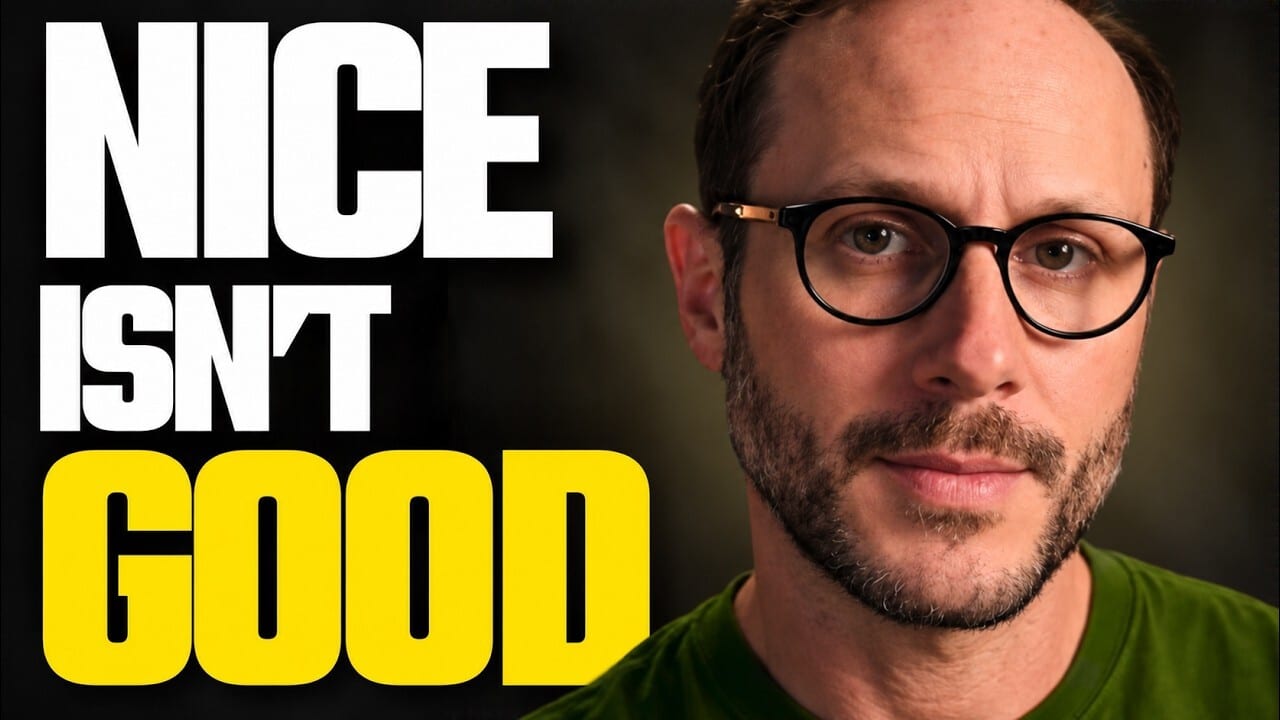
0:00 Welcome to Acquiring Meaning. Today I have Connor Beaton, the founder of Man Talks, an international men’s mental
0:06 health personal development organization and the author of Men’s Work, a practical guide for men. He’s also the
0:12 host of Man Talks podcast, which has passed a thousand episodes. He’s been downloaded more than 4 million times.
0:20 And he helps men with self leadership, relationship mastery, both in person,
0:25 online, as well as private coaching. Connor, welcome to Acquir Meeting. very excited to have you.
0:30 Thanks very much for having me. I’d like to start with your upbringing, what that was like, what your parents
0:35 were like, and then talk a little bit about your musical background, getting into corporate life, and then the
0:41 inspiration for Man Talks. I grew up in central Alberta, just outside of Edmonton. Go Oilers for any
0:47 of my hockey fans out there. Boo Calgary Flames. [laughter] Got to keep even
0:52 though I live in the States, I got to keep the rivalry alive. My parents divorced when I was three. uh they both
0:58 remarried other people. So my mom married my stepdad, my dad married my stepmom,
1:04 and they both had a daughter within a year of each other, and then they both had a son within a year of each other.
1:10 And so I grew up bouncing back and forth between two almost identical families
1:15 and family systems, but everybody in those families were polar opposites.
1:20 like my dad and my stepdad were opposite. Mom and stepmom were polar opposites. Sisters were opposites, brothers opposites. And so I really um
1:29 you know I grew up trying to in a lot of discernment for diff
1:34 differentiation like what made people the way that they were. I was constantly looking at differences and trying to
1:40 understand like why did they make that decision? why did he make that choice and she made that choice. And so I think
1:46 it gave me um it sort of created the fertile soil for a curiosity for the
1:51 human psyche and like why people make the choices that they make and why they
1:56 become who they are. That’s kind of my upbringing. I played a lot of hockey. I wasn’t very good at much of anything. I
2:02 wasn’t good at academics. I was just kind of like an average kid. I was a, you know, a C+ kid at best. Um, I
2:10 started to get good at hockey towards the end, then played juniors and was like, “Oh, I’m like, you know, I’m not
2:17 going to make it into the NHL without some herculean effort.” And so, I left that. I was working construction. I was
2:24 working in a gravel pit in Alberta, which sucked. I started in February working the night shifts from 6:00 p.m.
2:30 to 6:00 a.m. And it was a rude awakening as an 18-year-old to be like, “This is
2:35 terrible, and I don’t want to spend my life doing this.” Remember the first week of working, it was like minus 52
2:42 outside with the windchill at 2:00 in the morning, and I was freezing my ass off. I was the grunt that
2:47 would have to go outside and clean underneath all the machines, and the other two guys were, you know, in heated
2:53 spaces. And so I would go outside, work, run back into the heated trailer. And it
3:00 really kind of lit a bit of a fire in my ass because I met guys in that space, and I kept thinking to myself,
3:07 I just don’t want this to be my life. Like, just not this. And at that time, my dad
3:13 had worked for the federal government, the Canadian government, and he was a classical singer on the side, like he
3:18 sang with the Edmonton Opera and the chorus. And I’d always been interested in music, but I had never learned a damn thing. Like, I didn’t know the notes on
3:24 the piano. I’d never taken music lessons. And he said, “I think, you know, why don’t you go take a lesson?” I
3:30 had done some singing, but just for fun. And so I went and took some lessons. I was decent at it. I liked it. It was
3:36 challenging. It was also confronting because I was, you know, I was 19 years
3:42 old. I was drinking, partying, I was smoking. I was working construction. I was going to the bars all the time. And it kind of forced me to have to slowly
3:50 get my [ __ ] together, for lack of a better term. And I started winning some competitions. And then I, you know, I
3:57 applied for some schools, got into two of the prominent schools in Canada for music, UBC and U of T. Went to UBC, got my
4:04 degree there, got to travel around, perform, and it was a very interesting
4:10 career where I was a bit of an odd man out. You know, I was this, at the time,
4:15 I had been racing motorcycles. I owned a 99 Honda VR 1000. So, I’d show
4:22 up to school with this bright yellow crotch rocket with, you know,
4:27 custom D&D exhaust. It was so loud. And I had this motorcycle helmet with like two-inch metal spikes, like a mohawk
4:33 down the middle. Like, I was just such a weird character, you know? I was really trying to figure out who the hell I was because I didn’t know. I remember singing,
4:41 and it was going okay. Like, again, I was good at it, but once I
4:47 started to get into the career side of it, I realized I didn’t like the business. The people were very
4:53 dramatic. The industry was dying. And I just looked ahead 20 years. I was like, “How the hell am I going to support a
4:59 family on this?” You know, like, this just doesn’t make sense. I don’t know what I’m going to do. And I didn’t want to sacrifice my life for an
5:06 art form that was okay. And I remember my mentor, who ended up becoming my original mentor, Bernard, said, “If you
5:12 can see yourself doing anything else, go do it because this art form is for people that cannot imagine doing
5:18 anything else with their entire life.” And that gave me the permission to leave. Because I could see myself
5:25 doing a ton of other stuff. I’d always loved technology and home theater and
5:30 computers and stuff like that. And so I got a job at Best Buy as a sales manager. And, you know, I started
5:38 selling stereo equipment and home theater equipment. And then eventually moved to Apple. And in the background, a
5:44 bunch of stuff had happened. I’d hit rock bottom. My life fell apart. I had left singing, obviously,
5:51 and was trying to figure out what to do with my life and then entered into
5:56 Jungian psychology and started to get introduced to that. And so it sounds like quite the wild ride. You know, it
6:02 sounds pretty wild, and it kind of was. Very grateful to be where I am today. So maybe I’ll pause there and see where you want to take all that.
6:12 I think you do have a very eclectic, fun background, which I think gives you a unique perspective. And I think especially your childhood, having these
6:19 two families would give you a unique insight into psychology. And then I’d
6:24 like to dig into rock bottom and when you realized it was rock bottom. I’ve
6:29 heard you talk about external success, but it felt very performative, and you didn’t necessarily feel fulfilled. And in
6:36 many ways, I would say you’re wearing a mask. Can we talk about getting into Carl Jung psychology and
6:45 realizing that you weren’t fulfilled and what that journey began for you? You know, parts of my childhood were
6:51 pretty rough. I won’t go into too much of the details and specifics, but part parts of them were pretty rough. I mean,
6:56 coming from a divorced household where I saw my dad, you know, twice a month. I I
7:01 basically spent 4 days a month with him um wasn’t optimal for me as a kid. My
7:07 relationship with my stepfather growing up was not great even though he was my primary parent. And so as a young man, I
7:15 had a [clears throat] lot of pain inside of me. I had a lot of anger, a lot of sadness and grief. And no one had really
7:23 shown me what to do with any of that. So I had all of this dysfunctional behavior. You know, I drank too much. I
7:28 did a lot of drugs. And my favorite drug was women. And [clears throat] so I,
7:36 you know, I’m not proud of it. Um, but, you know, I was constantly unfaithful. And that led to a relationship that I
7:43 really liked and really wanted falling apart. And it was out of that I
7:50 remember, you know, she found out that I’d been having an affair that had been cheating. And
7:55 she moved back um to be with her family. And I moved all my [ __ ] into storage.
8:01 And I slept out of the back of my car for a few weeks in a Walmart parking lot in Victoria because I was so ashamed of
8:08 my behavior and who I was that I didn’t want people to know about what was happening. That kind of colors what was
8:14 going on for me, you know, outside. I looked like this very sort of eclectic
8:19 person. You know, I could I was a singer. I rode motorcycles. I had the Mustang and I was traveling the world.
8:26 And you know, I had this incredible woman that I was with. She was amazing. And internally, I was a mess. You know,
8:35 I hated myself. I fundamentally thought I was broken. I was so riddled with
8:40 shame that it was fueling a lot of my behaviors, a lot of my addictive
8:45 tendencies. And so, I just, you know, I hadn’t dealt with any of it. And it caused this collapse. And after the
8:52 collapse happened, um my mentor Bernard who was a singer introduced me to Young.
8:59 I started to train and started to learn and started to really go into the Yian
9:05 models and the archetypes and the different frameworks and understanding the shadow and what drives the behavior
9:10 and the unconscious and all these different parts. And it it really I think pulled me out of that space
9:16 because I started to what Jung would say is integrate the shadow and understand these parts of myself that I was trying
9:23 to kill off. And this is what we as men do, right? The aspects of ourselves psychologically and emotionally that we
9:28 dislike. We we literally try and kill them off and it doesn’t work. Um they
9:34 just get more and more power and they you know they take on a a life of their
9:39 own. Um I have a saying that your pain has its own intelligence. And so if you don’t deal with your pain, your pain will deal with you. And it’s a very
9:46 simple equation. It’s a very simple psychological truth that your pain has its own intelligence. And if you don’t
9:52 deal with your pain, it’ll deal with you. And this is what Young meant when he said in until you make the
9:57 unconscious conscious, it’ll direct your life and you will call it fate. And that’s exactly what was happening for
10:03 me. All of my pain, my grief, my sadness, my anger was all I tried to stuff it all down. And it directed my
10:11 life until I found myself in the back of a 2007 Pontiac G5, sleeping in a [ __ ]
10:17 Walmart parking lot and, you know, and contemplating not being here anymore.
10:24 And I think that a for a lot of men who are not taught what to do with the pain
10:30 that lives inside of them, there’s this inflection point. And it might not be as dramatic or as drastic as mine was, but
10:37 there’ll be an inflection point where, you know, a marriage will end or they’ll get fired for a job because of their
10:43 behavior or they’ll sabotage uh a business that they’re trying to grow or they’ll sabotage a relationship that
10:50 they really want and they’ll be forced into this kind of psychological reckoning to see can I make it out of
10:57 this rock bottom. That was always the role of initiation for young boys. It
11:04 was to create this demarcation line between being a boy and being a man and
11:10 being able to go through something so confrontational to be put in a position of powerlessness so that you can reckon
11:17 with your own power. And in the absence of traditional initiation structures,
11:23 what a lot of young men will do is they’ll either never leave the nest. They’ll never leave the home
11:29 psychologically and emotionally and they’ll sort of be these what Jung called the Puera, the forever boy, the
11:35 Peter Pans. Or they’ll get into their life and internally there’ll be a part of them that still feels so
11:41 psychologically young that they’ll they’ll end up imploding something to
11:46 see if they can make it out of it. And it’s not a conscious thing, but we need that really hard time to see, can I make
11:55 it through this? Can I get through this extreme hardship? And who am I when I
12:01 feel extremely powerless? Richard Roar had this great quote where he said, “Until a boy goes until a man goes
12:06 through an experience of powerlessness, he’ll always abuse power.” So we as men have a responsibility to really see who
12:13 do I become, how do I behave, what do I choose when I feel powerless. When I
12:19 start to work with men, the places in his life where he’s really struggling are almost always the places where he
12:26 feels powerless and he’s just not been taught what to do with that. And that might be with his his pain, his grief,
12:31 his sadness, his anger, whatever it is, uh or in his marriage and relationship, etc. Can you define masculinity for me?
12:38 Masculinity is a set of principles, right? It’s a set of virtues that you can operate from as an individual. Jung
12:45 would have made it more concrete than that. And I think that our our modernday
12:51 view of masculinity is there’s two things that kind of happen in modern-day
12:57 conversations around masculinity. Either it’s completely a social construct or
13:02 it’s just something biological. And it’s actually a bit of both. And Jung would
13:07 have talked about because he broke the masculine and the feminine into thema and the enemus. Thema is the phenomen
13:14 feminine and the enemus is the masculine. And really what what Jung was
13:20 talking about is that the masculine the feminine is a psychological orientation and principle an archetype that exists
13:27 within all of us. And part of our maturation as individuals requires us to be in contact with this. But for the
13:35 masculine, it’s principles like discipline, assertiveness, direction, being able to have some level of impulse
13:43 control, being able to have some level of not dominance, but some level of
13:50 control over the vices, over the impulses that exist inside of you.
13:56 Maybe temperance. Yeah. that you have some temperance, you know, that you have some capacity to say
14:03 no to vices, to say no to things that are harmful and immoral and unethical
14:08 and to really create order and structure in the world. And so the masculine is a universal um principle and orientation
14:14 that exists cross-culturally. It exists in every culture throughout the course of human history, in every religion. Um
14:21 the masculine, the feminine exist throughout human history. And some of those principles, some of the principles
14:27 of it are things like discipline and assertiveness and direction and order
14:33 and structure. And those things are attributes that are
14:40 universally tied to the masculine and that the masculine and the feminine are
14:46 amoral. They they are not something that are good or bad. They just are something
14:51 that exists and they’re an archetype, something that’s contributed to by biology, right? So, your biology has
14:57 something to do with masculinity and it also has something to do with your psychology, the the sort of the way that
15:05 we orient psychologically and the different principles and pillars that have been categorized to these two uh
15:11 different archetypes. I’ve seen and I’ve made the mistake uh balancing masculine and infinity. I
15:17 think you can use the metaphor and I I think Chris Williamson has used this. Uh a man and masculinity is kind of like an
15:24 island. You want to be focused on your purpose and make your island attractive. Women are like boats. So they may come to the island and visit but um you don’t
15:31 want to build the island around the boat. Um and there’s also this idea of the certainty and reliability of
15:38 masculinity and the femininity testing that over and over. The mistakes I’ve made in past relationships were becoming
15:45 reactive when uh a a female, whether conscious or unconscious, was was
15:51 testing if I was reliable and reacting emotionally back. What are some common mistakes that you see men make or men
15:59 come to you when they’re working with you from a dating and relationship standpoint? Super easy question. So, a couple of
16:04 things. The the masculine is is really tied to the logos. It’s the sort of like
16:09 the orienting principle. It’s about awareness. It’s about presence. And so,
16:15 you know, you you have different ways in which these things are talked about. Somebody like David Data would say, you
16:21 know, the the masculine is the everpresent awareness observing what’s
16:26 happening in the moment. And the feminine is whatever is coming through and being observed in the moment. It’s
16:33 the emotions. It’s the experience. It’s the sensation, the pleasure, the anger.
16:39 It’s it’s all of that. And the masculine is the awareness of what is and what is
16:45 happening. When you put this into a dating context and a relational context,
16:50 I think one of the the main pieces is that when you as a man begin to
16:55 understand your emotions and you can witness your own emotions, but you are not a slave to your emotions, nor are
17:02 you an individual that’s cut off and disassociated from your emotions, then
17:08 you inhabit the seat of the masculine. you’re able to um have that orientating
17:14 principle, that orientation of the emotions that are coming through you without them being bad or wrong or
17:21 something that you need to disconnect from. Because again, in the yungian model, your conscious awareness is the
17:28 masculine and your unconscious as a man is your feminine. So everything that
17:34 comes up into your conscious awareness is your is your feminine. And Jung said
17:40 that the the integration of the shadow is the first great step that a man will take in his life. And the work of
17:46 integrating the feminine is the great work that he can provide for the world. And I like to think that a part of what
17:53 he’s saying is that when we as men become reactive to our own emotions,
17:58 right? You feel sad, you feel anxious, you feel angry, and you’re constantly being pushed around by those emotions.
18:06 That one’s okay. Can’t feel that one. Don’t let people see that one. You are a slave to your emotions. You are you are
18:13 being held hostage by your unconscious because everything that comes up, you
18:19 have a response to it of it’s I’m okay to feel that. I’m not okay to feel that. I can tell people that I feel this way.
18:25 I can’t tell people that I feel that way. And that is not a type of freedom. That’s not in a place of this is what’s
18:33 truly happening inside of me. And so what happens a lot in dating is that a
18:38 man, and this is what I wrote about in my book, a man will treat women that he dates the same way that he treats his
18:45 unconscious, the same way he treats his internal feminine. So if how you treat your emotions is I have to shut these
18:52 things down. I can’t really connect to them. They’re dangerous. They’re bad. They’re wrong. It is so likely that that
19:00 is exactly how you are going to unconsciously interact with women. You’re going to see their emotions as a
19:06 problem. You’re going to see their emotions as overwhelming. You’re going to see them as something that you’re afraid of. So, you are going to project
19:13 your own feminine nature onto them. And so, that’s one way of doing it. The
19:19 other way, the other way is that you just inhabit them. You just are constantly being bowled over by your own
19:25 emotions. You know, you feel sad and you, you know, you’re so reactive. And Jung called thisma possession, right?
19:31 that the feminine within you as a man has sort of taken captive your
19:38 consciousness and you don’t have a lot of differentiation or emotional regulation. We’ll just call it that. Um
19:45 this is really what the Stoics talked about, right? Is that you can have an emotion come up and you can witness it
19:50 without needing to become it and react from it. When this happens, you are kind
19:55 of held hostage by the feminine within. And these types of men get into
20:00 relationships with women and they are constantly trying to run around. This these are the nice guys, right? The nice
20:06 guys and the people pleasers like, “Oh, she feels upset. I’m responsible for fixing that. I need to do something
20:13 about how she feels.” And you start to personalize what your girlfriend or your wife is
20:20 feeling because internally you’re held hostage by your own emotions. There is
20:26 no differentiation. There’s no space. You’re not able to witness them and just be okay that you feel sad. You’re not
20:32 able to witness that you feel angry and not react from it. This type of discernment is really what the masculine
20:39 is all about. And so where I think a lot of men are are going astray is that
20:45 they’re falling into these extreme categories, right? They’re going down the path of Andrew Tates. And this just a an example, right? And it’s not to
20:52 make a comment on him, but it’s just be emotionally disconnected, be emotionally severed, don’t show any emotions, don’t
20:58 feel any emotions, don’t talk about emotions. And that’s the most that’s the
21:04 highest virtue that you can embody as a man. But what ends up happening is that
21:09 you’re disconnected from a quality of beauty in your own life because emotionality and the feminine is the
21:16 embodiment of beauty in life. And that will always create hardship within your relationships. Or men are, and this is a
21:24 very common thing in our modern society, they’re hyper feminized. And so, a lot of men have been conditioned to become
21:33 what a woman tells them they should be. I’ve said this on a podcast before that
21:38 has been met with uh thumbs up and lots of lots of hate, but we’re living in one
21:44 of the first times in in recorded human history where what it means to be a man and what it means to be masculine is
21:51 largely defined by women. Women have a huge amount of power in defining what it
21:59 means to be a man, what it means to be a good man, how men should operate, what you should think and feel. And a lot of
22:05 the times this is confusing for young men when it comes to dating and relationships because what a woman says
22:10 she wants and what she responds to are almost always two entirely different
22:16 things. And this is very confusing for the masculine which is very logical,
22:21 very linear, very rational. And so a lot of guys will hear women say, “I just want a really nice guy. I want a really
22:27 kind guy. I want a man that, you know, just takes care of me and, you know, he’s very emotionally intelligent. And
22:34 she says those things and those things can be true, right? It’s not that we we shouldn’t be kind as men or empathetic.
22:40 It’s not that we should be these cold, calculated, heartless, you know, [laughter] automatons. But what usually women are
22:48 missing out on in the equation is that what they are drawn to is the untameable
22:56 aspects of you as a man and the masculine. If you read any uh like
23:03 women’s, you know, smut and women’s romance novels, what you’ll see is the
23:10 archetypal monster that is a little tamed by her.
23:15 Not entirely. And the challenge that a lot of modern men face is that they
23:21 either reject any type of having their edges smoothed or they completely
23:27 succumb to being neutered and castrated. And it’s such a fine line to ride in the
23:33 middle of saying, “I’m going to maintain my own agency. My emotions are mine, and
23:38 I’m going to be responsible for them and over them. and I’m going to separate how
23:44 you feel as a woman from my perceived performance as your partner. This is one
23:51 of the great traps that modern men have fallen into that they perceive their
23:57 self assessment as a boyfriend, as a husband is dependent on how she feels.
24:03 And so if she’s happy, you’re doing a good job. If she’s upset and disappointed, something’s wrong with
24:09 you. You got to figure it out. and you’re constantly like a dog chasing its tail trying to figure out how do I
24:16 become what she needs me to be so that she can be happy when that is the wrong
24:22 question. It’s the wrong game. That’s amazing. I I think it comes back to more of a a macro trend in this
24:29 unique time that we live in where there’s an attack on masculinity. And I think it goes in both directions as you pointed out. There’s men that have been
24:36 feminized and then there’s kind of probably what our fathers grew up with of you can’t express your emotions. And
24:41 now that a lot of relationships are built online, I see a lot of men cultivating their life in silos. They’re
24:47 alone. They don’t feel like they can talk to other men about what’s going on. And so women are creating the definition
24:54 of masculinity. Um and that that’s led to I mean I think men’s suicide is 4x
25:00 women today. And it’s a problem that you even speak about it and you you’ll be
25:05 shamed for even bringing this up as as a topic. But I think from a a relationship dynamic standpoint, uh many men will
25:13 fall into that category of being too soft, too hard, and it’s hard to find that balance. I’ve heard you talk about
25:19 in a relationship, you almost look at the relationship as a third entity. And instead of negotiating or trying to keep
25:26 score of I took the trash out the last five times, I’m carrying the weight. It’s how can I serve this person? So
25:33 maybe outside of the selection when you’re actually in a relationship from a place of masculinity, being in control
25:40 of, hey, I love you. I’m here for you emotionally, but this is who I am. I’m not going to change. I’m not going to
25:46 skip the gym. Not coming home early. like how do you set those proper boundaries and serve your wife in a a
25:53 healthy masculine way? I think the first thing is that’s very important is that you have to be willing
25:58 to disappoint them in order to maintain your own sense of agency and
26:04 sovereignty. And this is something that has is has really been a struggle um for
26:10 a while and I think has collapsed quite a bit within modern relationships. Like men have a lot of men have lost the
26:18 inability or are in relationships where they are so terrified of their of their
26:24 significant other being disappointed that they they basically let go of their
26:30 own agency, their own desires, their own wants and needs almost entirely. And it
26:35 doesn’t create a healthy functional relationship at all. like your wife,
26:42 your girlfriend, she needs to know that you can prioritize yourself even if it’s
26:48 at the expense of her being disappointed in you. That’s something that the a woman and that the feminine needs to be
26:55 able to trust you. And when you are constantly collapsing under the oh,
27:01 she’s upset with me. Oh, she’s going to be disappointed. Oh, she’s going to be sad. Duh. then that causes her to then
27:09 feel unsafe in the relationship. It’s very paradoxical. It’s not what we as men think, right? We’re like, “Oh, if I
27:16 just give her what she wants, if I just do what she wants, then she’ll be happy with me.” And you wake up a year later
27:21 and she’s resentful and bitter. And it’s because what ends up happening in the the power dynamic in the relationship is
27:28 that she then holds all of the power that your sense of autonomy and agency
27:35 uh and sovereignty has collapsed entirely. And that feels very unnerving
27:42 for a lot of women because it’s like, well, if you won’t stand up for what you need with me, how am I supposed to know
27:49 you’re going to stand up for what you need out in the world or protect me when the time comes? So, that’s one of the
27:56 main pieces um of of being of service. I know it doesn’t sound like it. The other thing is you have to find your own
28:02 expression of really loving on the woman that you’re with. And this is where I do
28:09 think that it’s important for you as a man to have a deep connection and access
28:15 to your own emotions. You know, I like I said this on a interview the other day
28:20 that emotional intelligence is like the modern-day Ferrari that women are looking for. Sure, some of them are
28:27 still looking at monetary status, but a lot of the women that have monetary status, they’re not looking for a man. I
28:34 mean, sure, yes, they are still looking for a guy that earns as much as them. and usually a little bit more. But what
28:39 a lot of women are looking for is do you have emotional competence? Are are you
28:45 tuned in emotionally? Can you hear what I’m thinking and feeling without, you
28:50 know, dissolving into trying to fix my problem? So being of service to a woman
28:56 a lot of the times is about evoking what I call emotional content. We as men get
29:02 caught in logistical context. What happened with your boss? Why are you pissed off with your mom, with your mom
29:09 or with your mother-in-law? Uh, you know, why why are you upset with the kids or your friend? And we stay in
29:15 logistical context. And for a woman, they don’t care as much uh about us
29:22 understanding the logistics as they do us really getting how they feel about
29:28 what happened. It’s it’s very different from us because we as men, we talk about the logistics. here’s what happened when
29:35 I was on the ninth hole and I hit the shot and d or when I walked in my boss’s office and he said this and I did that
29:40 like isn’t that [ __ ] crazy like that that’s how that happened and for a woman it’s yeah when I walked in my boss’s
29:46 office this is what happened and this is how I felt about it so if you’re missing the emotional context of the woman that
29:54 you’re with she’s going to feel like you’re missing her entirely she’s going to feel like either you’re scared of her
30:00 emotions they’re too much for you there’s something wrong with her and how she feels. She’s going to feel unloved,
30:07 unseen. That a whole bunch of conflict is going to be birthed out of that. And so a big part of this is you
30:14 understanding what’s happening inside of you with your emotions, how you feel about things, having context for, you
30:21 know, the grief and the sadness of maybe having lost a parent or a business deal
30:26 collapsing or not getting the pay raise and being able to confront the reality
30:32 that you feel very disappointed by that or maybe that you felt like an impostor and so it’s led to you behaving in
30:39 certain ways that have collapsed that opportunity. So the last piece that I’ll maybe just
30:44 say is if you don’t understand your relationship with your own feminine,
30:50 with your own emotions, with your own internal experience, I call it your direct felt experience that is going to
30:58 be projected on to the women that you choose always. And you’re going to
31:04 choose women that either allow you to avoid your internal experience or you’re
31:10 going to choose women that mirror and match your relationship to your own
31:15 emotions. I have seen this so many times. The guy who’s super successful
31:21 and he’s crushing it in life, he’s scared of his own emotions. And guess who he dates and marries? The woman who
31:29 is dominant emotionally. She’s no [ __ ] She’s kind of masculine. She
31:34 tells you what she thinks. You know, she’s like in her emotions all the time. And what happens? He’s scared of her as
31:40 well. And so, it’s just a manifestation of how you are in relationship with your
31:46 own feminine nature and your own emotions. And so if you want to pick better, if you want to pick better women
31:53 to date and to hopefully have a long-term relationship with, you best understand how you relate to your own
32:00 unconscious, to your own emotions. And a very simple question is, how do I normally treat my own emotions? Am I
32:08 driven by them? Do they rule me? Do they overcome me? Am I terrified of them? Do
32:14 I shut them down? And then the second question is, how do I treat women? exactly the same way as I treat my
32:20 emotions and start to see how you are projecting that part of yourself out
32:25 into your dating or your marriage. There’s a a book that I read recently called the uh the untethered soul by
32:32 Michael Singer. As I mentioned, I I think I noticed myself being really driven and moved and controlled by my
32:40 emotions. And that book talked about uh letting go really kind of that stoic philosophy of observing that emotion.
32:47 You don’t need to let it control you. I’ve also heard you speak about uh the
32:52 difference between self-worth and self-esteem. Really understanding where your
32:58 self-worth comes from. Can you speak a little bit about that? Self-worth is something that is installed
33:04 relationally. And self-esteem is something that you cultivate and develop through competency. We’re designed to
33:11 attach very early on in life with our caregivers. And it’s in those primary relationships where we’re meant to get a
33:18 sense of I’m I actually matter in the world. I have worth. I have value. It’s
33:23 inherent inside of me because I exist and I’m in relationship with other people. And so that’s meant to happen in
33:30 our in our primary uh relationships with our parents. That gets disrupted for a
33:35 lot of people. And especially for men, what ends up happening is that they start to perceive my worth is predicated
33:42 on my performance. My value is is baked into my ability to build, create, earn,
33:51 provide, yada yada yada. All of that is really about your sense of self-esteem.
33:58 And the misperception that’s really pushed on a lot of young men in today’s culture is if you just earn more, build
34:06 more, create more, you’re going to be worth more. And I think in the the red pill community, they have a they have a
34:11 a saying that women are born with value and men have to earn it, right? Women are born with worth and men have to earn
34:18 their worth. And this is this is wrong in my opinion. It’s just flatout
34:24 [ __ ] because I work with the guys that build the Fortune 500 companies
34:30 that become the worldclass athletes that become the world famous artists and
34:35 musicians. And guess what? No amount of earning or building or creating fills in
34:42 the void of self-worth because self-worth is relational. It’s
34:47 inherently knowing I have needs. I can bring these needs to you and my needs
34:52 matter in our relationship and you’re able to meet my needs. That’s the foundation of secure attachment in
35:00 relationship. Right? A kid has a need. It expresses the need. The parent meets the need. And what the child receives is
35:07 my needs matter. Therefore, I matter. Right? I have worth in the world. And
35:13 then it’s installed and it’s inherent and it’s not a question. So for a lot of men, they’re going about designing and
35:19 building a life, trying to prove that they have worth, missing out on the fact that no matter what you build, no matter
35:25 what you do, no matter how much you earn, no matter how many achievements you have, it’s not going to fill in the
35:30 void in the abyss of self-worth. You’ll get very, very competent and you’ll have
35:36 extremely high self-esteem. Phenomenal. Nothing wrong with that. I love that. Do
35:41 that, right? create amazing things, build amazing businesses, win the awards, do the achievements, all of
35:47 that. Phenomenal. Do that. But that’s going to build a very robust sense of self-esteem. And you can still feel like
35:55 you don’t matter and like you don’t have worth even though you have all the self-esteem in the world. So, we have to
36:02 have both. We have to be able to know that we can bring our needs to the woman that we’re with. That we can express
36:08 what we want sexually. We can express that we have, you know, a desire to go hang out with our buddies or go
36:13 traveling solo or whatever that is. And that those needs are going to be relevant and matter to that person. And
36:21 what a lot of men have learned is I need to be a needless man. I need to have no
36:27 needs in my marriage. I need to have no standards and no expectations in my
36:32 relationship with a woman. And if I can do that and just be okay, then I’ll be
36:37 winning the game. And then they become resentful or they cheat or they lie to
36:43 try and get their needs met and it creates all kinds of dysfunction. So hopefully that is uh as clear as day.
36:50 Super helpful. Um, I I think that kind of defines the anxious overachiever
36:55 operating on what you’ve talked about as dark motivation or or toxic motivation.
37:00 Um, I’ I’d like to talk about how you change that fuel. So, when a guy comes to you, some [snorts] of the practical
37:07 approaches that you take, I’m big on just like, hey, how do we actually do this? What’s what’s a practical
37:13 takeaway? I’d like to start with three things. Um, breath work, meditation, and
37:19 psychedelics. What I’ll just say is if you want to develop a sense of self-worth, you need to start to build
37:25 some primary relationships, this is something you can do with other men, right? This is why I have the man talks
37:31 alliance. We’ve got a thousand guys from around the world. Developing self-worth, developing self leadership, going
37:37 through the training to actually inhabit that and experience that as a way of being instead of a concept.
37:43 Have a tribe of men. Yeah. Yeah. Have a tribe of men. But in in that tribe of men, a few things need to
37:48 happen. So number one, you need to practice saying no. So in order to have a sense of selfworth, you have to be
37:54 able to say no to the woman that you’re dating, to your buddies, to your boss, to etc. The other thing you need to be
38:00 able to do is to start to identify what it is that you actually need in
38:05 relationship and be able to articulate it. You need to risk saying and expressing this is what I need more of.
38:13 This is what I would really like. I don’t want this anymore. and to be able to express a need and have that need met
38:19 so that you can see actually my needs do matter and I do matter to the people that are in my life. And so those two
38:26 pieces I would just say to to start with that so that you can start to build out a sense of selfworth. And then the last
38:32 piece is you have to start to address the shame that is inevitably inside of
38:39 you. When we don’t get a sense of self-worth installed relationally in our
38:45 childhood, I matter to people. I like people really care about me. I have worth. I have value regardless of what I
38:51 do and accomplish. What happens is that shame sort of fills it all in and you
38:58 start to perceive something’s wrong with me. I’m broken. I’m not good enough. There’s something defective about me.
39:04 and therefore I have to figure out what that is and either hide it or rectify
39:09 it. So the shame will always be the inhibitor for you feeling a deep sense
39:15 of worth and value and like you matter in relationships. So I just wanted to put that there. Outside of that, yes,
39:20 you need a practice of breath work, meditation. You can do psychedelics. Psychedelics for some people are a very
39:27 useful tool because it quiets down the default mode network, which is essentially the the the network inside
39:33 of your brain that is responsible for the chronic commentary that’s going on. That sucked. You’re a piece of [ __ ] Why
39:40 the [ __ ] did you do that? How come you like, oh my god, what’s wrong with you for even blah blah blah blah blah? And
39:45 you get to access that direct experience more um more directly, more more fully
39:52 without the story about it. And this is where most guys exist. They are caught
39:58 in the narrative about what’s happening inside of them. And they’re never in direct contact with their actual
40:05 experience. They’re just thinking about it constantly. It’s called rumination. I call it mental masturbation. Most guys
40:11 are just mentally masturbating about what’s happening inside of them, completely disconnected from their
40:17 actual experience. So psychedelics can help with that. Breath work can really help with that. I did breath work every
40:23 single day for like four years straight. Changed my life. I still do it all the time. I did it uh today this morning in
40:29 the sauna. Um what kind of breath work? Um I mean I just do standard like Wimhof
40:35 breathing. Um I also do a a series of different types of breathing practices
40:41 that I learned when I was singing. And so my joke is that I got a degree in in breath work because singing is really
40:47 all like oporatic singing is all it’s basically controlled yelling. So, you’re using your breath to control you yelling
40:55 and projecting as as loud as you can sometimes or and then, you know, dialing it back. Um, but I I did Wimhof
41:02 breathing for a very long time. I think it’s it’s basic. It’s fundamental. It’s easy to do. It can get you in the body.
41:08 And then you can do longer holotropic breath work sessions. Um, I recommend
41:13 that if you’re going to do longer sessions that you have somebody to work with you to actually have hands on the
41:19 body to help you move through emotions and and process through emotions, then that can be very helpful. And then a
41:25 basic meditation practice. What I did, what I recommend is if you’re a guy that’s trying to quit porn or you’re
41:32 trying to understand your own reactivity and every time you get reactive or you know you you feel sad and you that’s
41:39 usually when you distract yourself with social media or weed or booze or video games or whatever it is that you you do
41:47 something that I call the fire meditation where it’s when you get reactive that you sit down and you close
41:54 the eyes and you set a timer for 10 minutes and you breathe and you stay with what’s happening inside of you. And
42:00 what happens is you slowly start to build this window of tolerance, your ability to tolerate the state that’s
42:08 happening inside of you. For the majority of men, the reason why they shut down so quick or they blow up so
42:15 quickly is that they have very small windows of tolerance. And so they feel something inside, they can’t tolerate
42:22 the intensity of it, and they immediately become it and react from it. And so we need to sit with that state,
42:29 whether it’s grief and sadness, whether it’s anger and rage. And we need to be able to breathe into it and acclimate
42:36 our bodies and our nervous systems and our brain to say, “It’s okay that I feel this way. This is this is all right. I
42:44 don’t need to shut it down. I don’t need to disconnect from it. I don’t need to react from this place in this state or
42:49 try and attack somebody with this intensity. I just need to learn to be
42:55 present and aware of the intensity that’s happening right now without
43:01 shutting it down or acting from it. That might feel like a lot if you’ve never meditated before. So, so maybe start
43:08 with 5 minutes, sit there, focus on your breath, and anytime, this is a very
43:13 simple practice. Focus on the air dropping into the body and becoming breath. And the breath dropping out of
43:20 the nose and becoming air again. And just let your awareness, all of your consciousness rest there. And anytime
43:27 that a distraction comes, a thought comes, a sound, a sensation comes, just
43:33 return to the breath. Because the returning to the breath is the letting go of the distraction. Returning to the
43:38 breath is the letting go of the distraction. And when we can practice that, we we get a little bit more
43:44 impulse control. We have the ability to focus on what really matters and start
43:50 to let go of all the other [ __ ] that is a distraction. It’s largely irrelevant.
43:55 So, be able to say no. really be able to articulate your needs, being able to breathe and be aware of your emotions
44:02 and truly feel them, becoming them. I also think a lot of men nowadays are
44:09 afraid, afraid of rejection, putting themselves out there. I think I saw something that like 45% of young men
44:15 have never even asked a woman out. What else would you recommend for young men that may be afraid? Um, and how to build
44:24 that self-worth, self-esteem, whether it be rejection therapy so they can actually go out and do the things they
44:31 want to do. I think in a general sense, like if you study mythology and story and you study
44:38 stories of men, what you’ll find is that moving towards your fears inevitably
44:43 becomes a path towards freedom or purpose. And so you as a man become
44:49 caged and smaller and weakened by the avoidance of your fears. And so a very
44:55 simple um way of looking at it is the fears that are present in your life are
45:02 the doorways that you need to walk through. And it can be a fear of opening up with a buddy and being like, man,
45:08 I’ve really been struggling lately. like I’ve been dealing with all this anxiety or I’ve been dealing with this crippling
45:13 depression or you know my dad dying last year. I pretended like I’ve been fine
45:18 but I’ve actually been so messed up and you know I’ve been crying all the time about it like whatever is happening for
45:24 you. But it’s walking through the door of your fear that leads you down a path
45:30 to a deeper level of self-actualization. And this is something that Jung talked
45:35 about, right? The turning towards the shadow is a turning towards the
45:41 discarded parts of yourself, your insecurities, your fears, your inferiorities,
45:47 and being able to have relationships where you can talk about those things
45:53 because again, Jung talked about how the the first step in any therapeutic process is confession. It’s it’s the act
46:00 of saying this is true about me. And in my framework, where truth is, reality
46:06 is. And where reality is, vitality and life exists. So we want more truth. We
46:13 want more reality, not the story about it. Right? A lot of us say, “Oh, I feel
46:20 angry. I feel sad because the marriage is ending. I feel sad.” And then there’s a whole story about it, right? Well, I
46:26 probably shouldn’t feel that way. I should just get over it. You know, like what will people think if I tell them that I’m sad about it? we immediately
46:33 eject into the story. So there is no way out except for through. There just
46:38 isn’t. I know it’s cliche, but this is something that I’ve said to my 5 and a halfyear-old son all the time. Very
46:46 simple. Do it scared. Do it afraid. Go talk to the woman in the coffee shop. Go
46:52 ask for her number. Let your palms sweat. Let your breathing be fast. Let
46:58 yourself freak out inside about like, “Oh my god, what if she’s gonna reject me? Go [ __ ] do it scared, right?
47:04 That’s the point of life. That’s how you know you’re alive.” And you can even validate that that’s true and what’s
47:11 happening. I remember being like a 19, 20-year-old and my buddies and I would
47:16 go out to the bar or go out to the club and, you know, we we would sometimes like play these stupid games, but it was
47:21 about going and talking to women. And I remember being absolutely terrified of
47:27 going and talking to a woman, you know, and just like getting her number or asking her out or whatever it was. And I
47:33 remember one time I walked up to this woman. I think it was at Cow Cowboys in Edmonton. It’s probably still there.
47:39 It’s like a a classic in Edmonton. And I thought she was so beautiful. And I walked up and I was like, I got to be
47:46 honest. I’m terrified to talk to you and I’m going to do it anyway. And you can totally reject me and shut me down. um
47:52 but I’m doing this more for me than for you. And it was so and we had amazing
47:58 conversation after that because she could see like oh you’re facing something that’s very real and it didn’t
48:04 lead to anything. It’s not like we dated or slept together or any but it was this moment where I was like oh yeah I can
48:10 just be scared and go do that thing you know and so I would encourage men to
48:15 write down what are the things I’m genuinely afraid of in my life right now? What truth am I afraid of admitting
48:22 to my friends, to my family, to my wife or my girlfriend? Um, what truths are am
48:29 I afraid of owning that I want to move towards? You know, I remember when I started man talks, I was like, what are
48:35 people going to think? You know, it was 2014, 2015, and I was like, people are
48:40 going to judge me. They’re going to think that this is stupid. And if I had allowed those those fears to be become
48:48 my reality and and allowed them to dictate my decision and my choice, I
48:53 mean, I just would be in such a different place. So, write that down the fears and let them be the guide and
48:59 start to face them as often as humanly possible and get some accountability. And last thing, don’t use them as
49:08 another weapon to shame yourself. Don’t use your fears and how you engage with
49:14 them as another fuel for the shame, another weapon for you to beat yourself
49:21 up. Cuz that’s what some guys end up doing. It’s like, oh, I have all these fears and I’m not actually facing them and oh, I’m see I’m such a piece of
49:28 garbage and blah blah blah blah blah. So, start where start with the fears that you know you can confront and then
49:35 work your way up. Don’t start with the one that’s like the biggest scariest fear that you have because that’s
49:41 setting yourself up for failure. Something I’ve noticed in myself and I’ I’ve heard you talk about so a lot of
49:46 times I would mask sadness and fear with anger and you’ve talked about the four
49:51 different types of anger and the goal is to operate from clean anger. Could you
49:56 dive into that a little bit more? We can have implosive and explosive anger. Um those are the two main
50:03 characteristics. So, I think we’ll just keep it simple with those two for today. But most men are going to respond with
50:09 either getting reactive and showing anger externally, which is the explosive anger, yelling, defensive, hostile,
50:18 aggressive, going on the attack, or implosive. And the implosive one seems
50:23 like a better choice on paper um but be becomes the grounds for your own
50:29 self-destruction. And so in in psychology there’s a term called retroflection.
50:34 And retroflection is the byproduct of us not expressing that we are anger and
50:40 then directing that anger at ourselves. So a lot of men that have confidence
50:46 issues, self-esteem issues, relationship issues, a lot of and and they’re not
50:52 expressing that wasn’t okay with me. I didn’t like that. Don’t talk to me like that. Right? They’re not just saying
50:58 basic things in their relationship. it ends up collapsing in on themselves and so they end up directing that anger
51:05 towards themselves and it becomes aggression. It becomes rage. What the [ __ ] wrong with me? I’m such a POS. Like, oh my god. And that’s what
51:12 retroflection is, is that you don’t express the truth that you are not okay
51:17 with something and then it becomes hostility towards the self. So, we have
51:22 to start to determine where do I fall on that spectrum. Am I more explosive or am I more implosive? And I found that men
51:29 will generally go through periods of life of being one or the other. And then we want to start to not leverage but
51:38 allow anger to have a seat at the table in our life. Anger helps us to determine
51:43 that a boundary is being crossed. So it’s natural to get angry when it feels like somebody’s taking advantage of you
51:50 or that they are not understanding you or that they mean you uh you know harm.
51:57 That’s a normal response. And so anger says something’s happening, a boundary
52:03 is being crossed that I don’t like, that’s not okay with anger also is important for setting standards and
52:09 expectations in a healthy way. So what we want to aim for is clean anger or sacred anger. And the clean anger is
52:16 about helping us to maintain structure and order, helping us to maintain the
52:23 sanctity and the sacredness of love. So there are things that defile the
52:31 connection and the sanctity of our relationship. And if we don’t allow
52:36 ourselves to say, “This isn’t all right with me. I’m not going to engage with that.” Right? And some of this is about
52:41 sacred anger or clean anger towards oursel, I’m not going to do that anymore. It’s not okay for me to speak
52:46 to my girlfriend like that. It’s not okay for me to speak to my wife like that. I’m not doing that anymore because
52:52 that’s not how I want to operate as a man. and I’m going to hold myself to a different standard. That’s very
52:59 different than what the [ __ ] is wrong with me? Like such a stupid piece of [ __ ] for acting that way. Like, can you
53:04 feel the difference? It’s they’re night and day, right? One is this implosive, self-destructive kind of anger that
53:11 reinforces the pattern of sabotage and isolation and disconnection. The other
53:16 one is, I’m no longer going to engage in this. And now I know what the fight is
53:22 about. The confrontation is about not engaging with that [ __ ] anymore. I’m not going to act that like that anymore.
53:28 Or being able to set a standard in the relationship. Hey, don’t talk to me like that. That’s not okay. I really didn’t
53:35 like it when you said x, y, and z. That’s not all right with me. And I don’t want that in our marriage and in
53:40 our relationship. And it doesn’t have to be yelling. It doesn’t have to be a threat. It’s not an ultimatum. It is a
53:47 statement about what you stand for as a man and what you hold as a standard for
53:55 your relationship. So, we need some level of clean anger to be able to do
54:01 those things. And for a lot of men, that’s going to pull you out of the people pleasing nice guy stuff. And for
54:07 other men, it’s going to help prevent you from falling into the rage and the
54:14 hyper reactivity that you normally go into. That was awesome. Um, I got two more topics that I’d like to touch on and
54:20 then we’ll hop into our lightning round. First being, what what role has spirituality played in your life and uh
54:28 in your work with men? It is probably the deeper current that’s sort of
54:35 guiding most of it. Psychology is is really about the the logos of the soul.
54:41 It’s about the understanding of the soul. And even when you break down the the etmology, the the meaning of
54:47 psychology that was always at the soul, at the at the heart of it. And in some
54:52 ways, psychology is like the natural evolution of of shamanism in some ways. and that the shaman has always held the
54:59 deeper metaphysical realm of the human being. And I think we’ve sort of lost
55:05 some of that. And I think Jung really recognized that. You know, he he had a client that he was working with and the
55:14 client was uh had a drinking problem, was an addict, and really had was like an alcoholic. In one of the sessions, he
55:20 famously said, “You don’t have a mental issue, you have a spiritual problem.”
55:27 That individual was, I think he was the brother of or the the individual who started
55:34 Alcoholics Anonymous. And that’s sort of at the core of it. And so a lot of these
55:39 questions, we can call it soul, we can call it spirituality, we can call it spirit, but a big part of the questions
55:46 that men are having is some type of an encounter with the unknown. This is a
55:52 part of initiation that many men have been robbed of is that initiation was
55:57 meant to take us out of the known of the village and into the unknown territory.
56:03 And when you enter into the unknown, there is an element of the divine, of
56:08 the spirit, of the soul, of spirituality. It’s the other. And when
56:14 you’re in that territory, you’re changed. You there something happens to you that you you’re forced to surrender.
56:21 Your view of self gets sort of uh expanded exponentially in a way that it
56:26 can’t in in other realms. And so I [clears throat] think spirituality has been a for me it’s played a big role, a
56:34 big part of it. It’s not something that I normally talk about, but it’s certainly a part of the core because I
56:40 think for a lot of men, they’ve been almost like surgically disconnected from
56:45 the unknown. And there’s a deep fear that lives in so many men’s psyches of
56:52 the unknown. Whether it’s the divine, whether it’s spirituality, whether it’s the soul, the deeper part of them,
56:58 right? Jung called it the self and he wrote extensively about the soul. That
57:04 this that there is a a you that has always been you that is trying to emerge
57:10 in your life and in the world. And that the fate of the world in some ways
57:15 depends on our ability as individuals to hear the calling of this deeper self.
57:22 Whether you want to call it deeper self or call it soul or whatever it is that you want to put name you want to put to
57:27 it that that is a part of why we are here and what allows for continuity and
57:33 cohesion and connection and this you know the viability of the human species to to last and so I think it’s a a big
57:40 part of it but it’s not something that I I don’t do spiritual work with men it’s not how I I put it um but I think many
57:48 of the men that have come to work with me it’s this ineffable and almost
57:54 indescribable end result is that some men say like I feel changed spiritually
58:01 like I feel changed at my at a soul level that something deeper inside of me has been able to come forward that’s
58:07 always been there that I’ve never really been able to access or or bring out into
58:12 the world and I think that that’s what every man needs inside of every man
58:17 there is a vision of who you can be inside of every man listening to this that inside of you exists a vision of
58:24 yourself that you know you’re capable of being and becoming. And it’s not just about your achievements and your
58:30 accolades. It’s an embodiment of your deepest truths and your most congruent
58:36 aligned sense of self. And that’s really what I think Jung was interested in.
58:42 It’s what he called individuation, right? How do you become who you actually are? And I think that’s really
58:48 what I’m always interested in as well. Self-actualization. I love that. One of the names I was I
58:54 was going to originally call the podcast was Logos Mastermind. I thought it was a little too niche. It would be hard from
58:59 an SEO standpoint, but uh yeah. Um kind of going off of that, in my
59:06 opinion, when I think about my future self, fatherhood is a huge part of that.
59:12 How has becoming a father changed you? And when I look at society as a whole,
59:17 like fatherless home seems to just be trending up. I’ll go on dates with girls are like, I don’t want to have kids.
59:23 It’s becoming more and more normal. Um, replacement levels are are down. That
59:28 immigration, the US and Europe, it’s a real problem. Asia, it’s a real problem. I’d love your opinions just on
59:34 fatherhood and then how fatherhood has changed you. I think father is probably
59:39 the most important role or title that I inhabit and I think that we culturally
59:46 and socially have tried to kill off that archetype. I mean you just look at the
59:52 attack on patriarchy and the inevitable result of that is the dismantling of the
1:00:02 father. Right? Patriarch means father. Patriarchy, contrary to how it’s talked
1:00:08 about in modern culture, literally just means under the ark of the father.
1:00:15 That’s all that it means. Patriarchy just means under the ark of or to to uphold the ark of the father. And that’s what
1:00:21 matriarchy means as well, right? To uphold the ark of the mother. and that there’s a reverence for these roles and
1:00:28 that these roles are fundamentally different, but they play an equally important there’s an equality in the
1:00:34 importance of these roles. And when you try to dismantle the patriarchy and see
1:00:41 it as a systemic thing, as we can see, part of the result of that is that we
1:00:47 also dismantle the role of fathers within culture, within society, within
1:00:52 households. And you see this in mainstream media. You see this in modern
1:00:57 movies and TV shows. I mean, the fathers that are portrayed are [ __ ] idiots. Like there’s there’s very few examples
1:01:04 in movies, in modern literature, in modern um movies and TV shows of
1:01:11 exceptional fathers of really substantial I almost hesitate to use the
1:01:16 word patriarchs because it’s so it’s just so triggering for some people that they just like can’t hold it. But the
1:01:23 result of that is we have one in four kids. 25% of children in America will grow up in a
1:01:31 father’s home. 25%. And the data is so undeniably clear, it’s ridiculous. Young
1:01:37 girls are not as affected by it. They have higher levels of promiscuity and
1:01:43 higher levels of teenage pregnancy and that type of stuff. Young boys are disproportionately
1:01:49 screwed. When a young boy doesn’t have a father in the household, he is
1:01:55 exponentially more likely to drop out of school, run away from home, have behavioral disorders, have ADHD issues,
1:02:02 end up in prison, commit violent crimes, rape, murder, all of it. And so, we need
1:02:08 fathers. We need fathers. And I think that part of what’s happened in our culture, in our society, is the absence
1:02:16 of fatherhood, the deconstruction of it. I mean, you have people now that are
1:02:21 advocating for they call themselves family abolitionists. I mean, this is just the stupidest thing that I have
1:02:26 ever heard that somehow the nuclear family is racist and fascist. I mean,
1:02:32 it’s just nonsense. It’s such [ __ ] It’s so crazy to me. I mean, being a dad
1:02:39 has fundamentally changed my life in ways that I could never have imagined it. I mean, I always thought that I
1:02:45 wanted to become a dad and then I was hesitant around it because I was like, man, like I’ve been a mess. I’ve been,
1:02:51 you know, not somebody that’s been super reliable and I got, you know, more under control. But then becoming a father puts
1:03:00 everything into perspective. You know, for me, it has put everything into a very different context of why I exist
1:03:08 and why my life matters. And you know, I took my son camping this past weekend and I had a moment where I was like,
1:03:15 “Oh, I’m giving my son the childhood that I really wanted, you know, and I’m giving him the childhood that I think
1:03:22 he’s asking for as well.” Like, it’s not just a selfish endeavor of what do I want and what do I need? I I really am
1:03:29 trying to stay close to who is this being, who is this child, and who is he
1:03:35 trying to become? And how is he very different from me? Cuz he is. But there is something in that that I I think is a
1:03:44 deep yearning within the masculine consciousness of our culture. Like there’s a very deep yearning. And I
1:03:51 think it’s unfortunate how many people have been convinced and duped and I’m
1:03:59 going to say it, bamboozled into believing that having children is a
1:04:04 selfish, not noble, not virtuous endeavor. Like we are literally biologically wired to
1:04:11 reproduce. And I I think that we also have a responsibility
1:04:16 to if you believe that you are somebody that is living in a noble and virtuous
1:04:22 way, you have a responsibility for the species to try and propagate that. I
1:04:27 think it’s so fascinating the kind of death cult mentality that has entered
1:04:32 into parts of society that says the best and highest good that I can do is ending
1:04:39 my bloodline with me. like oh okay right so there’s a kind of nihilism that has
1:04:45 entered in this kind of very deep despair that has inhabited a lot of
1:04:50 people’s psyches and I remember being asked I had this conversation with Esther Prell who’s like one of the most
1:04:57 prominent relationship people for like the last decade and she and I were having this
1:05:03 conversation about this exact topic and I said I I don’t you know how how could
1:05:08 people want to not want to have kids. Like, it’s just so fascinating to me. And I said, you know, I I guess there’s
1:05:15 just a bunch of people that don’t want to have kids because it’s a hard time right now and the economy and, you know,
1:05:21 people’s perception of climate change and politics and political extremism. And she said, you know, Connor, in the
1:05:27 most dire of times has always been when people have had kids because children
1:05:34 always represent the hope of a future. You know, I really hope that people can find
1:05:40 their way to a kind of maturation, type of maturity that leads them towards
1:05:47 parenting. Because a lot of the people that I meet that are like, I never want kids. I don’t want to have kids. There’s
1:05:53 a type of immaturity that I see in a lot of them. And it’s not a judgment. I’m not saying that they’re wrong or bad. If
1:05:59 you choose not to have kids, that’s totally fine. There are some people that I know that have chosen not to have kids
1:06:04 that are very mature individuals and they have good reason for it. But a lot of the times I’m confronted by
1:06:10 individuals who just seem immature and are afraid of stepping into a
1:06:17 responsibility for something so much bigger than themselves that it is deeply confronting because it is deeply
1:06:24 confronting to become a parent because you have an actual life form that is
1:06:29 reliant and dependent on you. and the level of influence that you have on them is so substantial that you can’t ignore
1:06:38 and hold the veil up to the influence that you natively and naturally have on
1:06:43 other people in your life. And so I think it just fundamentally rearchitects people at their core. And I think for
1:06:50 men it is such a blessing. It like really is this inflection point where
1:06:55 you either you pull your [ __ ] together and you figure it out and you you know like all you you have a whole new
1:07:01 orientation or you just double the [ __ ] down on all of your bad [ __ ] and you
1:07:06 you know you fall off a cliff and that’s your rock bottom and then hopefully you pull yourself back out. But yeah, have
1:07:13 kids. Yeah, I do think the attack on the nuclear family, fatherhood, motherhood,
1:07:18 it’s so inconceivable and unlogical to the point where it almost seems spiritual uh to me, me personally. Um
1:07:26 but 5 minutes, Connor, we’re going to do a quick lightning round. Uh first one,
1:07:31 opera or podcasting? Like for myself to do? Yeah. Uh podcasting.
1:07:37 Easy. Sauna or cold plunge? Ooh, that’s tough. Uh, I mean, sauna,
1:07:43 the benefits for dementia and Alzheimer’s are are really robust every day for me. No more Mr. Nice Guy
1:07:51 or Attached. Which book would you recommend? Uh, probably No More Mr. Nice Guy. One sentence to describe shadow work to
1:07:58 a skeptic. You can’t be who you could be without understanding the parts of
1:08:03 yourself that you don’t want to exist. Breath work or the gym? Oh man, [laughter] both. breath work and
1:08:10 then the gym. I’m not choosing between those two. I’ll take it. I’ll take it. One word to describe you.
1:08:16 Presence. Favorite music genre. Oh man, I don’t have one. I was
1:08:21 listening I was I was subjecting my kids to Japanese jazz this morning at [laughter]
1:08:26 like 7 a.m. I have many different What I can say is country is my least favorite. I I’ll go with that. My least favorite
1:08:32 is country. I will take that. I will take that. The book you recommend the most? My book Men’s Work. Uh but besides that,
1:08:39 besides men’s work, um the wisdom of insecurities by Alan Watts, a dad hack or advice that you would give
1:08:46 separating personhood from behavior. So being able to say you’re a good kid and
1:08:51 that choice wasn’t great or you’re a you’re a good boy and that decision
1:08:57 wasn’t okay. So really separating that so that your kid has a deep sense of
1:09:02 self and their worth isn’t interrupted and they understand that the behavior or the choice is actually the thing that
1:09:08 needs to be addressed. That’s excellent. Uh purpose or performance?
1:09:14 What what how do you determine the difference? Performance really is about a skill set and a dedication to mastery and
1:09:20 repetition. Doing the same thing over and over again, honing in. And purpose is a quest. It’s an odyssey. It’s going
1:09:27 on an endeavor where you’re not really too sure what’s going to lead, but it’s this intersection between using your
1:09:34 skills that you are trying to perfect and perform well at skills that you care about to be of service to people or
1:09:41 something that you give a [ __ ] about. And being able to know that what you are
1:09:47 doing, how you’re using your skills and how you’re contributing to the people or the thing that you are contributing to
1:09:53 is meaningful and it’s something that you deeply care about. man talks in 10 years. I have [snorts] no idea whatever life
1:10:01 pulls me towards. [laughter] It’s kind of I mean I’m 12 years deep
1:10:06 and if you had asked me 10 years ago what it would look like today I would have it would have looked so different.
1:10:12 Um I am constantly trying to pay attention to what men are in need of and
1:10:18 then create spaces and opportunities for
1:10:24 them to engage with with that. So, it kind of depends on what’s needed. I would imagine, if I had to speculate,
1:10:30 that there’s some component of fatherson dynamics. Um, I’ve been getting so many
1:10:36 men reaching out and saying, “Hey, do you have anything for me and my teenage son or me and my 8-year-old son and and
1:10:42 there’s just a real um necessity for that.” And so, I would imagine that in 10 years I’ll probably have some type of
1:10:50 program or some type of support for fathers and sons. Connor, you’re the [ __ ] man. That was a blast. If someone’s interested in
1:10:57 reading your book, checking out your work, buying some merch, where can they get connected with you?
1:11:02 Right. My take a breath shirt. [laughter] Yeah, I love it. I might need one of those. We just we just we just made them. I
1:11:07 haven’t I don’t even have them up yet, but um yeah, I mean it’s just man talks everywhere. Man talks on Instagram,
1:11:13 manalks on YouTube. Um the podcast is called the Man Talks podcast, and then the book is called Men’s Work. I think
1:11:19 the best way to engage if you’re a guy that’s wanting to do some type of self-development, then go check out the
1:11:25 Man Talks Alliance. It’s a online community of men. I lead weekly live coaching calls where I work with guys.
1:11:32 I’ve got a ton of courses in there on self-worth and leadership and nice guy
1:11:38 and nervous system regulation, like the whole gamut. I have a whole series on attachment and being able to, you know,
1:11:44 fix your attachment style. Um, so that’s probably the best place to go is the Man Talks Alliance.
1:11:49 Awesome. Your work’s helped me a bunch uh over the last several years. I know it’s going to help the audience. We will
1:11:55 link everything in the show notes below. Thank you so much for watching and we’ll see you in the next one. Thanks guys.
Explore more episodes from the Acquiring Meaning podcast, featuring candid conversations with founders, operators and investors.


Start the Conversation
Whether you’re considering a full sale, a recapitalization, a growth partnership, or simply want to understand what your business is worth – start with a confidential conversation.