
Manufacturing M&A activity accelerated through the back half of 2025 and has carried that momentum into 2026. Chart Industries and Flowserve agreed to merge in a $19 billion deal. Siemens announced the acquisition of Altair for roughly $10.6 billion. Nippon Steel closed its $14.9 billion U.S. Steel acquisition. Honeywell acquired JM Catalyst Technologies at approximately 11x EBITDA. Beneath those megadeals, lower middle market manufacturing is among the most active M&A sub-sectors in the country as reshoring tailwinds, aging founder demographics, and renewed PE deployment converge.
Parkland Capital Partners is a lower middle market M&A advisory firm with deep sector focus across industrial services, distribution and logistics, infrastructure services, energy services, and the broader real estate and business services ecosystem. Our manufacturing practice is focused on founder and family-owned specialty manufacturing businesses at the intersection of our core sector strengths.
If you are operating a specialty manufacturing business generating $1M+ in EBITDA and thinking about a transaction in the next 12 to 24 months, this page is for you.
Manufacturing M&A entered 2026 with the strongest tailwind combination the sector has seen in a decade. Reshoring and onshoring continue to drive valuation uplift for U.S.-based manufacturing assets, particularly in semiconductors, batteries, specialty materials, defense components, and life sciences manufacturing. The Section 168(n) 100% immediate deduction for qualified production property (IRS Notice 2026-16) effectively subsidizes domestic manufacturing capacity expansion. Interest rate stability and easing financing conditions have reopened leverage markets. Aging family-owned business owners are reaching succession deadlines at exactly the moment PE deployment has reaccelerated.
The transaction prints at the top of the market reflect this capital deployment. Chart Industries and Flowserve’s $19 billion merger creates a scaled equipment platform with concentrated exposure to LNG, nuclear, and data center end markets. Nippon Steel’s $14.9 billion U.S. Steel acquisition closed after extended regulatory review. Siemens announced its $10.6 billion acquisition of Altair. Quikrete and Summit Materials agreed to combine at roughly $11.5 billion. Honeywell acquired JM Catalyst Technologies at approximately 11x EBITDA. Thermo Fisher acquired Sanofi’s Ridgefield sterile fill-finish manufacturing site. LG Energy Solution agreed to sell U.S. battery factory assets to Honda for $2.86 billion. Lyten’s approximately $5 billion acquisition of Northvolt’s battery manufacturing assets creates a vertically integrated battery platform.
The lower middle market is at least as active. Private equity reemerged as a dominant force through 2025 with five consecutive quarters of platform acquisition growth per Capstone Partners. The share of middle market deals involving PE buyers reached a near-record 45% by Q3 2025. Ventus Industrial Partners formed Aeron Defense through acquisitions of General Tool Company and Magna Machine. American Industrial Partners, CORE Industrial Partners, Wynnchurch Capital, Blue Point Capital, Audax, Platinum Equity, Nautic Partners, Kohlberg, Wind Point, Cortec Group, Genstar, Trive Capital, Pfingsten, Pacific Avenue, Warren Equity, and the broader industrial PE universe continue to deploy capital across every manufacturing sub-vertical.
The structural case for transacting in 2026 is stronger than it has been in several years. Private equity firms hold an estimated $4 trillion in global dry powder. Aging fund vintages create “use it or lose it” deployment pressure. Aging founder demographics create consistent supply of high-quality family-owned businesses reaching succession decisions. Reshoring policy is bipartisan and durable through the current administration cycle. For well-positioned founder-led manufacturers, the buyer pool is competitive and deep.
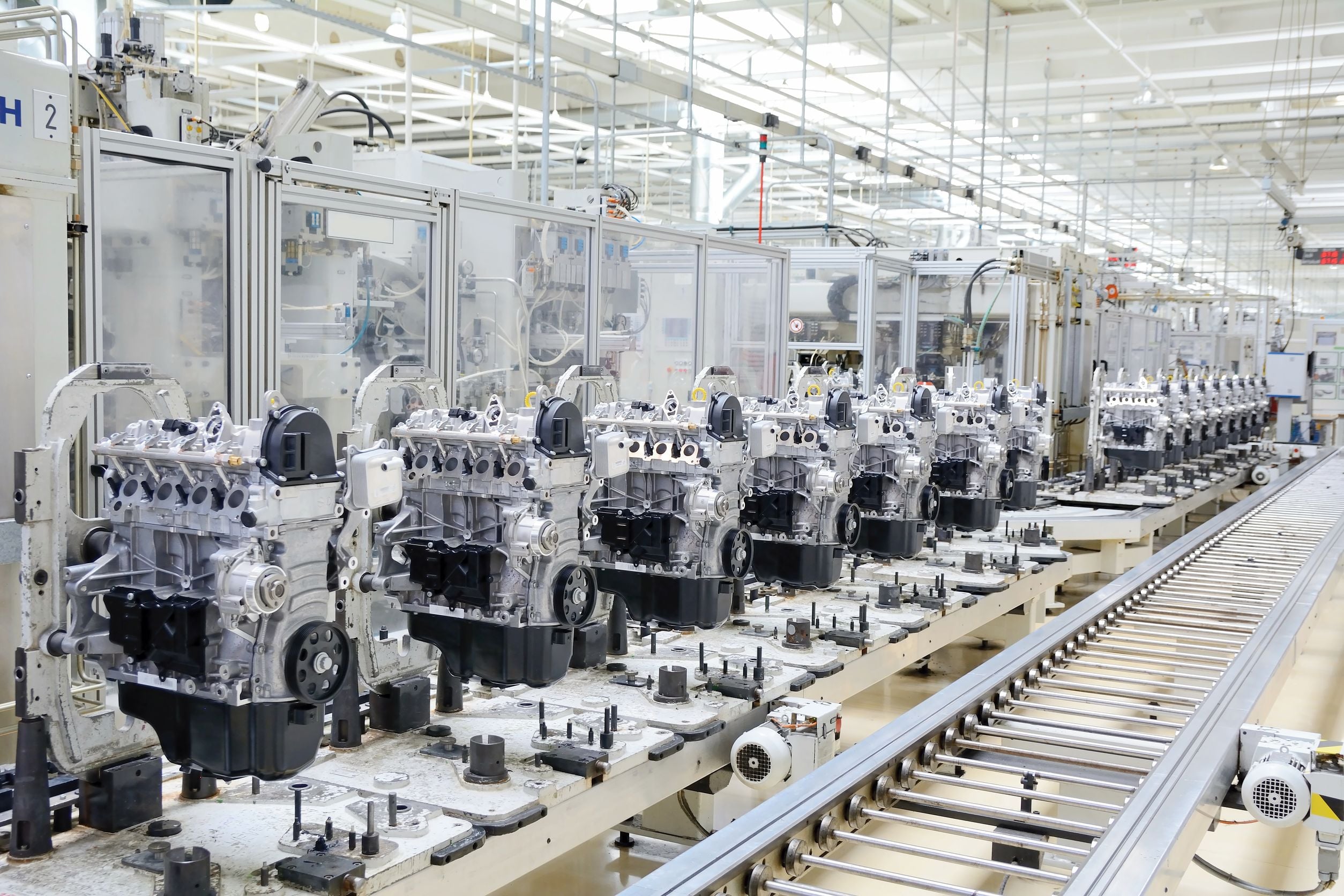
End-market and capability mix drive meaningful multiple variation. Five illustrative examples from the current market:
Defense and aerospace manufacturing. Premium category given rising global defense budgets, specialty certification barriers (AS9100, DFARS, ITAR), and concentrated OEM customer relationships. Ventus Industrial Partners’ formation of Aeron Defense through General Tool and Magna Machine reflects the PE thesis in this space.
Electrification and battery manufacturing. Premium category given structural tailwinds in EV, energy storage, and grid-scale battery deployment. The Lyten/Northvolt ($5 billion) and LG/Honda ($2.86 billion) transactions reflect scale deployment.
Semiconductor and electronics manufacturing. Premium category given CHIPS Act investment, AI-driven semiconductor fabrication, and the onshoring thesis. Specialty manufacturers serving semiconductor and electronics end markets command particular premiums.
Life sciences and pharmaceutical manufacturing. Premium category given Thermo Fisher’s pattern of acquisitions and continued contract manufacturing and specialty biologics demand.
Industrial services manufacturing (tanks, vessels, specialty fabrication, engineered products). Solid mid-market category given stable end-market demand in energy, infrastructure, and industrial maintenance. Premium multiples for operators with meaningful recurring aftermarket or service content.
Five factors move the multiple more than anything else. First, end-market mix — defense, aerospace, semiconductor, electrification, life sciences, and data center exposure command premiums. Second, recurring revenue content — aftermarket parts, service contracts, consumables, and multi-year OEM supply agreements drive premium multiples. Third, technology and process differentiation — proprietary processes, specialty certifications, and barriers to entry. Fourth, management depth and skilled labor retention. Fifth, operational systems maturity (ERP, MES, quality systems, compliance documentation), which directly affects diligence efficiency and buyer underwriting of operational risk.
American Industrial Partners, CORE Industrial Partners, Wynnchurch Capital, Blue Point Capital, Audax, Platinum Equity, Nautic Partners, Kohlberg, KPS, Wind Point, Cortec Group, Arsenal Capital Partners, Genstar, Trive Capital, Pfingsten, Pacific Avenue, Warren Equity, Gauge Capital, Greenbriar, Bregal Sagemount, Ventus Industrial Partners, and the broader industrial-focused PE universe are actively deploying capital across manufacturing sub-verticals.
Specialty components and precision: Illinois Tool Works, Dover, Roper, AMETEK, TransDigm, Heico. Defense and aerospace: Moog, Curtiss-Wright, Kratos, AeroVironment. Industrial technology: Emerson, Parker Hannifin, Honeywell, Eaton. Building products: James Hardie, AZEK, Owens Corning. Specialty chemicals and materials: Arkema, Ashland, Johnson Matthey. Each is an active acquirer depending on sub-vertical fit.
Family office capital has become increasingly important in lower middle market manufacturing, particularly for family-owned succession situations where generational capital aligns naturally with family-owned business values. Many of the most successful lower middle market manufacturing transactions in recent years have involved family office buyers who prioritize continuity, legacy, and long-duration ownership over traditional PE exit horizons.
Strategic buyers expanding across specific capability combinations (fabricators adding precision machining, specialty chemical producers adding specialty materials, OEMs acquiring strategic suppliers). Includes many privately held scaled manufacturers and family-controlled operators pursuing selective strategic acquisitions.
Opportunistic capital looking for well-run founder-led manufacturing businesses with clear operational upside. Often move faster than institutional sponsors and offer structural flexibility, though with smaller dry powder. Independent sponsors have been especially active in defense, aerospace, and specialty industrial manufacturing niches over the past 24 months.
Manufacturing does not trade like a generic services business. The drivers of value are end-market exposure (defense, aerospace, data center, life sciences, electrification, semiconductor, infrastructure, consumer), customer concentration and contract structure, technology differentiation and process barriers to entry, recurring versus transactional revenue (aftermarket parts, service contracts, consumables), capital intensity and maintenance capex, operational systems maturity (ERP, MES, quality systems), labor model and skilled labor retention, regulatory and compliance depth (defense clearances, FDA, AS9100, ISO, specialty certifications), and the depth of engineering, operational, and commercial leadership. Generalist brokers miss most of this.
The confidentiality problem is equally serious. Many brokers list manufacturing businesses on BizBuySell or similar marketplaces, post teasers to broker networks, or run open auctions that expose the business to buyers with no real capacity to close. In manufacturing, that leak reaches plant managers, skilled operators, quality engineers, key customers, and competing manufacturers within days. Manufacturing customers often require multi-year supplier qualification and first article inspection processes. Skilled labor (CNC programmers, tool and die makers, welders, quality engineers) is extraordinarily mobile given persistent shortages. A leak during a sale process can directly trigger skilled labor attrition, customer sourcing reviews, and competitive poaching of key operators before any deal closes.
The right advisor for a manufacturing business is one who knows the subsector, speaks the language of part-level margin analysis, work-in-process economics, aftermarket attach rates, capital intensity and maintenance capex, quality systems and supplier qualifications, sub-vertical-specific end-market dynamics and knows which PE-backed platforms, public strategics, and specialty-focused sponsors are paying premium multiples today for which capability and end-market combinations.
Most of the value in a manufacturing sale is made in the year before the teaser goes out. Repositioning end-market mix toward high-multiple categories (defense/aerospace, electrification, life sciences, semiconductor, data center), developing aftermarket and recurring revenue content, reducing top-customer concentration, documenting technology and process differentiation, maturing quality systems and operational documentation, developing management depth below the founder, and cleaning up 36 months of normalized financials can each add tens of percent to the final sale price.
The reverse is also true. Going to market with messy financials, undocumented quality systems, heavy customer concentration, thin management depth, unresolved compliance issues, or founder-dependent customer and supplier relationships leaves value on the table that no process can recover. Earnouts and performance-based consideration are common in manufacturing transactions and typically tie a meaningful portion of the purchase price to post-close performance, customer retention, and operational continuity over 12 to 24 months. A clean book on strong systems reduces earnout risk materially and often allows us to negotiate tighter earnout terms.
We work with founders well before the official engagement, sometimes for a year or more, to position the business for the outcome they actually want.
You do not get handed off to an analyst once the engagement letter is signed. The person you meet on the first call is the person negotiating your LOI.
We do not post businesses on public marketplaces, blast teasers to buyer aggregator lists, or run open online auctions. Every outreach is direct, curated, and tailored to your specific business — which matters most in manufacturing where the wrong signal to plant managers, quality engineers, skilled operators, OEM customers, or competitors can damage the business before a deal ever closes.
We do not recycle. For each mandate, we construct a buyer universe tailored to your specific sub-vertical, scale, end-market exposure, technology differentiation, and strategic fit, drawing on our proprietary database, active coverage relationships, and direct conversations with the industrial-focused PE, public strategic, family office, and specialty sponsor universes.
The goal is multiple credible bidders at LOI stage with real economic tension between them. That is what drives the final 10% to 20% of enterprise value. In manufacturing where the spread between specialty industrial sponsors, public strategics, and family office capital can be meaningful, the competitive tension among buyer types matters enormously.
A high headline LOI that falls apart in diligence, or erodes materially through earnout mechanics and purchase price adjustments, is worth far less than the LOI number suggests. We vet bidders for real capability to close, negotiate earnout terms aggressively on behalf of sellers, and structure the process to keep the right buyers engaged through signing and funding.
Economics matter. They are not the only thing that matters.
The best outcomes we deliver for manufacturing founders are the ones where the buyer honors the legacy of the business, takes care of the plant managers, quality engineers, skilled operators, and shop floor teams who built it, and continues to serve the OEM customers who trust the brand. Manufacturing is a deeply relationship-driven business at every level, often more so than many buyers initially appreciate. OEM customers contract with the business because of the execution reliability, quality consistency, and operational responsiveness it has built over decades. Plant managers and quality engineers hold customer relationships together across OEM qualification cycles that can take years to replicate. A high headline price from a buyer who cuts skilled labor, disrupts quality systems, or breaks customer trust is not a win.
This is especially true given the industry’s chronic skilled labor shortages. Every buyer is underwriting the risk that skilled operators, programmers, quality engineers, and key operational leadership will walk out. The right buyer has done this many times and knows how to preserve operational culture and skilled labor. The wrong buyer does not, and the consequences compound quickly in a business where a single major quality incident or customer sourcing decision can reset the trajectory.
We spend real time on cultural fit. We vet buyers not just on financial capability and strategic rationale, but on how they have actually treated skilled labor, quality systems, and OEM customer relationships they have acquired in the past. We talk to former sellers on the other side of acquisitions. Sometimes the right answer is not the highest offer. It is the right partner at a strong price.
We are a Dallas-based lower middle market M&A advisory firm with deep sector focus across industrial services, distribution and logistics, infrastructure services, energy services, construction management, engineering services, facilities management, property management and real estate services, and the broader business services ecosystem. Texas is one of the most active manufacturing markets in the country, anchored by the Samsung Taylor semiconductor fabrication investment, Texas Instruments’ manufacturing expansion, a deep aerospace and defense manufacturing corridor (Lockheed Martin, Bell Helicopter, L3Harris, Raytheon), Gulf Coast energy infrastructure manufacturing, extensive specialty industrial manufacturing (particularly pressure vessels, tanks, specialty fabrication), and one of the most active reshoring investment destinations in the United States.
We work within the private equity middle market and strategic operator ecosystem, not as competitors to large investment banks. Our clients are founder-led businesses and the institutional capital partners that buy them, invest alongside them, and grow with them. That positioning keeps us close to the buyers actually transacting in the lower middle market manufacturing space and focused on the kind of relationship-driven process that delivers real outcomes for founders.
Every mandate is run confidentially and bespoke to the business. We do not run open auctions, list companies on public marketplaces, or push teasers to aggregator networks. Information is shared only with named buyers we have vetted and qualified, under NDA, on a timeline we control.
The best time to engage an M&A advisor is 12 to 24 months before you intend to transact. The earliest conversations are about positioning, not process. What would a buyer pay for this business today? Where is the end-market exposure, customer concentration, or operational systems maturity holding back the multiple? Which industrial-focused sponsors and strategic consolidators should we be building relationships with now? What would it take to reach platform multiple territory in the next 24 months?
Those are the conversations that change outcomes. We offer complimentary initial consultations for manufacturing founders generating at least $1M in EBITDA.