
Multifamily property management has consolidated faster than almost any other sector in real estate services. The top four firms now each manage 240,000+ units. For founder-led platforms below that scale, the next 24 months will define the exit.
Parkland Capital Partners is a lower middle market M&A advisory firm with deep specialization in multifamily property management and adjacent real estate services. We advise founder and family-owned multifamily management platforms on sell-side M&A, recapitalizations, buy-side roll-ups, and strategic lift-out transactions. We operate within the private equity and strategic operator ecosystem rather than competing with large investment banks. Every engagement is confidential, senior-led, and targeted. We do not list businesses on public marketplaces, blast teasers to buyer aggregators, or run open online auctions.
If you are operating a multifamily management platform generating $500K+ in EBITDA and thinking about a transaction in the next 12 to 24 months, this page is for you.
Greystar crossed 1 million units under management in 2025 through a combination of organic growth and strategic lift-outs. Asset Living is now at roughly half that figure after acquiring FPI Management. Willow Bridge Property Company (formerly Lincoln Property Company) manages 244,000+ apartments. RPM Living manages 241,000+. That is the current top four. As recently as 2013, no multifamily management company in the country had 200,000 units.
The consolidation pattern in 2024 and 2025 was dominated by strategic lift-outs and platform acquisitions. Greystar took on Wood Partners’ 38,000-unit management arm in 2024, then added 11,000 units in a partnership with Grand Peaks in September 2025, plus a white-label management deal with Trilogy Real Estate Group for Midwestern markets. Alfred merged with Quarterra’s management arm in June 2024, pooling roughly 52,000 units and $20 billion in AUM. Asset Living, RPM Living, Bozzuto, Avenue5 Residential, ZRS Management, Hawthorne Residential, RAM Partners, Kairoi Residential, and Morgan Properties have all been active on the acquisition side.
Greystar’s leadership transition (Andrew Livingstone stepped down as COO, Toni Eubanks took over the US property management business January 1, 2026) signals that the next wave of consolidation will play out under a new generation of executives with fresh mandates to grow through M&A. The firms in the #5 through #20 range are aggressively building density to stay competitive. The firms below that range are the acquisition targets.
For founder-led multifamily platforms below platform scale, the practical question is not whether consolidation will continue. It is whether you will participate on the right side of the table, with the right structure, at the right point in the cycle.
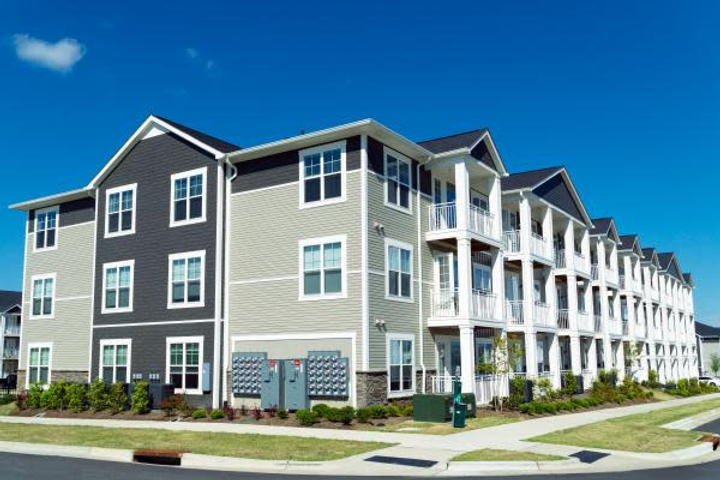
Three levers shift the multiple more than anything else in multifamily. First, the institutional client base. A platform managing for a mix of REITs, funds, family offices, and joint venture sponsors commands a higher multiple than one managing for a single institutional or developer client. Second, fee stream diversification. Management fees plus leasing commissions plus construction management plus asset management plus ancillary services create a materially different multiple profile than management fees alone. Third, on-site team retention. Buyers underwrite the risk that acquired site staff will leave; platforms with strong retention metrics and documented culture command higher multiples and tighter clawbacks.
Greystar (the 1M-unit leader, now under new US property management leadership), Asset Living (second largest, following the FPI acquisition), Willow Bridge, RPM Living, and the rest of the Top 10 are actively acquiring to maintain relative scale. These buyers pay for unit count, market density, geographic fill-in, and institutional client rosters. They typically offer the cleanest structure for founders ready to exit, with real rollover available for those who want it.
Bozzuto, Avenue5 Residential, ZRS Management, Hawthorne Residential, RAM Partners, Kairoi Residential, American Landmark, and Morgan Properties are actively adding units through a mix of organic growth and acquisition. Many have specialized focus (Class A, value-add, affordable, student, senior) and pay a premium for platforms that fit their thesis and footprint.
Specialized sponsors backing multifamily management platforms, either as standalone theses or as part of broader residential services strategies. PE sponsors pay for platform-quality assets and tuck-in candidates, typically structuring deals with meaningful rollover equity that gives founders a second bite of the apple at exit.
Large institutional owners and developers running their own in-house management platforms that are acquisitive when the right strategic platform becomes available, either to scale their fee business or to internalize an existing relationship. This is also the buyer universe for lift-out structures in the other direction.
Opportunistic capital looking for well-run founder-led multifamily management businesses with clear operational upside. Often move faster than institutional sponsors and offer structural flexibility, though with smaller dry powder and tighter financing dependencies.
Multifamily management does not trade like a generic services business. The drivers of value are unit count, market footprint, institutional versus private client mix, client concentration, lease-up and stabilized revenue mix, fee diversification (core management, leasing commissions, construction management, asset management, ancillary services), NOI margin, management team depth below the founder, and the quality of on-site staffing retention. Generalist brokers miss most of this. They price the business on a blunt SDE or EBITDA multiple, cast a wide net of buyers who are not actually transacting in multifamily management, and leave meaningful value on the table.
The confidentiality problem is just as serious. Many brokers list property management businesses on BizBuySell or similar marketplaces, post teasers to broker networks, or run open auctions that expose the company to buyers with no real capacity to close. In multifamily, that leak reaches institutional owners, joint venture partners, on-site staff, competing managers, and the broader industry within days. Multifamily management agreements are typically cancellable on 30 to 90 days notice, and on-site staff at an acquired community are famously mobile. A leak during a sale process can directly damage both client contracts and team continuity before a deal closes.
The right advisor for a multifamily management business is one who understands the subsector, speaks the language of institutional client relationships, fee stream diversification, lift-out structures and knows which aggregators, strategic operators, and PE platforms are paying premium multiples today versus which ones are fishing for distressed books.
If your business generates durable recurring revenue, defensible client relationships, and a credible position in a consolidating market, there is a buyer pool actively looking for it. Our job is to put you in front of the right ones.
Most of the value in a multifamily management sale is made in the year before the teaser goes out. Reducing client concentration from 40% to 25% at the top client, building fee stream diversification beyond core management (leasing, construction management, asset management, ancillary), documenting site-staff retention metrics by community and market, developing a management team that can run the business without the founder, and cleaning up contract-level and revenue-by-client data can each add tens of percent to the final sale price.
The reverse is also true. Going to market with messy financials, unreliable unit counts, unreconciled client-level revenue, heavy founder dependency, or undocumented systems leaves value on the table that no process can recover. Clawback provisions are common in multifamily transactions, typically tying a portion of purchase price to retention of specific clients or units over 6 to 18 months post-close. A messy book with ambiguous client relationships exposes the seller to real clawback risk. A clean book on strong systems reduces it materially and often allows us to negotiate tighter clawback windows or more seller-favorable definitions of qualifying churn.
We work with founders well before the official engagement, sometimes for a year or more, to position the business for the outcome they actually want.

You do not get handed off to an analyst once the engagement letter is signed. The person you meet on the first call is the person negotiating your LOI.
We do not post businesses on public marketplaces, blast teasers to buyer aggregator lists, or run open online auctions. Every outreach is direct, curated, and tailored to your specific business. Confidentiality is protected at every stage, which matters most in multifamily where the wrong signal to institutional clients, on-site teams, or competitors can damage contracts and team continuity before a deal closes.
We do not recycle. For each mandate, we construct a buyer universe tailored to your specific unit count, market footprint, client mix, and strategic profile, drawing on our proprietary database, active coverage relationships, and direct conversations with multifamily consolidators and sponsors most firms our size do not reach.
The goal is multiple credible bidders at LOI stage with real economic tension between them. That is what drives the final 10% to 20% of enterprise value that matters most. Competitive tension does not require a public auction. It requires the right buyers engaged in parallel, with the same information and the same deadline.
A high headline LOI that falls apart in diligence, or erodes materially through clawback mechanics and purchase price adjustments, is worth far less than the LOI number suggests. We vet bidders for real capability to close, negotiate clawback terms aggressively on behalf of sellers, and structure the process to keep the right buyers engaged through signing and funding.
Economics matter. They are not the only thing that matters.
The best outcomes we deliver for multifamily founders are the ones where the buyer honors the legacy of the business, takes care of the corporate and on-site teams that built it, and continues to serve the institutional and private clients who trust it. Multifamily management is a relationship business at the corporate level and a people business at the community level. A high headline price from a buyer who cuts on-site staff, lets service quality slip, or breaks institutional client trust is not a win. It is a transaction a founder will regret every time a former client calls or a former community manager reaches out.
We spend real time on cultural fit. We vet buyers not just on financial capability and strategic rationale, but on how they have actually treated the teams and clients they have acquired in the past. We talk to management teams and former seller principals on the other side of acquisitions. We advise our clients on which bidders will be good stewards and which ones will not, even when the economics say otherwise. Sometimes the right answer is not the highest offer. It is the right partner at a strong price.
We also believe the process itself should be as smooth as possible for founders who are running their businesses at the same time. Multifamily management companies do not slow down for a sale. Lease-ups happen. Renewals happen. Institutional clients call. On-site emergencies happen. We run tight timelines, protect our clients’ calendars, manage diligence requests so they do not become a second full-time job, and stay selective on which buyers we bring to the table so that energy is spent on real bidders only. Being selective is what makes the process easier, not harder. Fewer, better bidders produce better outcomes with less chaos.
We are a Dallas-based lower middle market M&A advisory firm with genuine specialization in property management and the broader real estate services ecosystem. We have covered more than 30,000 units of advisory work across single-family, multifamily, and HOA/condo management mandates. We know the consolidators, the PE platforms, the institutional owners, the independent sponsors, and the strategic operators building in this space because we speak to them regularly, and because we operate in their market every day.
Our core sector strengths are property management and real estate services, PropTech and vertical SaaS serving those markets, tech-enabled services, energy, and infrastructure. These are sectors where we have direct relationships with the strategic operators and private equity firms most actively transacting, and where our network consistently surfaces buyers who pay premium multiples for the right platform assets.
We work within the private equity middle market and strategic operator ecosystem, not as competitors to large investment banks. Our clients are founder-led businesses and the institutional capital partners that buy them, invest alongside them, and grow with them. That positioning is deliberate. It keeps us close to the buyers actually transacting in the lower middle market multifamily space and focused on the kind of relationship-driven process that delivers real outcomes for founders.
Every mandate is run confidentially and bespoke to the business. We do not run open auctions, list companies on public marketplaces, or push teasers to aggregator networks. Information is shared only with named buyers we have vetted and qualified, under NDA, on a timeline we control.
The best time to engage an M&A advisor is 12 to 24 months before you intend to transact. The earliest conversations are about positioning, not process. What would a buyer pay for this business today? Where is the concentration risk that is holding back the multiple? What does the path to meaningful fee stream diversification look like? Which institutional clients should we be cultivating now, and which consolidators should we be building relationships with?
Those are the conversations that change outcomes. We offer complimentary initial consultations for multifamily management founders generating at least $500K in EBITDA.
Yes. We run buy-side mandates for founders and platforms executing roll-up strategies in multifamily management. Many of our best client relationships involve multiple transactions over time, often a buy-side program to scale the platform followed by a recapitalization or full sale, or a recap today with a roll-up strategy to follow.