
Video version of full episode.
Video version of full episode.
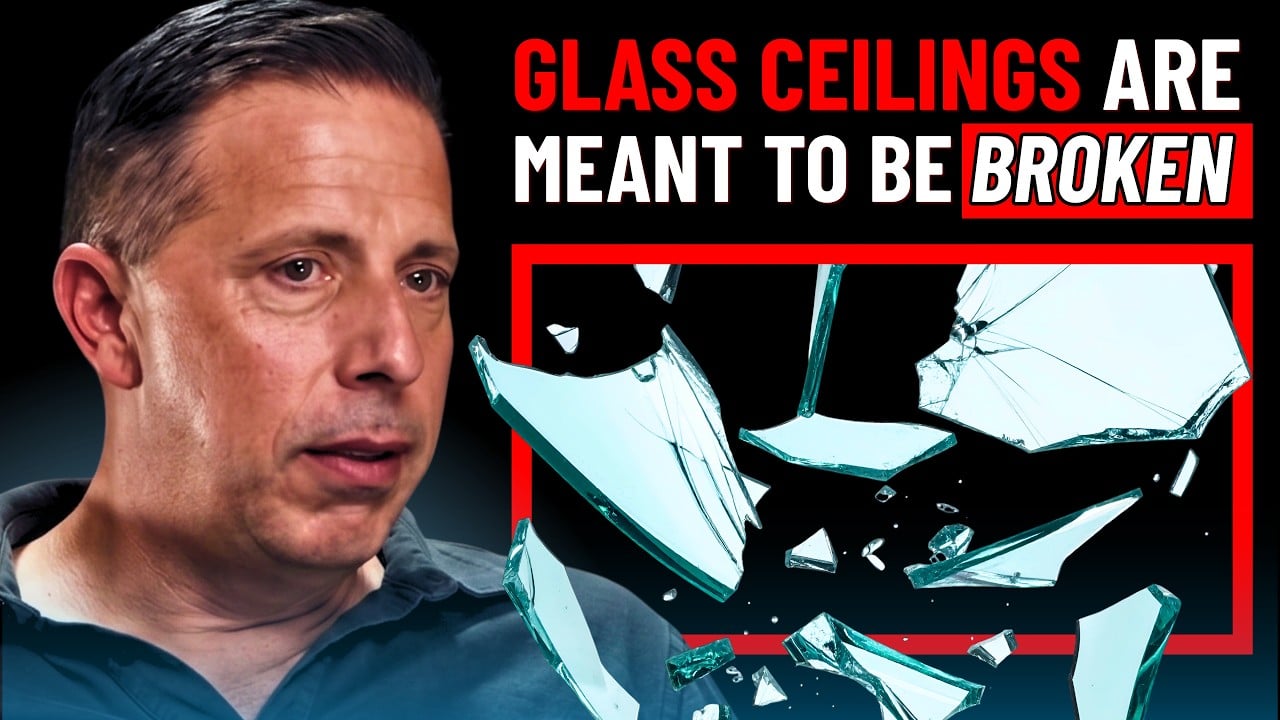
0:00 And thank you so much for joining me. You’ve had 12 exits. You’ve been a chief strategic officer. You’ve worked with some of the largest names in business like Google, Coca-Cola. You’re a best-selling author. I’d like to dive into a little bit of the principles behind your success and talk about exponential theory and thinking bigger and the thesis behind that book.
0:22 Thanks for having me, Austin. It’s a pleasure to be here and base is doing big things. So, look forward to building a friendship and partnership with you.
0:28 Absolutely. The idea behind exponential theory came because I was entrepreneur in residence at Arizona State University, Singularity at NASA, and Thunderbird Global School of Management.
0:40 And so I was working with a lot of startups and this is around 2008 and, you know, the economy collapsed. And then all of a sudden I was in an MBA program at Thunderbird and then that led me into being a professor in entrepreneur residence and all these different things.
1:00 So everything was really around people and how I use technology to scale people.
1:05 You know, exponential theory came in as the things kind of shut down. I started finding myself looking for opportunities and what every big company wanted to do at that time was learn how to think like an entrepreneur.
1:19 So I was a global facilitator mostly for European consultancies. I got kind of lucky just in life to create the dream role of my life.
1:30 I took an online course from a company called Hyper Island, which is out of Sweden. They then hired me to be a facilitator that led me to meet someone from another company called Chaos Pilot out of Denmark.
1:48 I ultimately have traveled to 103 countries, all 50 states, been in 500 different companies, and that largely involved taking the board of directors of Coca-Cola or Daimler into Tel Aviv, Shanghai, Singapore, Copenhagen, just different places.
2:06 And I’d say, what are the most innovative companies here? And then I would facilitate a learning exchange between the two companies.
2:11 So I was fortunate enough to meet people like Jeff Bezos or have been in the room with him in Seattle, Elon Musk, and what I found is that these exponential thinkers led me to write the book Exponential Theory.
2:30 I was around these people and I was like, in 2006 I wanted to write a book. So before this all happened and I started taking notes and I took 1,300 pages of notes.
2:43 And I finally published my book in 2020. So, 14 years later, you know, persistence and determination really works.
2:48 I just kept taking notes as I went in and out of all these companies. It’s like, why do these people think bigger? And then ultimately created Exponential Theory, which is this idea that when you think bigger, you become more conscious.
3:01 And then there are all kinds of things in the book that I kind of broke some new thoughts of my own on as I kind of just looked at people as like, okay, these people aren’t looking just to sustain. They’re looking to thrive.
3:13 They’re not looking just to scale. They’re thinking beyond that. So I built some of these kind of principles in the book that helped me then open even more doors.
3:24 That’s where I’ve been very, very fortunate to be in the room with some exceptional people with exceptional stories. But then you realize it all comes down to mindset and how you view the world is how the world’s going to view you.
3:36 So for me, life’s pretty easy at this point because I really don’t take things very seriously. [laughter]
3:44 And I mean that. That’s my new book. So, I wrote a book called Exponential Theory. And then on this end is, it’s really not that serious.
3:50 And the point is, the more serious you become about your career, the more pressure and expectations you put on yourself, the less likely you’re going to be successful beyond your wildest dreams because you’re going to hold yourself back because you are your glass ceiling.
4:02 So now it’s just like I kind of drift through opportunities and I always say, you know, let it go, let it be, let it unfold.
4:09 The unfolding is the great part because we don’t control anything outside our own worldview, our own view of ourselves and how we fit into the world.
4:23 You can reshape that at any moment in time. So that’s my new book. It’s really about those things because over the last five years, I’ve been on this journey to kind of reinvent myself.
4:35 That has opened so many doors, you know, and I lost over 100 pounds. Wow. Because I was always traveling.
4:41 So, when you’re with the board of directors of a company like Mercedes-Benz, they like to eat at five-star restaurants.
4:46 And I had this really dumb rule that I was like, if I’m on vacation, I can eat anything I want. [laughter]
4:52 The problem was, three weeks a month I was on vacation. So, that catches up after a while.
4:58 For sure. For sure. Were you always like this, whereas, hey, I’m just gonna enjoy life. I only can control so much?
5:03 Or can you look back at your younger self in maybe 2006 where you were stressed and trying to force things in your own life?
5:14 Oh, 100%. I was an angry 30-year-old, so I was like, I’m doing everything right and it’s just not working out. It’s struggling.
5:21 And I had already, you know, at that point had already been a millionaire and lost it, you know, and it’s like, well, why me? Then I’m playing victim and I’m not realizing that all these things were preparing me for something bigger.
5:34 And you know, I always say nothing’s good or bad. It’s just what is, and you make it good or bad.
5:40 And that’s where the most horrific things can happen to you and they can strengthen you, or you could have some of the lightest things happen to you and you think they’re just, oh, the world’s ending, but in reality it’s just unfolding.
5:52 And what you can control is how you relate to that and how you can step into that next moment. And so I choose to focus like, if you’re not that serious, let’s just have fun. Let’s just take it light.
6:03 You know, if you know, and all these things I blundered, you know, into your business mergers and acquisitions. The reason I sold so many companies is because I blundered them.
6:10 To be honest, I failed at more companies than I succeeded at. But generally when they became operational, I literally didn’t make the greatest deal.
6:21 I probably needed you on my team. I didn’t make the greatest deal when I sold them, but I was just happy just like in the challenge of creating something new.
6:27 Yet if you don’t stick to something for very long, you’re always reinventing yourself. You know, there comes a point where you have to understand, well, who are you and what do you want to do?
6:38 And I think I’ve been on a long, long journey and I’m not taking the way of Colonel Sanders where he created Kentucky Fried Chicken in his 60s, but I’m enjoying life, you know, because I know I’m exactly where I need to be.
6:49 Doesn’t necessarily mean that I’m happy. I’m not satisfied. So, you know, I have some drive, but what I realize is that it’s coming to me, you know, and it’s just a fun process.
7:03 It’s one of the biggest lessons I’m focused on this year is realizing how little I can control, especially in my space.
7:09 I’m often working with two different parties that are making decisions. And so, whether a deal closes or not, there’s only so much I can do.
7:21 A lot of times it’s outside of my control, and I’ve been white-knuckling a lot of life, very frustrated. And this year it’s been open-palming, saying, “Okay, it is what it is. Maybe this deal didn’t close. I was really hoping it would. There’s going to be something else.”
7:40 And I’m learning a lesson trying to accept that. I don’t think I’m at where you’re at yet. Still working. I probably need to read your next coming book.
7:45 But I think you have a very unique insight of the power of your mindset and worldview expanding your consciousness and then connecting that with technology and people as technology continues to exponentially grow.
8:04 I think founders are being forced into a position where they have to adapt or fail and many are having a difficult time.
8:09 I talked to a lot of folks that are in their 50s, 40s, 60s that they really haven’t changed things in maybe 10 years. What would you tell founders who are maybe afraid of technology and this new AI wave?
8:27 Well, you know, AI, how can I say it? AI, we’re in the age of average.
8:34 So, if you think about what AI does, it consumes a lot more data than we can consume and it synthesizes it into the average. So, it’s never going to be extraordinary.
8:49 You’re never going to feel that emotion. And I’m not saying it’s not going to get better and better, and the averages aren’t rising. And that’s where humans have to adapt to AI.
8:55 I think the only one that dies in AI are the people that say, “I don’t want to do AI.”
9:00 So those founders that are sitting on the sidelines understand the world’s working faster. There’s, you know, life’s easier with AI.
9:06 You know, I now solve business problems with AI. I’ll literally, you know, right now, my ability in AI is far exceeds the average person.
9:17 And you know, this year alone, I’ve created 10 companies using AI. Wow.
9:29 I exited an AI company last year, in kind of a little bit of a lawsuit around some patents that I had that they wanted.
9:41 And we got through it or whatever and I’m moving on to my next chapter.
9:47 But during that time I had brought two of my close friends, my girlfriend Christine and Forbes, into this company and they let us all go right before Christmas.
9:58 So now I’m responsible for a couple of their people and the money’s tied up and I own some equity to this company and all this and we’re we got lawyers going back and forth.
10:04 But I exited that after three months of just knowing that it was going to be better.
10:10 During that time we launched a podcast called Extraordinary Stories, you know, and have had over a hundred guests on it already.
10:25 We see it as an opportunity to create a network of all the extraordinary people that we’ve had in our lives and bring them together.
10:32 And I built some AI software that kind of matches them up with each other and kind of creates a networking effect.
10:45 I think people in general aren’t very good at giving first. They’re always wanting to take first. And our whole strategy is like to give, give, give.
10:57 And with that, it’s landed some really interesting projects and I’m building some software for law enforcement that’s global that affects police forces in Liberia and UAE and all 50 states.
11:16 To building different things for people that they never knew, like you could do that kind of thing. I love the fact that AI can surprise people about how much of the things that we don’t like to do that it’s going to take off their plate.
11:35 I’ve always been a programmer. I mean, I started my career at Accenture, learned to code, and with that we’re just in a place of regeneration now.
11:50 A lot of people, if you think about flow state, this is kind of in my new book. If you’re in a struggle and you’re like the world’s against me or different things, sometimes you just have to surrender and I have a story to kind of tell this and then flow state happens.
12:01 And then you have to recover and that’s the regeneration part. And then you’re going to find new struggle because you’re going to be at another level of your own success and it may feel like the same problem but you’re seeing it through a new perspective.
12:26 I jumped out of a little plane from 5,000 ft. My sister and brother-in-law had taken me for my 30th birthday.
12:38 I was going, but I was a big guy, but I was heavier then. And they didn’t have anyone that could go tandem with me.
12:50 So I’m standing there like, “Well, I really wanted to go today.” And they’re like, “Well, we can train you real quick.” [laughter]
13:02 I find myself on a little plane stepping out on a thing and then jumping.
13:10 And then I jumped and as I put my arms back, I got my arm caught in the thing. And I didn’t know enough and I was committed to say like, I’m not going to pull the one parachute to go to the other.
13:24 So, it starts flipping me head over heels, tumbling, tumbling. And I tumbled for about 10 seconds at a speed I don’t know, but it was fast.
13:37 And all I could see is the ground, sky, ground, sky, ground, sky. And I was in such a struggle and I used so much energy.
13:48 I see that light that people talk about and I see my life flashing before me. I’m like, “Oh my God, this is it.”
13:55 And then I had this peace come over me and I just let go because I felt like I was going to hit the ground at any second.
14:00 When I let go, my parachute opened and then I grabbed the reins and I was only 500 ft from the ground.
14:12 And oddly enough, I was right over the target of where I needed to land. I was able to come down and land where I was supposed to land.
14:24 What I learned in that and what I take from that experience for myself was something that gave me strength.
14:36 The strength that I got from it was just the fact that, you know, when we struggle, we choose that.
14:48 When I got down to the ground, this whole arm right here was all black and blue because I was actually holding it down.
15:00 I was holding this thing down and it was flipping me over and I was using all my strength because the parachute was kind of partially opened or whatever.
15:13 And it just opened up when I released because I’m like, I’m going to hit the ground. If I balance I should be soft, right? I don’t know what I was thinking at the time.
15:18 I’d really given up and found peace. And that I realized in every struggle that I’ve had since then, I’m getting better and better at that because we don’t control anything outside of ourselves.
15:31 That problem itself was my problem of struggle. It had nothing to do with the equipment or the setup or the environment or me not going through a training course.
15:44 I could blame it on everything else, but in the end it was me deciding to be in a struggle until I realized, you know, find peace.
15:50 And I think when you find peace in business, one, you build long relationships with people. You always seek to give first. You just help people.
16:04 This network is just, we want to help everyone live an extraordinary life, which means that they’ll get on more podcasts, they’ll speak more, they’ll write books, they’ll build companies with AI that they never thought that they could ever build something so big.
16:23 And so we’re building this kind of group of people that continues to expand. And they all leverage each other in a network effect.
16:36 That’s led to me building 10 other companies with some of our members and just the idea that now in life I’m just creating, not consuming.
16:47 After COVID, I got to the end of Netflix and turned off the TV and just realized, hey, I don’t want to live by the scroll and I don’t want to live by the TV. I want to go create things.
19:01 When I was reviewing you also have a website, it’s called hackerlabs.na.
19:14 Some really great, I think, fundamental up to intermediate and advanced AI education. Some of these founders who are hearing AI may know what ChatGPT is, but they don’t know what an LLM is, they don’t know how to prompt or how to leverage it.
19:39 Where did that idea come from? So in developing AI, I was like, how can I learn this in the best way?
19:47 So I integrated every LLM into that. So you can go in between different LLMs and what I found is, you know, Claude’s good for things, GPT, Gemini, Grok, so all those are integrated into one chat field.
20:14 My last company, the original goal was literally this idea of AI adoption. How do you have companies adopt AI and how do you have individuals or entrepreneurs?
20:26 I developed around this idea of a hackathon and that’s where Hacker Labs has kind of come from.
20:45 The idea is how do you incentivize people to learn and grow? And then I’m also going to kind of certify people’s ability to understand AI.
21:04 How do I create a playbook? And it started out this concept called conceptually.com, which is my accelerator.
21:11 We give a couple hundred thousand away and you can either buy your way in for $25,000 or you can give 10% equity.
21:28 Generally younger people that are getting into that and generally giving equity away and then I’m mentoring them to accelerate theirs.
21:34 What I found is like, okay, let me give fast track. So I give everybody, can go to conceptually.com and they can validate their idea.
21:40 They can then create, with vibe coding, a prompt for Lovable that they can stick into Lovable and they can build their site.
21:56 Then it’ll give a prompt for GPT to help develop their business plan and then it’ll get them their go-to-market strategy.
22:02 And the last step is you can get with mentors. So there’s a mentor platform there and then you can apply to 30 of the top accelerators and it tells you exactly how.
22:19 You have a concept, you don’t know if it’s the right concept. So I just built that and that was kind of the first thing.
22:26 What I realized is like, okay, I just created a playbook for an accelerator incubator that’s all built in AI.
22:38 Now I moved it over to Hacker Labs and now you have a coach on the side of that to kind of give you guidance.
22:54 I realized, okay, I need to just create something for myself. What are the hundred things I need to know?
23:01 What happens in Hacker Labs is, as I move through it, I continually accelerate my pace of learning.
23:12 Now I have these libraries of code that I can just do things that much faster.
23:19 If you needed something in Hacker Labs, we have so many libraries of code. I can just drag and drop and create a website of the future.
23:34 So I’m just in the part of building and creating and having fun and then just meeting extraordinary people and just enjoying because it’s really not that serious.
23:55 Between the three of us, we’ve written 25 books, five bestsellers. So we’re in this place of just doing extraordinary things and excited to see how it unfolds.
25:05 Can you maybe tell a story of one of these businesses where you did make a mistake and there was maybe some failure but that 10 years looking back ended up teaching you a lesson?
25:12 Yeah. I think in your life as a child, everyone around you kind of creates a glass ceiling to kind of say, you know, hey, Austin, you’re never going to be an astronaut, buddy.
25:22 That’s either mean you’re going to break through it and you’re going to do it because it pissed you off or you’re going to accept that reality.
25:29 If enough people do that, and that’s where we look at people that are really held back and playing victim, they play in a very small box with a glass ceiling.
25:34 I always say make your ceiling your floor and if every month you can improve your ceiling to your floor, you’re heading in the right direction.
25:46 And that’s where I’ve had ups and downs. My biggest advice is because I’ve failed at more businesses than I’ve been successful.
25:57 Yet I still would be like in the Hall of Fame batting average if I was a Major League Baseball player.
26:10 A lot of people, you know, and you’re dealing with mergers and acquisitions, they feel empty after they sell, and it’s probably something you’ve experienced if you sell a company.
26:22 I’m in that regenerative state to go to the next one. And I’m also quick to pull the plug. And that’s why I have failed at so many companies is because I get bored or not energized or I realize the market’s not what it is.
26:34 But I put myself in a state of failure. Meaning that every success story was only built off of failure. And that’s what people forget.
26:47 You didn’t go out and close every one of your deals. In fact, at the beginning, you probably got denied 90% of the time. And that failure, if you learn from it, you grow.
27:03 My advice now is, on Fridays, just talk about your fuckups as a team if you have a startup, because the more mistakes you make, the faster you learn.
27:20 A lot of times CEOs of a bigger company or even a small company, my advice as a coach is, make three to five decisions a year.
27:34 And generally when I ask people when I’m doing speeches, I’d ask people, like, how many decisions do you make a day? Not one of them was under five.
27:46 You’re suffocating your organization. And the biggest failure is not to empower the people around you and just let them make mistakes.
28:00 If you have a plan and it’s right here, and if it ever gets off plan and you’re bare-knuckling it, you’re suffocating your company.
28:18 You’re killing their creativity and empowerment and innovation. And the reality is that you don’t have the best way to do it.
28:45 When you realize you know what you know, you probably know what you don’t know, but you don’t know what you don’t know.
28:50 How much of the world’s knowledge do you know? Is it 50%? Not even close. Is it 1%? Probably less than that.
29:01 So it’s a humbling fact that we walk around thinking that we know everything when we realize that life’s unfolding and everything is presented as a signal for us to learn and grow.
29:19 If you want to change your friendships with people, if they irritate you, instead of saying you’re irritating me, say I need to know why it’s irritating me.
29:45 If you make less decisions and this idea that we don’t really know that much, as CEO your biggest question is if someone comes to you and says, “I don’t know,” what would you do?
29:58 If you do that for about a month, you just change the culture of the company and likely in a startup you exponentially created your success.
35:02 The first principle is from Aristotle that you get down to the root cause of something, and Tesla was, I just got to build a better battery and then I can put it in a car and people will buy it because it’s going to go faster.
35:22 But the zero principle is the fact that right now the world’s reinventing and if we attempt to do things the same way we did, we can marginally improve things, which is what innovation has been.
35:35 We’ve been incremental, but we’re in an exponential place with AI that we have to think anew, meaning we have to do things completely different than we’ve ever done them before.
35:46 And that’s exciting to me because then you get to play creator. And with AI, you can do these extremel
Explore more episodes from the Acquiring Meaning podcast, featuring candid conversations with founders, operators and investors.
Start the Conversation
Whether you’re considering a full sale, a recapitalization, a growth partnership, or simply want to understand what your business is worth – start with a confidential conversation.