Home » How John Carona Built the World’s Largest Community Management Firm
Video version of full episode.
Video version of full episode.
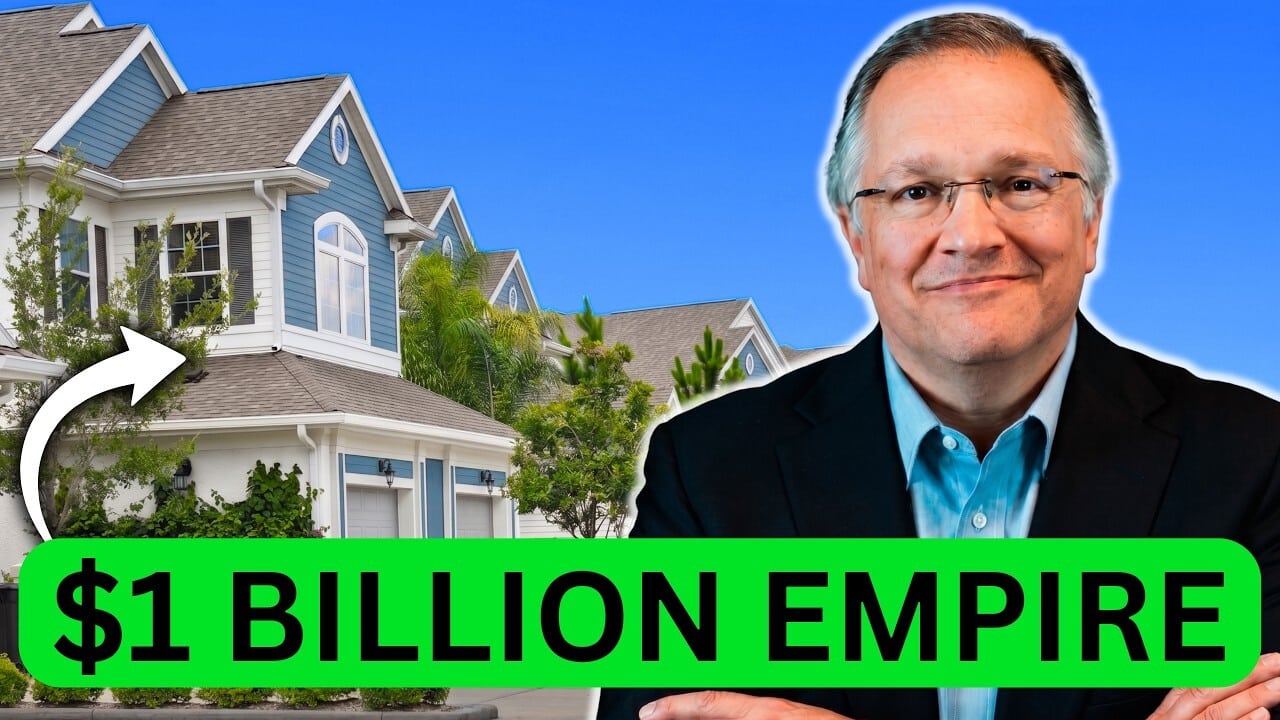
My guest today started his first business at 12 years old buying a lawnmower from a neighbor on a $10-a-week payment plan. He grew up learning that if you want something, you have to go and get it yourself. One year out of college, he borrowed $2,500 to start a small property management company in Dallas. Today, that company is Associa, the largest community management firm in the world.
I served in the state senate 18 years all in. And to my knowledge, I’m the only state senator that was ever sworn in while President Bush was serving as Governor Bush. We were good friends. I’ve always admired and respected him. Baylor University is just a wonderful institution. My wife and I made a gift to the school and we were honored with the naming of the residential college after our family and it was a great honor indeed. I think two of my five children have attended Baylor.
I served on Undercover Boss. I was asked to be a participant and my first reaction was, “Well, no, no way. It’s not going to happen.” But then when our staff convinced me, look, that’s an hour worth of television on a national network and they don’t expect a nickel for it. It’s—would you reconsider? Well, I thought of it that way. And of course, I said yes. It’s great opportunity for the company.
And sure enough, after that first episode aired, we received one phone call after another from across the country with leads for new business. So, it turned out to be a wise decision, though it wasn’t necessarily my first decision. But I was proud to do it. I spent almost 7 days on the road filming that as we traveled all across the country in our various offices.
We’re going to talk about everything from your childhood and upbringing, your family, how you scaled Associa, M&A, to faith and giving back and legacy.
I’d like to start with your childhood. Can you tell me a little bit about what it was like growing up? You mentioned your father and or your stepfather and mother never owned a home. That money was very tight. I assume you would credit that to a lot of your ambition and motivation to become an entrepreneur.
Very, very much so. Business money was tight in our family and there was never any extra money and I recognized if there were things I wanted as I was a young kid, in that case moving into the teenage years, I’d have to go out and work for it myself. And I started with at age 12 with a lawnmower. It turned out that one of the neighbors owned a little lawnmower repair shop and he agreed to sell me a mower at my age of 12 if I paid him back weekly. And I did in fact do that.
Today that lawnmower sits downstairs as you enter our corporate headquarters. It’s encased in a large glass box, but they have it on display there with a little story telling the background. It made me very proud. In fact, when they presented it to me, I had no idea they were going to do it. It brought tears to my eyes as I look back. But, you know, there are a lot of people with stories of challenges, difficulties growing up in childhood. That’s really not the issue. I’m not unique in that regard, and I don’t feel that I am. What I think is unique among some of us is that you have an ability to go forward and tough it out and make something of yourself or you shy away and you find excuses. And I always opted for the former and that was to get in there, get a good education, go to college, and to try to advance myself. I knew if I wanted anything, as I’ve said before, I was going to have to pay for it myself. And that’s what it did. By the time I was in my at my 12, I started at 12.
By the time I was in my early teens, I was mowing up to 20 yards a week while going to school, of course. And I would end up on a given Saturday completely exhausted. But I’d start at 7:30 in the morning and I’d wheel that lawnmower in by on foot by 7:30 at night, but I had a pocket full of cash. And so, that was the beginning. And I think that was my first venture into being an entrepreneur. I loved it and I’ve never looked back since.
I love it. I love it. I do think there’s people that make excuses and there’s others that have this internal locus of control. Whether you feel like you’ve been dealt a bad hand of cards, if you feel like you can make the change, you put in the work, you can endure the pain, wake up at 6:30 on a Saturday and work, you can really achieve a lot. I think back to my own life where I remember there was a time I was harassing my mom to go to Blockbuster and rent a movie and I would not—I wouldn’t give it up. And it got to a point where she broke down crying and she said, “We don’t have money to even rent a movie.”
That left a lasting impression on me of I’m never going to experience this again. I’m going to do something so my parents don’t have to deal with this. My kids don’t have to deal with this. And it created an internal locus of control. I wanted a life of a great amount of responsibility. I wanted to have an impact. Can you think of a pivotal moment like that when you were growing up?
Well, I would just tell you in general, hardship’s not a bad thing. I mean, yes, it’s difficult as you’re going through it at the time. You wish you had that. You don’t understand why you don’t. You don’t understand why others have something when you don’t. But the reality is it’s those difficult times that make us strong and make us who we are. I would argue the greatest issues today amongst our young adults are the fact that they’re not put to the same challenges that someone like myself was, you know, 50 years ago. In my own family, I’ll say I love my kids. I have five children and eight grandchildren. But I would be the first to tell you they didn’t experience the hardships that I did growing up. And as a result, generally speaking, they don’t have the same degree of ambition that I do. Now, maybe that’s healthier for them. Time will tell. But the reality is somebody out there has to be working on the cutting edge and pressing to open our new businesses and coming up with the new ideas. And generally that comes from life experiences that in many cases weren’t favorable at the time but motivated you to do more.
Amen. Amen. What do you think is harder, building wealth and legacy or passing that on to the next generation?
Well, it’s funny you ask that because it’s a little of both right now. My wife and I have been involved in estate planning for the last I’d say two, two and a half years. And I mean it, you know, really involved in it. And making money was hard, but leaving money behind for the next generation and for responsible purposes is hard too. We recently created our attorneys created a foundation and it’s through that foundation that we’ll be making all future gifts. But we’ve made a number of gifts prior to that as well. Baylor was one. There are other examples. And I think it’s very important that not only you know when you’re living your life, growing up, spending wisely, providing for your family, all those things are essential, but you want to leave money responsibly. And in our case, my wife and I have made the decision that not all of our money that we’ve been fortunate enough to accumulate should we leave to our kids. Some of that money, a rather significant amount of that money should go to charitable purposes. And I think that every generation is responsible for making their own way. And I really don’t think that anybody should rely upon their inheritance as part of their financial planning or their financial planning goals. And so in our case, yes, our children will receive some benefit, but other charitable organizations, particularly in the Dallas area, will as well. And that makes us very proud. It makes all of the work worthwhile.
Thank you, John. You were entrepreneurial at 12 starting your first company very early. It didn’t seem like you had much of a knack for being an employee. You seem to have this I can do this myself. Tell me about starting Associa, getting the loan, getting your feet wet. And then when you started to see some scale and success, what that felt like and what that looked like.
Well, first you’re right. Those early days created a certain independence that I liked being able to make the decisions, good or bad. If I made a mistake, I made a mistake and I learned from it and I went on to the next point of decision-making. But all of that is what started. Then I went off to college. And of course, I had to work my way through college. And one of those jobs, I had three at one time while I was going through college. One of them was managing a small apartment complex in Austin, Texas. I’m a Longhorn if you didn’t already know. And so I’m there managing an apartment while I’m also going to school full-time. That is what really led me into the next phase which was going back upon graduation into the real estate business and specifically because that’s what I knew most recently, property management.
Had a lot of friends at the time. They were also in the same degree programs I was in and they were going to go off and be big developers and do all sorts of things that were fine. They were grand. I liked the steadiness and the certainty of property management. If you did a good job, in most cases, you got to keep the client long term. If you accumulated any kind of mass at all in your portfolio, you began to make money. And of course, in those days, I didn’t know how to define success. I just knew that whatever size I was today, I needed to be a little bit larger tomorrow. And so we just kept working.
And people ask me how did you grow the portfolio to the largest in the industry? It honestly was one brick at a time. We never really thought about, gee, we’re getting large or, gee, let’s in my 20s decide when I’m 70 I’m going to be at a certain size. It was just always go in, work hard, work smart, run an honest business, and treat people fairly. Those all sound very simple, but that’s really the guideposts that we used along the way and it has served us very, very well.
I know a big portion of the scaling also was related to M&A. You, I think, executed at least 150 acquisitions as you grew the company to today we’re over 200 acquisitions and in fact we are in five countries now. We most recently purchased a very large company in Spain that manages homeowners associations. It’s the second largest in that market. By December, we believe we’ll be the largest in that market across the entire nation there.
But it was in doing those acquisitions that so much of our growth came. You have to have in any organization organic growth and you have to have the ability to retain the clients you have. The most valuable client of all is the one that you already have in your portfolio. But part of our strategy has always been to acquire and we’ve done that across the US but in four other countries as well and we continue to do that. Our primary plan for the next three to five years in addition to our growth here in the US will be European growth. We intend not just to be in Spain but we intend to build out several of those countries and actually are in the process of doing that right now.
What’s the secret, John? Most business owners I talk to in their 60s and 70s start to slow down. It’s exit planning. But you have this vision 20, 30 years. You’re expanding into a new continent. Interesting. What’s the secret?
You sound like all my old high school buddies who continually ask me when I have lunch with them, why haven’t you retired yet? Because of course they all have. You know, I just have the energy and the drive to continue. If I were not in the business today, I’d go find some other business to be in. I think when you’re entrepreneurial in nature, it doesn’t so much matter the business as it does the ability to build and grow the business. At least that’s the perspective I’ve taken over the years and it’s served me well.
I get up still very early in the morning. I am frequently behind my desk at 6:30 to 6:45 every morning and I just wake up with energy. I’m ready to go. And, you know, I like the challenge. I’m competitive. I like the opportunity to advance the business, particularly with technology. Technology today is becoming an increasingly large part of what we do in the property management industry. And we have nearly 200 people amongst our 24,000 employees that are dedicated strictly to advancement of our technology, software developers and whatnot. And so all of that comes together to make for a pretty exciting environment.
You were, I think, one of the first businesses to computerize with some IBM computers back in the day. You also have a digital service center where you do some engineering, robotics, automation. Tell me what that was like being first to computerize back then. That probably wasn’t overly popular at the time.
Let me tell you, when we bought our first big computer, it was an IBM System/36. The thing was a huge box and would fill a room. And of course, it just almost broke me financially to buy the thing. It was so expensive at the time. And we were just really a fledgling operation. I was so proud of that computer that I made them cut a hole in the wall and put in window glass so that every employee could see it as they walked down the hallway past it.
And from that experience we continued to rely heavily on technology. We were one of the first, as you mentioned, to engage in technology. And now we’re a leader in that regard.
Today, our homeowners in these various communities that we manage, and as you know, we specialize in the management of community associations. Today, our homeowners can do almost every interaction that they choose to do through a handheld device and through our app.
And while we are here always eager to give personal one-on-one service, in the age we’re in today, people want to be able to go to that app anytime, day or night, and engage, reserve a clubhouse, bring up their car by the valet, pay their monthly assessment, receive notices on any kind of upcoming events or rules and regulations.
The list goes on and on. And this technology today, believe it or not, over 100 management companies that we have no ownership in whatsoever use our technology to run their businesses.
We white label a lot of our technology and other companies are using it. So, we’re trying our best not just to benefit our own clients and our own portfolio, but to establish an industry standard, particularly in technology, as the community association and property management business in general is still pretty fragmented all across the industry.
And not just fragmented in terms of management, but fragmented in terms of how it uses and when it uses technology. And I believe the big breakthrough in property management and it’s essential for quality of service as well as profit margin is going to be and will continue to be technology.
100% agree. I also think because of the fragmentation that M&A plays a large role in this as well and consolidating the space. It is a big part of your success and continues to be. What’s the secret, John? Most business owners I talk to in their 60s and 70s start to slow down. It’s exit planning. But you have this vision 20, 30 years. You’re expanding into a new continent. Interesting. What’s the secret?
Well, the first thing you look for in my view when you’re buying a service business is the quality of that service that the company has been known for providing. You don’t want to—if you go out and look for a bargain. If the goal of the buyer is to go find a bargain in the service industry, somebody that’s struggling, somebody that’s in trouble, whatnot, believe me, you’re going to get drawn right in and you’re going to be in trouble as well.
The key to our success has been go buy quality companies, companies that are already market leaders, that have good personnel, that have some bench strength, and rely upon those people. We also look for deals where the principles in the transaction, at least in part, are going to remain with the company. Maybe there are four or five owners. Well, two or three of them are going to stay with the company for the next few years to come. That kind of continuity is really important. But again, most of all, it’s the reputation of the company. And then, of course, it’s not just the reputation, but it’s the quality of the underlying portfolio.
Are these properties that the client is willing to provide the resources to have us take care of? Are they properties that are safe and secure? And there are just a number of things of that nature that we look for. Because, you know, we are not here—perhaps there’s a place in the marketplace. There’s always a place in the marketplace for C properties, D properties perhaps, but that’s not us. We run A and B properties.
And we’re willing to always take a property that needs hard work and needs refurbishment and whatnot. That’s all part of what we do and all part of the various service offerings that we have. But yeah, if you’re going to take properties like that, you have to have a client who’s willing to pay for those things. And so we look for clients that want to run quality properties. And our job is to go in, figure out what’s wrong, figure out what the priorities are. Money is never endless. And so you prioritize what will get the biggest bang for the buck and you get to work and do that.
And that’s what our managers across the country are trained to do. And I think we have today close to 2,000 of our 24,000 associates are property managers. They’re the people out in the field really getting into the nitty-gritty of these properties and making them work.
Were you the one actually executing the first acquisitions done by Associa? And when did you start to build an M&A team to support you?
Oh, I was absolutely the first one and it was that way for years. You know, I watch a dollar closely and every dollar matters and so yes, I was the first one. But once we began making acquisitions outside of the state of Texas, I realized they had to have a team around me.
So I’ve been very fortunate over the years to have a very good team, a group of core veterans, about half a dozen, and then probably another 20 people out there beyond the half a dozen that feed us constant leads. And there are people that work for us. They’re out in the markets all across the country. And, you know, they hear things. They know where there is a possible opportunity opening up. Someone’s retiring from the industry. Somebody’s fallen into bad times with their company. It could be a dozen different excuses. And they feed leads to us as well. And we go in and, you know, we look at the situation.
Not every deal is really sellable if you would. I mean, some deals, though everyone that creates a management company believes they’ve created something of value, some deals just don’t have a lot of value. And so we have to look at a situation where the client base is stable and where there are opportunities for us to better the service delivery in that particular market.
And those opportunities are out there and they’re abundant. Our pipeline always stays full. And I would say right now we probably are in the process of closing as many as 20 different deals. And that pipeline is constantly being fed as one comes to closing and enters our network of offices, another one goes into the pipeline.
And it’s the product not of simply being in the market, but it’s the product of nearly 50 years in the market. The thing I would say is that I cannot recall a person who has sold us their business that speaks negatively of us. I mean, I’m sure along the way there may have been a bump or two in completing any transaction. These are sometimes complex transactions, but we treat people right.
If we make a commitment to do something, we do it. Even if it’s a commitment that we come back and regret that we made, we honor our commitment. I remember a deal I did six or seven years ago in Chicago over lunch and the seller and I penciled it out on the napkin. True story. On the napkin that we were served as part of our lunch and that’s how we closed the transaction. Just upon that, we sent that on to the attorney and within three weeks we had the deal closed. I do deals like that.
I would tell you that’s becoming more and more difficult to do. It’s the market. It’s public attitude in general. People don’t keep their word generally speaking as they once did. A handshake and a handshake deal is not as meaningful as it once was, but it is to me. I grew up in a large Italian family. That’s the way my father and my uncles did business. They were businessmen, not in this field, of course, but they were businessmen and they honored their deals and your word was your word. And that’s how we operate here.
And I hope that’s not lost forever because if you don’t have honor and integrity in a deal, you will spend your life in the courthouse and nobody wants that. Anything that finds its way to the courthouse, in my personal view, is a failed deal. And I’ve only, in all of our years of business, nearly 50 years, and all of our acquisitions, some 200, I’ve never had but one time a transaction have to go to the courthouse. It only happened once. And of course, I wish that hadn’t happened, but that’s pretty good track record.
It’s a very good track record. Very impressive. What do these deals typically look like from a revenue or EBITDA size standpoint? Is there a model or framework that you look at? Of course, no deal is the same, but from a transaction, do you typically buy 100% of the company? Is there cash plus a earnout roll or no? What does that look like?
We typically buy 100% of the company. You’re right there. The multiples of EBITDA and everything is bought and sold typically in our industry is a multiple of EBITDA. They can vary. Now the smaller the company, interesting how it works, but the smaller the company the lower the multiple. The larger the company, more sophisticated, they will command a higher multiple. But for the most part the industry operates in the single digits in terms of multiples.
Outside of what we do, there are other industries that operate in multiples as you know in the teens, sometimes in the high teens, sometimes even higher than that. This is not an industry generally speaking that operates. Now, there are people that come along from time to time and pay those, you know, 14, 15, 16 times EBITDA transactions. But listen, nobody’s been in the business any longer than I have. And I think those are foolish transactions. Those are not transactions that will sustain themselves over the long term.
This is a what many would consider a low margin business. Now we’ve built it into a billion-dollar enterprise but we did it with the understanding that the only way we’re going to really create value is grow larger so that our multiple is larger. But at the core, grow the EBITDA. You’ve got to grow the EBITDA if you want to grow the value.
And what do you think is the most important skill for getting deals done? I know time kills deals. A lot of people will get lost and maybe what’s not most important. I love the story of executing a transaction on the napkin and building it on 50 years of a reputation. But what do you look for from a skill set and what do you think is most important to practice if you want to get transactions complete versus them dying on the 50-yard line or the 90-yard line?
Well, there are always going to be surprises in any transaction that I have learned after nearly 50 years of doing this. And you have to factor all that in on the front end because if you don’t, you try to make it up somewhere in the deal negotiating process or when you’re trying to negotiate the final language of a purchase agreement or whatnot, it’s too late. And by that time, you put the entire transaction at risk, people assume you’re not going to keep your word and that’s a bad deal.
It is why in some instances, some private equity operators have had difficulty in this space. They come in, they want to get anything under an LOI, a letter of intent, but when it comes down to the purchase agreement, that’s when they get another stab at negotiating the deal. We don’t do that. And I just try to get everything that it’s important to both sides into the LOI, the non-binding LOI. And if we reach that, then we’re taking a document to the lawyers that really just needs to be memorialized. And in our industry, anything short of that, you begin to scare the seller. These are not sophisticated sellers. Look, and this will be the one transaction of their lifetime that they’ve made this way. And so, we want to make it as pleasant an experience as possible.
So, as I said, we factor in the surprises on the front end when we price a deal. We don’t try to negotiate our way to a better deal somewhere late in the transaction. But all of those things are—you have to have communication. You have to have integrity. And you need to know who your seller is.
I will tell you that I don’t do any deal that we don’t have either firsthand knowledge of the seller and the seller’s method of operation or a seller who’s come very highly recommended to us through a third party that we trust. And I think when you’re buying a service industry, you have to especially do that.
When you’re if you’re off buying a warehouse full of commodities, that’s one thing. You’ve got an inventory at least to back up whatever it is you pay to closing. But a service industry purchase means you’re basically buying contracts in a file cabinet. And I guess I’m showing my age when I dare say file cabinet, but you’re buying contracts and so you have to be very, very careful there.
And so it—I keep saying integrity, but integrity is important part of the process. And where people get burned in this industry, and they are getting burned in this industry right now, is when they go in and they try to outsmart one another on the buyer or seller side, or they come in and they overpromise what it is they’re offering. And of course, the surprises begin to follow. I don’t like surprises. And so, while we occasionally get surprised, it’s not very often because we go through a pretty rigorous process on the front end.
Most of the work in a deal is not done at the back end. And when the contract is finally being papered and signed, it’s on the front end before you even get to the point. I don’t like to go to the attorneys and start spending legal dollars until I know that buyer and seller have directly one-on-one agreed to the primary terms of a deal.
Otherwise, you’re going to end up, you know, listen, I’m grateful. We’ve had wonderful attorneys and I work with wonderful attorneys all the time, but the biggest deal killers can be attorneys, not because they want to kill a deal, but just because they’re attorneys. And so when I take something to a law firm, it’s with the understanding that we want this thing papered up and done.
And so that means managing the process beforehand. And that’s where I think a lot of buyers come up short.
Absolutely. When we’re talking to clients or prospective clients, that’s something that I almost always highlight is the biggest deal killer once we’ve agreed on high level terms is attorneys. And so to set clear expectations regarding what is their pricing, what is the timeline in getting red lines back in documents and are they experienced in M&A as well as service businesses in the real estate space.
Absolutely right.
You are absolutely right. And if you do that you will avoid some shockingly high bills or just a general misunderstanding. I don’t like for our attorneys to negotiate terms. I like for that to be between buyer and seller.
Agreed. Agreed. Is there a minimum EBITDA number that you will acquire? Is there something that’s too small for Associa to look at?
Well, I mean, generally speaking, I can say we acquire at all sizes. Now, there are some exceptions. I’ve dealt with one just this morning, in fact, that was on a Zoom call and the deal was just simply too small. The person contacted us. They managed a portfolio of 12 relatively small communities.
We do tuck-under acquisitions on a regular basis all across the country. Remember, we have 340 offices. So, we’ve got people out there trying to do local deals all the time. It’s the bigger deals that come to the home office and work through our sales team here, but we’ve always got small deals that are brewing in the pipeline.
But I look at them and we look at the size of the portfolio. We look at the total amount of gross revenue. We look at what the cost savings, if any, will be once the small tuck-under is merged into one of our platform companies out there. Some won’t qualify. Most do though. Most do.
Now, what do we look for? Well, you, as you would expect, we don’t spend most of our time looking for the small deals. We go out for the large deals in the market. We recently signed a letter of intent on a 500-community management firm on the West Coast. That’s a large portfolio in our industry. And those are the sorts of things we’re looking for.
Our next deal, our next two deals that are scheduled to happen in Spain will bring another, I would say, nearly 8,000 communities into our portfolio. It’s two separate companies, but combined it’s about 8,000. That was the transaction I mentioned earlier that will make us the largest operator in Spain.
And we’ve got, you know, it’s really interesting when you go into a new market, all of a sudden you’re hearing from a lot of people. And so, no sooner than the press release went out on that acquisition, we have people calling us from Germany and calling us from the UK and calling us from elsewhere. And so, I’m sitting here speaking one language and that’s English, knowing I need to learn four or five others very quickly.
I love it. When you were scaling, you think back 40 years ago, was there a moment where you really started to have real success with the business and what do you feel like changed in your life when you started to have some financial freedom and abundance?
Well, the light bulb went on probably at about year somewhere between year 12 and year 15 that if I did what I did in volume and if I added automation to a great deal of the process, then that’s where I could make investor-grade returns. And I’m, you know, I’m a businessman. I love this industry. Don’t get me wrong. I’ve dedicated my life to this industry, but the best part of the industry is the fact that it’s a business. It’s a—it can be scaled to be very large and it has investment-grade returns. And so I’m always looking at how we can improve our service to the client, how we can create greater efficiency internally, how we can make the job easier for our employees. Because part of all this in service industry is making sure that they’re not left out of the mix. You’ve got to make the job easy enough and understandable enough to be able to do and do well. People want to come as employees. They want to be successful.
But I would say that, you know, somewhere around our 25th year or so, and remember, we’re almost 50 years old now, somewhere around our 25th year or so, we began to realize the financial success that came with scaling the business. And boy, was I glad that happened because those early years were quite lean.
You told the story earlier. My first capital was derived from a business loan against my wife’s Datsun B210 hatchback. Most of your listeners probably don’t even know what a Datsun was. But that was the forerunner, of course, to Nissan. But when you start out like that and you don’t have any real capital, you don’t have some rich relative who’s behind the scenes funding you and we didn’t have any of that, you watch every dollar very closely, both the dollars coming in and, of course, the dollars that go back out.
But about the 25th year or so, I realized this, you know, this is something that’s very scalable and that we can be successful with. And then along the way, we knew we’d need financing to continue to grow. We were accumulating, of course, retained earnings, but we weren’t accumulating enough in retained earnings to match the growth that we saw ahead of us, unless we went out and raised capital.
And I said, “So I thought, do I go and I sell equity or do I raise capital through debt?” Well, it’s always cheaper to go and find debt than it is to raise equity. And so I went into the capital markets and I initially had a small bank syndicate that backed me, one lead bank here in the Dallas area and about 10 other banks that followed onto the credit facility.
Well, about three years into it, we outgrew the credit facility. I thought, where in the world do I go next? And so I don’t know exactly if it was fate or what, but we met with one of the units of Goldman Sachs, and Goldman Sachs became our first real sophisticated lender, if you would.
And they offered terms and conditions of payback that was different than banks are able to do and much more favorable. We used Goldman Sachs for eight or nine years. They were wonderful. Had a wonderful experience and then scratched our head and thought, you know, why don’t we take this out to bid? And we did.
And lo and behold, there was another very prominent company out of New York that by then had heard about our company and said, “We’d like to have the financing.” Goldman wanted to stay in the financing so badly that they came back and they bought 40% of the new investment banks holding.
So it was—we took that as a great compliment from Goldman Sachs. But the current lender that we changed to is our lender today now some nearly 15 years later. They are with us on every project.
And establishing a successful track record—I don’t know how much of that is hard work and how much of it is luck—but establishing a successful track record means they love you. If you perform, they love you. If you don’t perform, well, not so much love. And so, we performed. And so today, our lender is very substantial. They tell us we’re their largest credit in the country. And we have that honor because we perform.
And I’m also conservative. I will tell you, I think for anybody in business, no matter what size you are, you always need a Plan B because things rarely go exactly as planned. And so we’ve always said to ourselves, well, this is what we need, but if we don’t get this, what will be our alternative? And we’ve always had a Plan B.
The other thing I would tell you, part of our success is that I’m a goal setter. And it may sound a bit neurotic, but I don’t leave the office any day without creating a list for the next morning. Right there on my desk, the things I know to do when I walk in. It puts me to work immediately without loss time, and I go after it.
Of course, I also set three-to-five-year goals as well. I can tell you exactly what we’re going to do in Europe over the next three years. Now, I won’t tell you, of course, top secret, but I could tell you I have a weekly schedule with every day planned out of kind of the most important activities that need to be done to move the ball forward, plus urgency activities, and then five-year goals.
Typically I’ll do some annual, but I think the five-year are much more important. A year flies by. You’ll be surprised with how much you can get done in five years.
I also think that it’s very unique for a business of your size to still be privately held and retain the equity that you have. Most companies will go public. They’ll do a recapitalization with private equity. They’ll lever the business. And so that conservative approach and protecting the equity, which I believe will create the most long-term wealth, is ownership in businesses and in assets. I commend you on that.
Thank you. I think I had a question regarding—go ahead please.
Well, we’re generous in how we compensate our key leaders. I mean, good people aren’t going to come and stay with you over multiple years if you don’t treat them fairly. And that’s just fact. And we’ve been blessed. You can walk the halls of this building here and find people that have 20 years, 30 years, 40 years. It’s at times it amazes me. And then I remember, wait a minute, I’ve been here all that time, too.But it’s, you know, we’re very proud of the fact that people come and they make their careers here. That’s not always the case in companies that start small and build as they grow, but it’s been a great place.We take care of our folks and they take care of us. And it’s a simple formula, but it in our case produced success. And you’re right, I do hold the equity of the company, but all of our key leaders participate in the profits and the growth of the company.We use the SARS program that has been very effective over the years to make certain that as the company grows and increases in value that their SARS grow and then they’re paid out accordingly.
Can you explain what that is in a little bit more detail, John, for people that aren’t familiar?A SARS program is stock appreciation rights. That’s where the acronym comes from. And so we peg these in our firm. It can be designed any of a number of ways, but in our firm we peg this over five-year periods. And so you begin each year you get additional amount of SARS units if you would. It’s equivalent to having shares.The only difference in a SARS program is you don’t actually have a stock certificate that shows ownership, but it tracks or mirrors ownership as every year the company is reappraised. As the company grows in value, which is typically based upon the EBITDA, the profitability, well, then your SARS accumulate.And then every five years, we take those SARS that have accumulated on the five prior years, and we redeem them. So people aren’t having to wait, you know, 20 years to cash it in. They cash it in every five years and we always keep it on a rotating basis.The result is that we’ve paid out, and I’m proud of this fact. It’s not a secret. We’ve paid out millions of dollars to people in over the growth of this company. And I think the last payout alone was somewhere in the range of $25 million.And so, you know, when you have that opportunity to further enhance your salary with the SARS program and you don’t have your own money at risk and if you work really hard and smart and as part of a team the value grows for everybody. Who wouldn’t want that? And so we think it’s been great and we don’t—I mean I never think twice about what it cost us because what I get in return is absolutely worth the investment.When you think about leadership and what a good leader focuses on, I’ve heard reputation sounds like creating the right culture, the right incentives to attract the right talent, focusing on finding the right talent. What do you think great leaders should spend their time focused on? And what traits do you look for in talent?
Well, we have a saying around here and you can go up and down the hall of our executives all tell you the same thing. John always says, “I’d rather you make a decision even if it’s the wrong one than make no decision at all.” The thing that does not fit within our organization are people that are timid about making decisions or people that purposely avoid decisions so they’ll never be the one in trouble if something goes wrong.Something’s always going to go wrong. That’s part of the process. I don’t get it right all the time. I don’t expect them to get it right all the time, but I expect them to show leadership and courage. And I think that’s what it takes in a company.You’ve got to have leaders that have the courage to make the decisions. Hopefully well thought out. Hopefully decisions are the right decisions. But listen, I’ve got people here that have been with us, you know, like I said, 20 plus years who over the course of that time in some instances have made the wrong decisions.Listen, nobody likes to make the wrong decision, but I’m proud of those people. That’s what I want them to do is make the decisions. If they can’t make the decisions, they can’t be leaders.And so, I think that’s what people within the organization perhaps that aren’t in those leadership positions admire about our company is we aren’t shy. We’ve taken plenty of risk over the years. We continue to take risk.
Many people would argue that, you know, as a 70-year-old owner of the business, should you be taking risk at this point in your life? My argument is absolutely yes. And I will take risk till the last day I walk out the door. That’s part of owning a business and operating successfully.
You can own a business. Hey, listen. Most anybody could own a business. But if you want to grow a business and build it into a true enterprise with meaningful value, you’ve got to take risk and you got to have the courage and you’ve got to be willing to accept that sometimes those risks and those decisions are going to be wrong.
Oh, I can’t tell you how many times over the years that I’ve made a decision that was the wrong decision. Usually those are around bringing on new service lines or something of that nature. You know, in the middle of the night I’ll wake up and think, “What a genius idea I just had.” But by the time it goes through the mill in the weeks and months to follow, maybe it wasn’t so genius after all.
But you’ve got to take those risks. And the good news is amongst all those risks and the failures, we’ve had some really great ones hit along the way too that made us look a whole lot smarter than we really are.
Along with your work ethic, taking risk, your time management. Colleagues have talked about doing 10 and 15 minute meetings that your directness is legendary. Seems like you’re very respectful of people’s time and not wasting your time. Talk to me a little bit about how you manage your time when you’re at work.
Well, that makes me sound terrible, but listen, I’m not one for long meetings. I feel like when you come into a meeting, it needs to be short, to the point. So what I ask the people to do is come in with what we call a four-box proposal. They’ve got one sheet of paper. They break the issue down into four boxes. Talk about what the problem is, what the correction is, what it’s going to cost us, and the timeline for implementing it.
That’s our four-box solution. And they come in, they go out, but I can’t tell you last time I had a meeting that was more than 15 minutes. They know that coming in, and so they’re well prepared. The meetings oftentimes are lighthearted.
But we—I just don’t think there’s anything productive in coming into someone’s office and raring back in a chair and chatting for the next 45 minutes. That’s a lot of wasted time. And we’ve got things to do.
As I mentioned, I come into work every day with the list of things that I am expected to accomplish that day before I go home. And I try to accomplish all of them. And a small but significant to me rule is I never leave the office without returning every single telephone message because people want immediate answers.
And in a position like mine within any company, your ability to respond quickly is really the difference between whether or not the organization moves forward at the speed you want it.
You know, with this many employees, one would think it’s a pretty slow ship and certainly a difficult one to turn. I won’t say we’re as nimble as we were when we were 20 employees, but I will say that we’re pretty nimble. And I think that’s important.
In a service business, your clients want one thing, and that’s service. They don’t want to hear all of your excuses of why you couldn’t answer promptly or why it took you three days to get back with them or whatnot. They’ll go find somebody else, especially in the day and the age we’re in today.
And so from my standpoint, everybody gets a call back and I don’t go home without taking care of all of them.
I love it. Speed to lead. Responsiveness. I’ve noticed that in the most successful people that I know, they’re incredibly responsive.
Yeah, it’s surprising oftentimes. It’s your reputation.
Yeah. You’ve been an amazing entrepreneur, scaling Associa. You also served 25 years in public service. What did you prefer?
Well, I’m a bit business, to be candid. I’m a businessman at heart. That’s my—if I have a calling, that’s my calling. But I will tell you there was no greater honor than those years in public service. I was fortunate to serve 24 years.
Politics is a strange thing and it changes over time and voter preference changes over time, but I served 24 years. I have one of the highest bill passage rates in the entire legislature. And, if you’ll allow me, in the history books, I passed over 900 bills into law.
I was the go-to person for much of Dallas business and the Dallas business community. And it was an honor to represent, not just, of course, the business interest, but the people.
We accomplished a great many things over the years for the constituents in this district and there’s some of them that still warm my heart today. Government can be a really difficult arena to navigate and the job of a representative or at this case a state senator is to get in there and help people through this maze and do it in a timely fashion.
And we did that in several instances over the years and to the benefit of a great many people. So I was very proud of all that. I absolutely consider it a very important part of my life. I’m glad I got to do it.
But if I had to choose business or politics, especially as nasty as politics are today, I’d choose business every time.
I’d agree with you 100%. 100%.
When you look back on your life and you think about yourself when you were 20 years old, what advice would you give your 20-year-old self on what to focus on, what skills to develop?
Well, at that point I was still in college at 20 and but I would tell you that for me at least part of it was just getting a good education. And there are a lot of places you can get a good education. You don’t have to go to an Ivy League school to come out, you know, prepped and ready to go. Though there’s nothing wrong with going to an Ivy League school.
I thought education was important. I knew my work ethic was important. The one thing I knew I could bring to the table was that I could work equal to or perhaps outwork anybody else. And I was never timid about that. And I liked being competitive. And I’d been competitive going through junior high and high school and sports and in just about everything I ever entered into.
I was a pretty good student. And all of that just prepared me for being the—you know, I looked at myself and said, well, if you don’t have special contacts, you don’t come from a family with money, you know, you don’t—
Back in those days, I, of course, it was because I mowed all those lawns. I was as dark in terms of complexion as you would ever find. Most people just assumed that I was Hispanic and because this is Texas and all that’s fine.
But, you know, when people use excuses today of like, well, you know, I’m a minority, therefore I can’t do this or I’m, you know, I’ve got this limitation, no family with no money, I can’t do that.
I just say to all of them, that’s just not so. You get in the arena regardless, regardless of your family background, regardless of your skin color, opportunity really does exist out there for everybody. And there aren’t many people along the pathway any longer today that would hold you back for anything, your ethnicity or otherwise.
People want to be around people that are successful and hardworking. Period. I find that true all the time. And so when I see the fights that still continue today, this group against that group and all the claims of unfairness and mistreatment and whatnot, not to say that some of it isn’t valid and that some of it needs correction, we’ll never be in a perfect society.
But I say to myself, forget the excuses. Just it is what it is. Just get out there and control the things that you can control. And if you do that, you’ll be successful. And I truly believe that in my heart.
I want everybody to be successful. I just—but I think that success goes to those people that are willing to work the hardest and that are willing to study and prepare. Doesn’t mean they have to be the smartest person in the room, but they have to be prepared.
Your mom and stepdad never owned a home. You now manage over 7.5 million homes. If you walked your mother through the new campus in Richardson, what do you think she would say?
Well, I think she’d be proud. We have about 270,000 square feet here. We are in the process. We will be building a third building. We think the kickoff will be in October of this year. The final plans are being drawn right now.
I think she’d be proud. I hope she would be proud. I believe she would. I know she was proud when I entered government service. That was—I was the first in our family to do anything like that. And she was still alive at that time. And that meant a great deal to her.
I think that being successful in business is great. But I think you ought to give back to the community as well. My wife and I feel very strongly about that. And I think that, you know, I don’t credit myself with this. You know, God gives you these opportunities and watches over you and if you try to live the best life you can and you’re charitable toward others, I can’t help but believe that goes a long way in the process of living a truly meaningful life.
And so we do give back to our community at every opportunity and I think she’d be proud of that too.
You’ve been successful in business, public service, the community. Talking about a meaningful life, you’ve worked with your wife for a long time in business. You have five children, eight grandchildren. How do you balance that and what advice would you give around being successful in business but also prioritizing family?
Well, I believe very strongly in prioritizing family. But listen, none of us as parents that work outside the home are, you know, perfect at that. It’s a constant balancing act.
The most important thing I think one has to do is continue to remind yourself. Am I spending enough time? Am I going to the baseball games? Am I going to the soccer games? What about parents’ night at school? Am I going and meeting with the teacher? All of those things were important.
For years, I would fly back. I had the good fortune of having a plane. I would fly back from Austin every night after the legislature just so I could be there at the dinner hour for my kids. I’d fly back early the next morning on the very first flight, very first opportunity out of Love Field back to Austin.
That was difficult. Those were difficult years. But I did it because I knew it was important and there was a point in time when the kids needed me.
Now, kids don’t always need you to the same degree, the same amount of time, in one group of years as they might in other years, but there are periods that are very, very important.
And so, I don’t believe for a moment I was perfect. I’d probably give myself, if I were giving a grade, a B+. I don’t even know that I made an A minus. I gave myself a B+, but I always kept my children, you know, in my mind and in my heart. And I always made every effort to come back periodically and rebalance.
When I’d see that I shifted out of balance and was neglecting one thing in favor of something else, I’d come back in.
One of the saddest things about all those years in the legislature is I watched at the end of every legislative session, you’d have one group that would go home to a divorce and one group that would go home to financial ruin because serving in public office can be all-encompassing.
You get drawn into it. If you’re a worker, you get drawn into it, or some people get drawn into it because they like to go play a game of golf at the capital. But whatever their activities are, it’s very easy to forget the things that matter in life.
And you know, your faith matters, number one, but your business matters, your family matters, and if you don’t keep an eye on those things, you’ll have a loss. And I saw it. I would see it every two years we convene, this person had been divorced, this person had been bankrupt. And I always said to myself, that’s not going to be me. And so I always tried to be aware.
So I guess awareness is the most important thing you have to have. But I’d say to people all the time, if you’re aware and you’re trying and you’re making an effort, don’t beat yourself up. Because there are a lot of people out there that tell a good story about how they have it all balanced and they work and it all life fits. I would argue that’s probably a bit of an exaggeration. I’ve not seen anybody yet truly that had it all together all the time where their kids and family were concerned.
Starts with loving your family.
Absolutely. Absolutely. You mentioned faith. What role has faith played in your life? And can you think of any specific instances where you felt guidance from God when managing Associa or just in your life in general?
Oh, absolutely. Faith has been a not just a high priority. Faith has been at the top of the list. And I mean that genuinely. Listen, over the course of building this business—now, bear in mind we’re in our 49th year now—but listen, in my early years on paper, I went broke two, maybe three times. I mean, I didn’t go broke. I didn’t file bankruptcy. But listen, I was flat on money and I didn’t know where the next dollar was coming from to meet the next payroll a week away.
You want to talk about faith, that’s when you get down and you pray your hardest. But it’s not just in situations like that. Of course, part of faith is just knowing that there is a higher power. God is there. I’m Christian and I rely upon my faith and I’m never bashful about sharing that with anybody.
I can’t do this by myself. I wouldn’t want to travel the road of trying to do this by myself. What a scary road to travel. I look toward faith. It strengthens me. It guides me. And I try to incorporate as much of those values and as much of those beliefs into the environment here in our company as possible.
Some people are funny today about how much you can share your faith with them and have them not recoil. But I take every opportunity to share as much as I can. And I think people know even though we may not sit down and talk about scripture here in the office, we absolutely talk about culture and values and all of that comes straight from the Bible that I read and that I believe in.
And so I think it’s very, very important and it’s the sort of thing that folks like myself have an opportunity to share and to witness for regularly if they would just take that opportunity. And I believe you can witness to others through your actions and through your word. You don’t have to get in their face and scare them to death to have them know that you believe in God, you believe in Jesus and you attribute your success to your faith.
John, I greatly appreciate you walking through your success in business, in public service, the family, faith. I want to end with a quick lightning round. I’m going to give you a topic and I’d like a short response on each.
The first topic is community management.
I love it. It’s the future. 95% of homeowners are very, very satisfied living in community associations. We have survey after survey that backs that up. Some people, it’s a small percentage, probably 5% or less, they don’t like conformity and living in an association is conformity, but they haven’t been conformed since they were in elementary school. And so you work through, you serve everybody and we do work for everybody, not just a select group. But community management is the future. There’s my short answer.
Acquisitions.
Oh, need more of them. Always want a full pipeline.
Love it. Leadership.
Critical. If you can’t be a leader, you need to move over and let somebody else lead. Owning a business today that is successful requires leadership and it requires tough decision-making on occasion and you got to be prepared for all of it.
Dallas.
Well, I think the future of Dallas is bright. I don’t believe the current leadership downtown is sufficient. In fact, if some of those folks work for me, well, they wouldn’t be working for me for very long. And I’m very discouraged about recent events in Dallas and lost opportunities that should never have been lost. And I think the next mayor needs to be a strong somebody with a business background that comes in and can speak to the community, speak to the public, and bring about change.
I just—what we’re getting out of the current city manager and some of the council members needs immediate attention.
Politics.
Nasty. Sad. I’m a strong believer that politics ought to be bipartisan. Listen, I’m Republican and I’m mainstream conservative, but I’m not far right and I certainly am not far-left. Government occurs in the center and yet we are operating today in both parties from the extremes and that just can’t last much longer.
If we continue to do so, the result will be nothing short of disastrous for this country. And though I am Republican, I am not pleased with the way our president currently handles many of his affairs.That’s a very candid answer. I appreciate candid direct answers and I think many Americans would agree with you.The World Cup.
Oh, it’s been great. Who could not get excited? I was not even much of a soccer fan at all. My last exposure with soccer was when my kids were all small. They all played soccer, of course, but it’s been great for the country. It’s been great to put this country on display with people from around the globe who, by and large, according to the stories we read, are leaving the US with a very favorable impression of our country. And goodness knows we need that right now.
Marriage.
I’m all for it.
Faith.
It’s essential. You cannot walk this earth alone. Nobody is that wise, that shrewd, that calculating. God’s there and it’s ours to grab hold and build a strong faith and that requires commitment and study.
Fatherhood.
I love it. We don’t have enough responsible fathers in the country today and we need more of them. Part of our problems, part of the problems across America are the absence of fathers in the home. And while I respect single parents that are trying to raise their kids, and I don’t mean it disrespectful in any way at all, kids need to the greatest extent possible two parents and to the extent they’re under the same roof. That is essential.And last one is AI.
Oh, it’s the future. I don’t think we should fear AI. I believe in our instance, for example, AI won’t reduce our employees. It will allow us to take those same employees and deploy them in other areas where they’re needed more. So AI in my opinion has been grossly exaggerated. I believe it’s going to be a tool that simply makes us all better, quicker information, smarter on the facts. I see virtually nothing other than positive attributes to AI and we are incorporating it as rapidly as we can in our business.Awesome. John, I greatly appreciate the time.
For folks listening, if they’re interested in learning more about your career, educating themselves on business, maybe selling their company, where can they find out more about you, more about Associa and as well as your philanthropy and giving back?Well, they can go to www.associonline.com or they can pick up one of the books. I’ve been fortunate to work with our team here and we’ve written three books to date and those books are all available on Amazon and certainly they can go to one of those. But we’re always interested in providing additional information and we welcome any kind of inquiry.Everything will be linked in the show notes below.John, thank you so much for the time. Greatly appreciate it.Thank you so much for watching Acquiring Meaning. We’ll see you in the next episode.Thank you.
Explore more episodes from the Acquiring Meaning podcast, featuring candid conversations with founders, operators and investors.