Home » Lockheed Martin Engineer Turned Founder: The Rules To Creating A Life Without Limits
Video version of full episode.
Video version of full episode.
Thank you so much for joining me, Justin. Um, so excited to speak to you. Everything from the the military to your engineering background to health and fitness and faith. Um, I want to start with your origin story. Um, what you were like when you were a teenager, what caused you to get into the military? My understanding was you enlisted right around 9/11. I want to understand was what was going through your head on that day and what were you looking for when you enlisted? Sure. Thanks for having me. Um, I grew up your classic tall, skinny band nerd. [laughter] Really? I was not going to get Yeah, absolutely. I played trumpet from uh, I think fourth grade up through high school. Became really good at it, but I did marching band and jazz and and all that. Had a scholarship if I wanted it to continue playing into college. Um, but growing up as a skinny kid that doesn’t want to be skinny, um, you know, you start to develop a little bit of a a complex, I guess, but for me it was I just wanted to be in better shape. Yeah. I wanted to be bigger. You know, I wanted to look like I played football or whatever, you know. Um, so for me, I was always um working out. That’s how I found my love for fitness, you know. I think I was probably, if I had to guess, in maybe six or seventh grade when I just found like some little 5 lb, 10 pound weights that my dad had somewhere, squirreled them away into my room, and just started just doing anything I could think of, you know. And so I think that mentality really started to teach me that um you know it’s on me if I want something in life like you know I actually I need to keep staying in my room and working out if I want to get bigger. And I think all that also led into my interest in the military because I had no interest in going to college. Okay. None. Like I just I didn’t really get school. Like I did okay, but I didn’t understand why I had to spend so much time there, you know? So, um, like I was I was a good student if I wanted to and I was great at playing music and everything, but I was just I just felt like school the structure was dumb. So, the thought of graduating high school and then doing significantly more college, you know, I was like, “This doesn’t this is incompatible. This is not going to work.” So, I was working at Sam’s Club at the time and my buddy Donnie who I worked with comes in and goes, “I’m joining the Navy.” And I was like, “Oh, that’s an interesting thought.” And so, uh, I don’t remember exactly when that happened, but to your point, um, I was getting ready for school. I was a junior in high school when uh when 9/11 happened and I had the uh the TV on back in the day, which is kind of crazy because I don’t watch TV now, but I have the news on as I’m, you know, getting my breakfast. I drive myself to school and I see, you know, the events of 9/11 start to unravel. So, I go get my dad and he turns on the TV and we’re looking at it. I’m like, “Do I still have to go to school?” And he’s like, you know, thought about it. He’s like, “Yeah, go to school.” But I went to school, but we didn’t do any school work that day. We just watched the TV from class to class to class and we’ve watched the towers, the Pentagon, building 7, all the things that transpired. Pennsylvania airplane and I remember sitting there watching that just like I don’t know like kind of surreal almost like out of body like I was pissed and I also couldn’t put my finger on it but that’s where the idea formulated. I’m like that I feel like there’s something here for me. So that combined with my buddy joining the Navy and me not wanting to go to college, it all just kind of clicked. I’m going to go do something about that. Yeah. And I remember that day myself.
Like I think everyone who was alive remembers the day of 9/11. And that the country came together in a way that I don’t think we’ve come together since, right? Um there’s there’s fear, there’s excitement, there’s probably some parallels today with the war in Iran, Venezuela. Um I think we’re probably as unstable as we’ve ever been. What was it like actually serving in the Navy then and going through the war? And then I’ve seen a ton of entrepreneurs transition out of the military and be very successful. You learned specific skills. So what do you think the military gave you from that service and experience? Yeah. So going in especially like at that age, you know, when you’re 16, 17, 18 and you’re going in like you find that purpose, you find that fire, you want to do that. Let’s go get them. Let’s go get the bad guys. You know, I want to go be badass. I want to go be a man now, you know, I’m done with being a boy and I want to go do something that men do, you know. So, I think that’s the mentality I had, especially when I finally committed to it. It’s a thrill, you know, you’re like, I don’t really know what I’m getting into, but I know a lot of men have done this before. I’ve had family that have been in the military, and this is my path now, so I’m all in, you know. And so, when I’m in boot camp, um, I wanted to go behind, which is surface warfare combatant crew — essentially the guys that, I don’t mean to oversimplify it or you know rub anyone the wrong way, but they’re part of special operations that help insert and extract the SEALs for operations and they can do maritime operations overcoming, you know, vessels that need to be boarded, and a lot of other stuff. So I wanted to do that. Um, didn’t make it through it. Um, ended up getting pneumonia when I was in boot camp and couldn’t keep on swimming, and so I fell back to my original rate which is avionics and, um, actually ended up getting a career in that for like 10 years even after the Navy. So, it worked out fine for me. But I think one of the things, one of the biggest things I learned in the military and then afterward as an extension working for the Air Force as a civilian was problem solving. So, I got very good at taking very complex issues and problems and projects and facing them head-on without getting stressed out. Yeah. Without, you know, without getting worried. You know, some of the programs or some of the projects I used to do with my fighter jet, um, when I was at Lockheed Martin, we would have the vice president of the United States at the time watching remotely and we flew in all those classified areas that don’t exist and did a lot of stuff off the books and there’s a — and when you do that kind of stuff, there’s a lot involved. There’s a lot of money, there’s a lot of power, there’s a lot of, um, you know, scrutiny and eyeballs and and if you get stressed out about stuff, it’s not going to work really well. So that’s one of the biggest things that’s carried over for me now in business is when things go wrong, I just kind of look at it as more data. It’s like, okay, well that didn’t work. Well, what’s going to solve that? And I just, you know, that it’s worked out pretty nice for that. It builds that resilience, that grit that I think when things are not that difficult in an entrepreneur setting, like you’re like this isn’t that serious. This isn’t life or death. Yeah. Because you watch, you know, people melt down all the time about little things and it’s like my flight got delayed. Yeah. Yeah. My flight got delayed or, you know, this contract cancelled or this, you know, sale didn’t close or, you know, whatever. You know, this product didn’t sell. And it’s like, okay, cool, good. What did we learn from that? What do we need to change about that product? Why did that guy leave? You know, like what happened? And it’s it’s just, you know, it’s just ones and zeros. The way I look at it, it’s just cool. Just solve it. Make a pivot change. And I know a lot of that came from, you know, 14 years combined to military work, you know, doing that kind of stuff. Looking at modern warfare from F-22s, F-35s, kind of the war on terror in Afghanistan, those are different tactics than what we’re seeing today in Ukraine, Russia with swarm drones, AI. Um, what do you think that experience would be like for modern soldiers? Are you jealous? Are you happy you’re not dealing with drones? Like what do you think that effect is on the battlefield? More traumatic, less? Well, it’s it’s a brand new operation now, you know, like we are really entering a new era of war fighting, of warfare. When you look at, like you said, drones, but then also AI, more advanced weapons. You know, the Space Force is a formidable force. You know, it can do a lot of cool stuff. And one of the things that people don’t realize, I think, especially early on in this Iran conflict, people are like, “Man, what’s going on? And why does it seem like we’re having so much success?” It’s because all of our forces are interconnected in a way they never have been before. Like we’ve always had radios. You could call in a target, you know, and you can get cover fire and whatnot. But now as we go in, our fighter jets, our bombers, our drones, our satellites, our ships, our ground units, everything are interconnected in this web that can share targets. They can share data. And we basically fly in, in this case, Iran. Imagine just like a bubble coming over Iran and everything that’s in that bubble, which is thousands of things, you know, like I mentioned, ships and planes and satellites and everything and ground units, they’re all now working together as kind of like a hive. Yeah. So, when you have that intelligence like that and you know how to now deploy things like drones or smart weapons, it’s a completely different era. So, I don’t really know. I think it’s pretty interesting to be in there cuz it’s changing by the minute. And Ukraine, you mentioned Ukraine, you know, up until now, Ukraine had the most, and they maybe still do, the most experience fighting with drones. And so some people think, oh, it’s, you know, it’s Ukraine, it’s a small country or whatnot, but man, what they were experiencing with Russia is really giving them some really good intel, some experience fighting in a new way. And so that’s one, if I was going to say, benefit for the military at least of us being involved with Iran right now is our guys are actually getting reps using this for the first time.
Yep. I would think of Lockheed Martin, top secret projects, working with the vice president as a dream job for a lot of people with your background. What was the fork and turning point where you said, “I don’t want to do this anymore and I want to be an entrepreneur and I’m going to help people in a different way.” Like what was that? Yeah, you know, I’ve had to explain that a lot, especially in the beginning. Um, because it was a lot of fun. And don’t get me wrong, I really liked what I did. You know, I love military technology and fighter jets and all that fun classified stuff. Like, I really did like that. But what happened for me is, you know, I was advancing pretty quickly through the programs. Um, you know, I went from being an avionics technician then I became an aircraft manager and then a lead flight test control engineer and then, um, they wanted me for the next, uh, actually a couple positions up. So the director calls me into his office after I went through the interview process and all that and he goes, “Hey, I want you for this position, like you’ve been proven you can do it. You won the interview. You’re my guy.” And I was like, “Cool. Let’s do this, you know.” And he goes, “However.” And I was like, “What do you mean however?” However, HR says you need another 10 to 15 years experience before they’ll let you have that job. So, I can’t offer it to you. That was the fatal mistake, on bureaucracy on their part. The bureaucracy when — so, I mean, you think about me at that point, I was probably, you know, how old is I? I was probably like, you know, I don’t know, 30, 31 or so, you know, and I was like, you got to be kidding me. Like there’s no way I’m going to sit here for 10 years to get that job that you just told me I’m the best at and I could do — there’s no way I’m going to sit here. So once that light bulb went off, there was basically no going back. That’s when I got the bug. And then it’s kind of interesting how things happen. I don’t know what you might call it, but everything just started to fall into my lap. I started to have people reach out to, hey, what do you think about this? Or do you want to come out here and, you know, open a brewery with me? And I was like, oh, that sounds interesting. That’s new. But I got that bug that man, I cannot sit here and pour everything I have into this just to hit a ceiling now. Yep. You know, and this is after again after 14 years experience being told I need another 10 just for that kind of still kind of like mid-level job. Like we weren’t talking VP yet, you know, I’m like there’s no way I’m going to sit here. So it was really the drive inside me that said you can do more, you can earn more, you can become more, but not here. Yep. Yep. I’m a big fan of this podcast called uh the Founders Podcast and he’ll read in-depth autobiographies and biographies on different founders, entrepreneurs, and he’ll find these patterns. Um, no founders the same, right? But they’ll have these specific traits where they take extreme ownership over their life. They really have a very powerful internal locus of control. They become obsessive about things. They have crazy grit. They can just endure pain a lot more than others. They have asymmetric work ethics. So, these are the people that are working until 1:30 a.m. They’re getting up early. And I see that again with a lot of people in the military. You think of Jocko Willink. It transfers really well into the entrepreneur space. And as you were touching on, I also think you guys have an incredible threshold for stress. Uh, and so you’re able to bring that into a business setting where you’re solving a specific problem and really make people feel at ease and solve those problems effectively. What skill sets do you think were the most challenging changing into the private sector from the military? That’s a great question. Yeah, entrepreneurship is not fun.
Um, I’ll just say it like that. You know, the rewards can absolutely be fun and this is why we do it. You know, we do it because we want, you know, unlimited upside essentially. And you don’t have that when you’re stuck in a career like I was. So getting into that world where I can become anything that I want, I can earn everything that I want is freeing. And I just like that potential. But with that comes unbelievable amounts of stress because you realize, like you said. Yeah. Um, it often does involve staying up in the middle of the night, um, whether you’re working or just freaking out, you know, like you don’t sleep as much as you want and it’s very difficult to have — or very easy I should say — to have your health deteriorate because there’s always more to do. There’s always a problem to solve, and this is one of the things that I’ve really latched on to, and thankfully I rooted myself in fitness for many years. But, um, you’ve got to take care of yourself, and it has to come first. You know, you might think or you might say that, you know, the money has to come first or the business has to come first because you can’t eat if not, but it’s like, dude, if you cannot show up ready to handle the next problem or handle that stressful day, the money is not going to be there. So, you got to put yourself first. So, I think in general, like I didn’t worry how stressful it was going to be because I just came from a background of solving problems, but I still wasn’t really prepared for what it was like. Yeah. You know, because I’ve had a lot of success. I’ve had a lot of roller coasters straight down. I’ve had a lot of crazy happen and I think probably at this point now about 10 years in, it’s the fact knowing that it’s still a roller coaster. All this does kind of compound sometimes. So sometimes even when shit’s on fire or you’re building something new and there’s a lot of uncertainty, like I’m not stressed, but then sometimes when you allow yourself to be a little stressed about something, it sneaks up from years before and it’s like, oh man, I really got to talk to myself now, you know, about not letting it all build up on me because it’s, um, it’s a hell of an endeavor to do something on your own. I struggle with it too. That margin for yourself, really carving out the time to get the workout in, to pray, to have that margin where you’re just taking care of yourself, or it’s just working. The work is never going to stop. Right. Right. Um, I also find that a lot of the guys coming out of the military have an incredible sense of camaraderie and connection with the guys that they serve with. Are there any things like that that you miss being in the military?
[Ad break: Parkland Capital Partners — new client slots open for lower middle market businesses doing $700,000 to $7 million in EBITDA thinking about exit or scaling.]
Yeah, you know, that’s a great question. I don’t think I’ve ever been asked that because, you know, a business, to really be successful in a real business, you need a team. You know, you can’t just be a lone wolf, as great as that might sound, you need a team. Um, but there’s a big difference between having that camaraderie in the military and in business, because in business, because of what it is, most people are there for a reason to make money, like they’re trying to get something out of it. Whereas when you’re in the military, you’re all there because you signed up to be there and there’s nowhere else to go, you know. So you do become closer a lot of times with the guys that are in the military because also the reason you’re there — you’re there knowing you’re all going into harm’s way together. You’re all taking risk with your personal lives and each other’s lives together. Whereas in business, you’re taking risk, but it’s usually financial or reputation or something like that. So, um, you know, I’ve been very blessed to have a ton of great people on my team in business throughout the years, whether it’s, you know, brand ambassadors or partners or just family supporters, friends, like you name it. Um, but it is also more difficult to build that lifelong camaraderie through business because if a partnership doesn’t work out, even if you’re cool and you’re homies and everything, chances are you’re not going to talk that much. Yeah. You know, and it’s going to fizzle out a lot more than if you deployed with a guy for five years. You know, it’s a lot different. Yeah. That danger creates, I think, a level of vulnerability, trust, intimacy. Yeah. That doesn’t just go away, that probably business doesn’t quite create the same way. No. Exactly. Right. No.
Um, when I was in my 20s, I wanted — I was very skinny when I was young, too. Like so skinny. I just wanted to get a little bit bigger. Isn’t that fun? Right. [laughter] Uh, and I put on some mass and I wanted to get jacked. But as I’ve gotten older, that’s shifted to more functional fitness and longevity health. And I’m not a nutrition expert. I’m not even necessarily a health expert, but I’ve been working out and I’ve been an athlete my entire life. And I would say I’m like an entry level biohacker, everything from the saunas to the whoop, and so I want to understand why you selected kind of functional capability fitness longevity as what you wanted to focus on in helping people. Yeah. So we come from the same background basically. I always wanted to be bigger and I think that kind of, uh, maybe ruined my mind a little bit when it came to fitness for a lot of my life because I always wanted to be bigger, bigger, bigger, you know. So after the Navy, um, you know, I got out of the Navy, I was in great shape, but I was like, “Oh, now I can do whatever I want.” So I tried some pro hormones, you know, I did some stuff and I got significantly bigger. Like right now I weigh about 200 lb. I got up to almost 240 and still very lean. Like so for me, I looked even bigger than that. And I was like, “Yeah, this is what I want to do, you know?” But then I realized how much my back hurt from lifting so much weight. Then I realized how not fun it is to go to bed every single night completely full, gassy, like not wanting to, forcing yourself to eat, gagging. Oh, dude, it’s just so not fun, you know. Then, you know, my girlfriend who’s not wife at the time, we’re going to bed together, I’m just like, I’m going to sleep, you know, I don’t want to do anything. And, um, so now, especially now that I have kids, I really look at fitness differently. I just want to be healthy and as capable as, you know, as possible forever so I can run with my daughter and play gymnastics and soccer with my daughter and do these things. And I realize like if I’m 30 lbs heavier, sure, maybe I’m stretching an XL shirt, but does my daughter care about that? No. She cares that I have the energy to get off the couch even when I think we’re done for the day to go do something to ride bikes or whatever. So now I’m finally am now past the point of like I don’t care how much I weigh. To me, what’s important is if I can consistently just work out and like keep my five, six days, you know, at the gym, hit my sauna, you know, four or five days a week, consistently stay hydrated, eat a certain way, I know that my blood markers are staying where I want them to. And to me, that’s a win. Yep. Yep. So, we’re pretty similar. And I want to get into some of the actual nuts and bolts. So, you’re working out five to six times a week. You’re doing blood panels every six months. I’ve been doing a lot more like every three months or so. Three months. Okay. And then sauna — what is a typical weekly protocol? Are you doing push pull? Like what’s a normal split? Yeah. My favorite one that I’ve kind of settled on at least for now is a push pull legs with some HIIT a couple days. So I’m still a fan of like group cardio classes. Yeah. Because you just push more than you will by yourself in that gym, you know? So I think that’s fun. I think that’s cool. And there’s a lot of great gyms here that do that, you know, Namaste, FitBody, like a handful of them. So, I like to do that. And then I always do my sauna if possible, 99% of the time, right after my workout. I feel like it kind of just keeps the cardio effect going a bit after workout. Yeah. And, um, I just like to do that. Um, but that’s kind of where I’m at, and that’s been the best for me. But I think the biggest realization has been to really have zero ego when it comes to lifting. So, I don’t do big deadlifts and squats anymore. I’ve kind of adopted some of, um, like my wife’s program, like booty pump type stuff, which I thought was calisthenic kind of — yeah, you know, like cable kickbacks and stuff that you only ever see the girls doing. You think they’re just doing it for the gram. Once I started doing it, um, you know, my friend Bernice put together my wife’s program, I went through a couple of them, I’m like, “This is actually killer.” Yeah. And the biggest benefit for me was my compressed disc in my lower back doesn’t hurt anymore. Yeah. And it does when I squat. It does when I do a lot of these movements. So, I’ve ditched basically everything that hurts my lower back and my shoulder. And lo and behold, I can be way more consistent because I’m not getting injured as much. I’m not going to the chiropractor all the time. And it just works for me. So, I’m just trying to look through that lens of like my daughter is seven and a half and growing. What do I need to do to be like ahead of her all the time? I don’t want to be chasing her. I want her to be chasing me forever. I love that. I remember the kind of bros split squats where I’m trying to max out deadlift squat and I also had a lot of knee pain, lower back pain and I started working out with a close friend of mine and he had a very unorthodox style, a lot of more athletic movements, metrics — uh, this guy, Knees Over Toes, I don’t know if you’ve heard of him, but big fan of him, and I don’t have any of that pain now. Now, I’m also not lifting as heavy of weight. And now what I’ve kind of run into is more feeling a plateau, like I’m stuck in my workouts, and I’ve been doing a lot of the same sets and routines for a long time. I’ll switch a program here and there, but I just feel like I’m stuck. What advice do you have for someone like me who’s very busy, fairly consistent, but just not getting any forward progress? Very good question. And I think sometimes for guys like you, and I think a lot like me, when we commit to doing a weird kind of challenge out of nowhere that really triggers something, like maybe like doing a 100 mile ruck, or committing to doing Kilimanjaro, or committing to doing, you know, something you’ve never done, taking like a swim battle class, you know, something that you have to kind of like prepare for, a Spartan race even, maybe if you’re not used to that. I’ve done some Spartan races in the past. I was thinking about HYROX as that challenge. I hate that you just said that [laughter] because I’ve been thinking the same thing, but I haven’t wanted to commit to it. So much cardio. So much cardio, which I am not a cardio guy either. There’s no way. Um, but honestly, I think that’s probably the solution here, probably for both of us. Yeah. Is to identify something like a HYROX that says, man, if I could do that, I have an idea of what that would feel like in my own mind. That’s probably it. And doing it with someone.
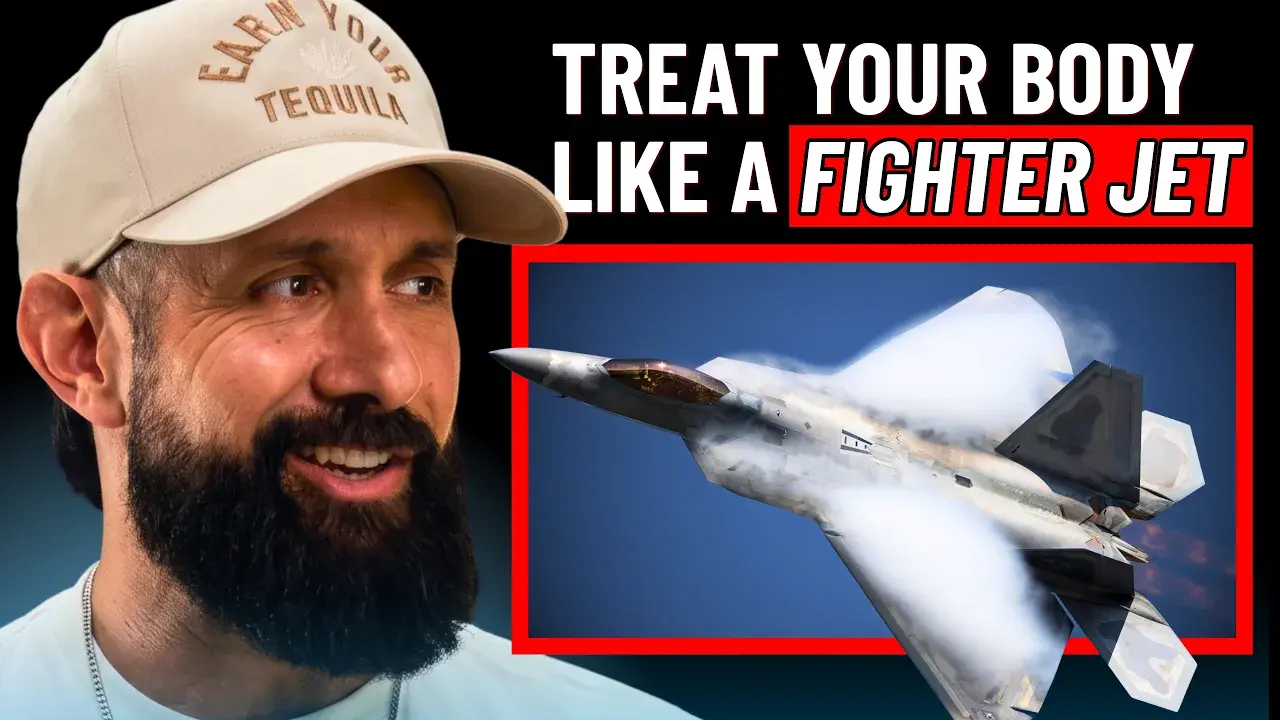
I recently hired a consultant to help me generate some health accountability. So, we’re going to do a VO2 max test, a DEXA scan. We’re doing blood panels, a genetic test. We’ve gone through all the supplements that I’m taking, the peptides, my whole regimen, lifestyle, and kind of condensed this to a customized profile of what I need to do to improve my health, what’s working, what’s not. And he’s even able to track my Whoop activity, and I’m starting to realize that I am not getting enough zone two or three workouts. And so I need to start doing HIIT classes, and I’m becoming more cognizant of that. When you think about longevity, give me three things that you would focus on for the average person to maximize longevity. Um, you have to have some muscle. Lean muscle mass. Yes. It doesn’t mean you have to be massive like we’ve been talking about, but you should have some muscle, especially as people age over 40, it’s one of the biggest indicators for longevity. You know, when an old person falls down and they, you know, explode and they break their leg and their hips and all that kind of stuff, that comes from a few things. One, that comes from not lifting and having enough pressure on your bones, so the bones are more fragile. But most of the time when people fall, it’s because they don’t have the grip strength to catch themselves either on a railing or a stair or a piece of furniture, so they fall and that strength is just not there, so they go down. So if you’re building muscle, you’re going to have a better grip, which is going to help you, and your bones are going to be stronger because they’re used to being under load. You know, this is why most women, you know, suffer from, you know, brittle bones, is because they just stop exercising. Um, or they specifically stop lifting weights or holding weight, or they never want to lift weights because they don’t want to look manly, which you’re not going to look manly if you’re — no, yeah — and whatever their reason is, well, it’s like, okay, your bones then are going to say, you know, think about them just being blind inside the body, like, oh, we don’t have to do anything anymore, so we’re just going to kind of deteriorate a bit. And now when we fall, we explode. So, I’d say one is muscle. Um, two is what you just kind of said, for anyone that can afford it, dive in and do all of the testing. I’ve done the epigenetics, the DNA, the mitochondria, you know, the blood work, like you name it, all that stuff. And now like there’s no guessing about what supplements to take. I fill my little cups like my grandfather did with all, you know, every day. And, um, and I know that that’s working because when I do the next blood work, we can see it and we can adjust, for example, vitamin D up or down. You can make these little changes because if you’re not doing that, everything is a guess, and you can make maybe a best guess, but if we’re really talking about like optimizing your body, you need to know the data. Yeah. Just like a fighter jet, we don’t just change a part just because the hell of it because we think that’s what we need to change. We look at the data that says that part is bad, change it, oh, the data is better now, cool, now we go fly. We got to treat our body like that. So that’s muscle and that’s, you know, learning the data of your body. And then, um, you know, a third one that you might not — you might be surprised at — I think is also, um, being happy. You know, finding ways to enjoy the process, whether it’s business or life in general. Yeah. Um, I think, you know, laughter and human connection, you know, social enjoyment is way underrated when it comes to health, cuz you can grind your ass off in the gym and take the right supplements and everything, but if you’re a miserable person and you don’t ever allow yourself to, you know, let your hair down and laugh and be silly and stuff like that, that takes a toll on your body because that registers as stress. So, I think it’s really important to also allow yourself to have fun, stop, smell the roses, maybe even have a couple drinks along the way, like just, you know, really enjoy the process because you don’t know how long you’re going to be here for. You don’t. Yeah. And I think it’s very important for your body to experience joy and happiness and fulfillment and all that, and one of the easiest ways to do that is just to not be so serious all the time and just enjoy, you know, your life. I think I am the epitome of the type A person, the overachiever, always striving for what’s the most efficient thing to do, and I think the biggest thing I’m focused on this year is exactly that. Like I don’t actually need to do the most efficient thing. I’m pretty efficient already. I can do what I’m going to enjoy. And I love spending time with people that are type B, just stop and smell the roses because they allow me to slow down, enjoy life, and I’m trying to be a lot more intentional about that.
And you also look at studies and the biggest correlation to longevity and life satisfaction is deep relationships and spending time with those people. No one’s ever on their deathbed and says I wish I worked longer. It’s I wish I spent more time with my family and my loved ones. And so for me, it’s all about time management and energy management. I’m going to block this time on my calendar as personal time. I may miss opportunities, something might burn, but it’s going to be okay because this is what’s most important. And when I don’t do that, I become very stressed, very upset. You just get stuck in a negative loop. And I’m a big fan of Tony Robbins — he talks about like if you can’t change it, it starts with your state, right? Whether that’s physiology or relationships, going back to the why, letting some of that stress off your back that I can abide. This isn’t all on me. I’m not in control of everything, right? Um, and maybe starting your morning with a workout versus the end of the day, so you’re actually in a better physiological state to conquer the day. Yeah. You know, one of the things that I do is I schedule in my calendar certain things like taking my daughter to gymnastics, or, you know, our morning routine is completely blocked off. Yeah. You know, so, um, because otherwise it could be filled with sales calls or meetings or, you know, whatever comes up. And I think that’s really important for people that are very busy to go ahead and schedule it. That might sound cheesy, but we’re both talking here about how important that is. And it’s so easy, like I was saying earlier, to let your health go. How easy is it to, oh, you know, the kids can put TV on, or, you know, one thing that just my heart breaks for people that I hear when they say like something to the effect of “at some point I’ll take us all on vacation” or “don’t worry, daddy will have, you know, all this money someday and it’ll make up for all this time.” It’s like, dude, that’s not how this works, you know. And, uh, you mentioned something about being in control and everything is up to us to earn in life. However, um, when you can step back and say either I don’t know or just realize it’s not all in my control, you know, I think that’s ultra important because then it’s like, okay, well what is the bigger purpose of my life? And we mentioned faith earlier. Um, to me, that’s kind of where that comes from. Yeah. Because you can’t control everything, and I don’t want to control everything. Like it’s actually more stressful to try. Way more stressful. Well, you know, I would much rather think that, you know, there is a divine plan for me and I’m doing my best as I’m here day to day, and I, you know, of course we’re all going to fail, but if we can just acknowledge that, hey, I’m trying my best, I have a personal connection with God, and, um, it’s not all in my control, then it’s like, well, okay, that takes stress at least off my chest a bit. 100%. Uh, I like how Tim Keller talks about how work is a form of worship. And so I think everyone has specific callings and gifts, and I think for both of us, kingdom building is an aspect of that, and then throughout your business, it’s an opportunity to show that service, that sacrificial service towards others. Yeah. And then letting go of the outcome — like you do what you can do and then accept that there’s only so much that you can control, and I have a hard time with that. That’s probably one of the things I struggle with the most. I mean, I do too. But, you know, I’ll give you an example. So for the first three years of my business, Earn Your Booze, we grew by two, 3x like every year, and I was very happy with it right out of the aerospace career, right? And then we basically hit a wall and lost it all during COVID. Yeah. And that was insanely stressful, I bet. Um, and until — I think I still have PTSD from that, to be honest, you know. Um, because for the next two years we just went online and sold apparel, but everybody went online, and so now I’m in a relaunch of this thing, getting ready for it. But, um, things are never going to go according to plan and you got to be kind of okay with that.
I think about it as as you mature as an entrepreneur, you realize that leadership is taking on the problem solving. Yeah. And just knowing that you’re going to run into problems and that you can’t control all of it, and it’s just a ride and a journey that there’s a little bit of a surrender that you have to accept to a certain point. That’s a good point. I think that’s where I was going with it. It’s like you can put in all the work and you can put out all this effort. Like for example, I spent like six months building an international tour with a huge tequila company that everybody would know, and we lost that for COVID, and so I remember sitting there, I was like, six months, wow, out the window. Yeah. You know, gone. But that was a good lesson for me too, you know, pretty early in my entrepreneur experience, that there’s really no guarantee. Um, but if you’re okay with that, it’s like, okay, cool, let’s pivot. Yeah. You know. Yeah. And it’s that feeling forward, like every attempt brings you closer to the one conversation that you need to actually launch, because being an entrepreneur is not linear, it’s exponential. Yeah. And you’ll fail, fail, fail, but each one of those times you’re learning. And I look back at my life and I think about all these different odd jobs I’ve had — I was a night janitor, I worked at Chick-fil-A, I had so many different sales jobs, it’s not even funny. In my 20s, I was so incredibly frustrated, like why am I doing this? And then as I look back now, I learned all these unique skill sets that gave me an incredible competitive advantage and a work ethic that really drives, and I see the why now. And sometimes you have to be 10 years in the future to realize why God had you walk through a desert period in your life, to go through the COVID and your business breaking, so you have that resilience. Yeah. With your business today, developing partnerships, making hires, what do you look for in people when you’re making those decisions, man? Do I actually want to be around this person, right? Can I have a beer with this person? If I was stuck at the airport, would we have fun? Yeah. Right. And so, it’s, and of course, you go through the, well, you know, what are the opportunities with this person? You know, like is it worth my time? You know, is there an ROI from it? But if it’s just that — that’s not enough. Like I really want to know, would I actually hang out with this person outside of whatever we’re doing together, because I think that’s kind of everything. Yeah. You know, like you got to have real relationships because getting into business together, especially if we’re talking like a partnership, I mean, it’s kind of like getting married. 100%. You know, you have money involved and you have reputations involved and you have your family riding on this. So, if I bring this person in to work with me, even though the potential ROI is massive, if it’s going to cause some sort of stress for my wife for whatever reason, or if it’s just not a good fit for me, that’s going to come back to my family, and I’m not trying to go home more stressed every day. I’m trying to come home more inspiring every day, you know, and bringing more positivity and more happiness and all these things. So, if I’m going to work with someone, that’s the first sniff test — is like, do I actually like this person?
Yeah, this is a totally selfish question to ask, I’m not married. Um, what is the balance between shouldering the emotional weight and responsibility as the head of the household versus also including and sharing and being intimate with your wife emotionally and with planning? Like, do you understand the question? Kind of striking that balance. I think that might be the most important question when it comes to marriage. Obviously, I think again that’s the most important question, because as a man, I believe you should take on more burden on your own. Yeah. Because if you think about it like this, if you have a unit — like I have me and my wife and my daughter, and I have two other daughters that are grown, there’s my stepdaughters, they’re amazing — but under my house right now, it’s the three of us, right? So there are things that happen on a day to weekly basis that stress me the hell out, or that worry me, or that get me angered, or whatever, that I keep to myself, because if I shared all that stuff with my wife, how does that come across? All stress, and you transfer that to her and it makes her worry, and you transfer it to her, so that sucks. So you should hold that. Um, and this is also why I think guys need to train their bodies physically and be prepared for violence and be prepared to protect them, and take on that stress as well, because that’s our duty — we’re, you know, it’s our duty to protect our women. Mhm. So, I think you do need to carry that, but you also need to find that right — I don’t really like the word “balance,” but you do need to find that right method for you to bring her along with you, to make sure that she understands why, for example, I’m coming up to a podcast today, why are we going to dinner tonight, why did I say yes to that meeting, those two meetings this Saturday, why am I gone again on this weekend, why am I doing this, why am I doing that, you know, why am I reinvesting every dollar I have again? Like, why, why, why, why? Yeah. Um, so it’s important to make sure that they understand the effort and the journey along the way, but then you got to be really careful about not bitching, moaning, and crying to them all the time, because then, like you said, it’s going to transfer that stress to them, but then they’re also going to start to second-guess, like, man, is this really my leader? Is this really my guy? Is this really my king? Is this my man? Yeah. You know, so it’s an interesting thing, and that’s kind of where I found sometimes in entrepreneurship it can be hard to figure out, like, okay, who do I vent this to, who do I discuss this to, cuz if you have business partners and you have, you know, people you do other work with, you don’t really want to bring it to them sometimes, because then now you’re just going to kind of look like you’re falling off your rocker or whatever. So, it’s an interesting world to be in. I think that’s where a lot of the stress comes from — there is so much you have to internalize, but you got to figure out a way to work through it. And for me that’s whiteboard sessions and memos to myself. Um, there’s a lot of methods that I have to kind of talk and think through things before I call somebody. You know, if I have a question that it’s just burning inside me that maybe you can answer for me about, you know, how I’m setting up my business, now, before I call you, I’m going to role play and say, “What if he called me or what if somebody asked me this exact question, what would I think?” That just little practice alone has really helped me solve a lot on my own, where then if I still call you, I’m way more prepared and I’m not just at the starting line — I’m like up here, and now your expertise can really help kind of complete the puzzle.
100%. I do think a lot of men now get stuck in that stoicism of “I’m just going to carry the burden, I’m not going to share what’s going on, I’m going to carry it for my wife or my partner.” But I think it’s so important, especially right now where I feel like masculinity is a little bit under attack, for men to create communities where they can share what’s going on. We’re maybe not the best at that, but having a few guys that you’ve just known for a long time that you can bounce what you’re struggling off, and not just keeping all of it inside of you. Um, when you think about your life, do you have a few people that have been maybe mentors that you can kind of go to, and how did you meet them? Who were they in your life? Yeah, absolutely. Um, you know, I was very fortunate growing up to have parents that really, you know, kind of set me up in a good way. You know, my dad had me reading, you know, Og Mandino and Rich Dad Poor Dad and all these things, like, as a kid. And, uh, do you ever know Amway back in the day? Yeah. My dad was in Amway, so every time we were driving somewhere, I was listening to these, you know, the tapes back then, you know, motivational talks, and you know, just like you would hear at a Tony Robbins seminar now and everything. So, um, they helped me set up in a way to be kind of self-sufficient like that. But as we’ve discussed here, I know I cannot do it on my own. So, a handful of the guys, the guys that I lean on now, like my circle is pretty tight, you know. Trust is a pretty hard thing to earn, you know. Um, shouldn’t be, but unfortunately, that’s just the way the world is. Got to guard your energy. But I’ve met, you know, I’ve met the guys that I lean on now through doing more stuff like this, saying yes to a podcast, and it was a couple, you know, um, instances, and we’re now like almost best friends, you know, become business partners. Um, so I think you know getting out there and just meeting more people, like, uh, Brad Lea says, you know, the more hands you shake, the more money you make, but in this case, we’re not talking about money — that could just be the guy that you actually want to ask this question about, whether it’s business related or personal related. A lot of them have come from just being out there and being authentic and just talking with people. Yeah, I work from home. I have a team that’s all over the country and even global that work with me, which is so nice, it’s a privilege to be able to do that. It’s very efficient, comfortable, but I will tell you I am happier when I always have to create the margin of actually going and meeting people intentionally. Uh, I think it’s very easy in our society now to Uber Eats, stay in your apartment, uh, but building that community is really important. You know, I came to the same realization because, uh, my wife and I both work from home now. Yeah. And that might sound amazing, but to your point, sometimes it’s like, man, I drive from my house to school, to the gym, to the store, an occasional meeting, [laughter] like but I’m always here, you know? So, I think it is really important to especially get out and go to events. I just went to a cool event the other day that my buddies invited me to over at the Global Ambassador. Dude, met some awesome people there, but I could have easily just stayed home. But it’s like, man, you got to make sure you don’t become like a homebody when you work from home, because that’s not too fun. Yeah. And like how fun is your, you know, your social media if that’s all you do, right? You know, so, right, I agree. Um, it can be a trap, but it can be very good, especially if you get more time with your family, and it’s great to work from home.
When you look back and meet your, let’s say, 20-year-old self, what were maybe some of the biggest mistakes that you made, advice to avoid for young men today? So, what do they say about sailors? They say, you know, we cuss and drink, two things, right? And that’s obvious that was true for me. Uh, so thankfully, like we said, I was always working out from a kid, that really amped up in the Navy, and then afterwards when I went to work for Lockheed, you know, I was in aerospace, I was always dragging people to the gym, always wanted to be in shape. But, uh, we drank a lot, you know, because there was always for whatever reason always a celebration, cuz, you know, nobody worried about money. Like we just lived in an area, in a, like north LA up in the high desert, where it’s like low cost of living and you kind of do whatever you want, you know? I had a boat in air conditioned storage in Lake Havasu. We’d go to Vegas all the time, did all this stuff. So, there’s always a quote unquote reason to drink. So, even though now thankfully my body markers, my liver, everything is good, I hardly drink now. I would tell guys that are in their 20s to really take their health seriously. And, you know, sometimes people will say, like, explore more when you’re younger and travel, and I do think that’s important — I was fortunate enough to travel a lot when I was young. But I think guys should really get after it when they’re younger and really think about what we’re doing. How old are you? I’m 33. So the guys in their 30s, and I’m 42, listen to us that are saying, “Hey, these are the things that we find important now at this point,” because at some point you’re going to be 33, you’re going to be 42, and if you’re ruining your health, ruining your reputation, kind of setting yourself up to not be a serious person, when you try to go start a business or something in your 30s, you’re going to have a hell of a hill to climb. There’s so much opportunity now, you can do basically anything from home, especially with technology the way it is. I would just love to see the younger generation, if you choose to drink, prioritize yourself first. That’s what Earn Your Booze means, earn your tequila. Yeah. Like get your together essentially. Yeah, if you’re making money and you can provide for yourself and your family, and you’re healthy, and you’re surrounded by good people, and you got a strong mind, and you go golf with the boys or go to Coachella or whatever, like your life isn’t going to fall apart. But if you’re just mindlessly drinking or doing whatever drug is your flavor, that’s not honoring your body. One, this is a gift from God — that’s a big realization that I’ve had, is this is not just about looking a certain way. Like, man, we only get one life, and these bodies are so capable and they’re so beautiful if you take care of them, but they deteriorate quick. So, really, really take care of yourself at a young age, and if you can carry that forward, I mean, you’re always going to thank yourself.
I like to think, what is my 80-year-old self telling me today? I like to think about what that might be when it relates to everything. Uh, for me personally, I think back — I binge drank and partied in my 20s a lot and had fun, but I also don’t look back at any of that and think that was really valuable time spent. I’m really happy I did that. I can think of periods where I’ve abstained completely, kind of the monk mode period. Yeah. And the exponential growth that that creates, and I think compounded. Uh, if I was to give my 20-year-old self advice again, it would be to focus on the habits that are negative. So the binge drinking for me, anytime I did anything stupid, it was because of binge drinking. Any massive mistake was around that. And then, okay, I didn’t want to work out, I was hung over, I skipped class. And that compounds, and so, okay, maybe you’re having fun, but if you cut that out, the exponential growth and who I could have been, I think about that a lot. It’s not too late still, fairly young, right, but if I could go back — I couldn’t imagine if I had never touched it. Yeah, and, you know, I could make the case, and a lot of people do, that sobriety is the best way to go, but we’re also just talking about how it’s important to have fun and be in a social environment. I actually think that the — what I talk about quite all the time is the earn it mentality when it comes to booze and donuts and pizza and, you know, downtime and stuff like that, is a better mentality, because it teaches you real discipline. It teaches you to actually put in work and have a reward, and then get back on work, you know, get on it. Um, whereas in my opinion — this is a little controversial — but when somebody says, “Hey, I don’t drink at all because that bottle, if I have one, I have 10,” it’s like, well, you haven’t really overcome that thing yet, it’s still more powerful than you. Yeah. I would rather help people get to the point where they’re like, “Sure, I can have a drink if I choose to on a special occasion, but I don’t on a regular basis.” And I think that’s the much healthier framework, because that applies to everything. Mhm. You know, like there’s a lot of things that are bad that we shouldn’t do — people shouldn’t shoot heroin ever, you shouldn’t do that casually, you know. But if we’re talking about someone that has their life together and they’re healthy and they go out and they have some drinks, I mean, that little bit of humor right there, you know, the humor and the social life and the fun and the laughter, I think that is, like I said, maybe the third component to really help you live a fun life, because this needs to be a fun process too, and not just work, work, work, grind, grind, grind. 100%. Kind of depends on who you’re talking to, too — some folks really need to hear that grind message, other people are stuck on the chicken and rice, they’re never going out, they’re not having any fun. I’ve been there, I’ve done that, and then I’ll have a friend that comes in and kind of pattern disrupts, we go on a trip and I just let loose and like, “All right, this is what life’s really about.” [laughter] Uh, and so you have to have that balance.
What was having kids like? I’m not a father either — people tell me that completely changes your outlook on life, that you don’t even know what love is until you have a child, your risk tolerance completely changes. Uh, what changed for you when you had a kid? Everything. Becoming a father is the most beautiful experience I’ve ever gone through, you know, it’s um — can you describe the day, the first time you held her? Yeah. Yeah. So, you know, we knew the date was coming and so I’m ultra prepared, you know, I have the bags and I have the plans and all this kind of stuff, so that was the easy part. Um, my wife and I were sitting on the couch one night and she goes, “Oh, I think it might be time.” And I was like, “Oh, okay, cool, you know, this is it.” And then she goes, “Actually, no, I don’t think it is, I’m just going to go to bed.” So, I was like, “Oh, oh my god, are you sure? Maybe not.” You know, so that was like my first kind of little panic at being a dad, you know. And, um, so we didn’t. Um, but then the next time she’s like, “Oh, I don’t know, maybe we should go check.” So, we go in and we go to the hospital and they do whatever their check is, and, uh, the way they said it, it wasn’t really clear to me, you know, so they said something like, “Oh, yeah, she’s almost there,” or something that was a little vague, and I was like, “Okay, well, what does that mean? Are we going home? Are we coming back?” You know, she’s like, “No, you’re not leaving here without your baby.” I was like, “Oh, okay, it’s actually time.” And so then, man, um, that whole process I think was just so beautiful, like just helping her, you know, get into the room, and I was fortunate enough to where I went to every single checkup that she had along her pregnancy, I was there with her for every one of them. And so the day comes, the time comes, I think it was 10:15 in the morning, September 26th, you know, that the birth happens and she’s born there. There was kind of no words, it was just like, you don’t really know. And it was, um, it’s crazy, I never really thought about it like this deep, like I could almost get emotional about it — this is such an incredible experience. But she comes out, and when you realize that the baby’s good, she’s okay, she’s healthy, the mother is good, she’s okay, she’s healthy, and when it all kind of comes together, like it happened, we did it. It was — there’s nothing like it, dude. Yeah. There is nothing like it. My friend I just got lunch with him, um, I remember he had a baby about a year ago and he was recounting the story to me, and there — he had a lot of fear around, is she going to be okay, is the baby okay, uh, but once that subsided, it was something that he couldn’t put into words either, uh, but he felt this stress of like taking care, and this overwhelming, like, oh, I have to be perfect as a dad, and then a couple months later, he realized, my job is to show up and love her, but God has a plan for her, and a lot of this is outside of my control. And there really is something to be said about your DNA and just God’s plan for your life, versus nurture, like what happens in your life — I think there’s aspects that do shape us, but there’s also aspects that no matter what we’re going to experience, we’re going to be who we’re meant to be, and accepting that, I think is important. Um, yeah, it was kind of interesting for me — like once it happened, once we had her and we took her home, I remember the first time putting her in the car, you know, like clicking the seat in and making sure it’s all good, and did I do it right and everything, and then we get to the house, and, you know, I’m holding her in one hand, opening the door, going in, to me a lot of the stress left, because something just told me, like, you did it, this is it, you know, like the unknown scary part isn’t over, but for some reason I was pretty at ease with it, and I just kind of accepted, this is it, this is my life. And now she’s seven and a half, and every stage has been my favorite throughout it, you know, first one year old, two, three, four, five, up until now seven and a half, every stage is my favorite. I just absolutely love being a father, and I would have a hundred more if that was in the cards. Yeah. Yeah.
I think that’s the one thing — I have a lot of things in my life I’m really happy with, uh, but I want to have kids very badly and haven’t gotten to that point, and I’ve gotten to a point where I’m like, “All right, I’m kind of behind, I’ve watched so many friends get married, have the kids,” and I feel this pressure of being behind, and I’m trying to just say, “All right, so I’m in God’s time in his plan.” What advice would you have to guys that maybe feel that pressure of like, I need to get married or do this or have a kid? Let me tell you exactly how it went for me, because I had the exact kind of thoughts. So, when my wife and I were still working in aerospace in California, we got married and we said, “Okay, we’re having a kid.” And so, we start trying, right, and so we buy a new house, um, you know, decked it out exactly how we wanted it, had the baby room, had everything ready to go, both of us working our careers, like everything’s quote unquote perfect, ready for the baby, right, and it didn’t happen. We don’t really know why. Um, but we’re like, well, okay. And then all this stuff happened with my career, like I mentioned, and we decided we’re going to sell this house, we’re going to move to another state, I’m going to go start my own business, you know, my wife was able to get a comparable job out here still in aerospace, but we were not trying then, because now we have a small — we got a cool little historic home in downtown Phoenix, like, but it’s small, built in 1941, you know — um, my basically income went away, you know, we’re doing the business thing, and then she got pregnant. So, at first we were both just like, “Oh, this is not what we planned for,” but we realized that it was actually the perfect timing, and I don’t know why, but if you just trust that you’re on God’s time, you can’t go wrong, you know, and if you try to force it, I think that’s where people get into relationships they don’t want to be in. Yeah, they make decisions that, you know, down the road they’re like, “Man, why did I jump into that so hastily, you know?” So, I think if you just keep shining that, you know, the way you are, who you are, it’s going to attract the right person that wants the same thing. And at 33, man, especially being in such good shape and good health, like you’re great, I wouldn’t worry about that. I’m 42, she’s seven, so, you know, we had her when I was what, 35 or so, and my wife is 5 years older than me. Okay. And she still, you know, did great, our baby is perfectly healthy. That’s awesome. You know, so, um, I think you keep doing what you’re doing, um, the timing is going to work out exactly how it should, and you’ll understand it when it happens. Yeah. Again, coming back to the topic for me this year, it’s been a lot of white-knuckling life, and this year I’m really focused on just kind of open-palming and being like, “All right, God, whatever you have for me, I’m okay with that.” No, I’ve always found, like, in my personal life and with my homies and whatnot, when they stopped trying to find the right woman, she showed up, [laughter] you know, tell me that all the time, and, and maybe like when we stopped trying so much to get pregnant, there was probably some sort of physiological stressful block that we just didn’t know about, that just happened. But, you know, even though we were not planning for it, things just kind of fell into place, and she was born here in Phoenix instead of the Antelope Valley, California, and I think that’s exactly how it was supposed to work. Yeah.
Uh, as we kind of wrap up, I want to talk a little bit about leadership, taking on responsibility, being a leader for your staff, for clients. When you think about that, um, what are the practical ways you try to help people that work for you, and how do you strike a balance between trying to minister to someone, being a leader, but also making sure that people are performing and that you’re not maybe being taken advantage of? Yeah. I think it’s really important for everyone to know the objectives of what we’re doing. Mh. Because if people find themselves just — yeah — rinsing and repeating whatever their job is without really understanding why, especially if you’re working like on an entrepreneurial team where there’s, you know, more going on than just the nine-to-five, um, that’s when I think you start to lose people, because the vision isn’t there. So, if you can paint that vision for them, but then also make it enjoyable along the way, I think that’s huge. And then you also — you got to hold people accountable and make sure that they’re hitting their metrics and they’re not taking advantage of you and the business and whatnot, but it also has to be worth it for them, you know. So, does that answer the question? Yeah. Because if you can find a way to make, you know, whatever it is that they’re doing, even if they do something kind of mundane or something they don’t necessarily like or they find stressful at the moment, like if there’s a good upside to them, you know, to what you’re doing, and you’re communicating along the way, I think that goes a long way. I always heard that like a good leader is someone who can have the ability to transfer and change state, both through creating a vision and making that contagious. Yeah. Getting other people to believe in it and believe in themselves, and taking someone who maybe doesn’t have the self-belief or is in a down depressive state and lift them up into a state of feeling confident, excited about what they’re doing. I think a good leader has to be able to make a decision, so that’s number one, but then a good leader will also listen to other people and take in the information that’s coming from them and use that to make a decision. You know, I think a lot of leaders that quote unquote fail, or maybe have high turnover, are the ones that just it’s my way or the highway. Yeah. That ego, and it’s like, man, just because this person is a new hire or they’re a younger person doesn’t mean they don’t have the perfect answer for whatever you’re doing. Might be able to teach you something. Absolutely, and especially might have the perfect way to solve this business problem even though they’re brand new to the team, you know. So, I think if you can listen and then use everyone’s input to then ultimately put your foot down and make the decision, I think it’s back and forth between that all the time. Love it.
Okay, quick lightning round, want to focus a little bit on health. Favorite go-to, maybe three exercises, especially for someone who maybe travels a lot, apartment gym, high functional fitness — what is the go-to workout that you’re going to knock out in 20, 30 minutes anywhere you’re at? Man, if you could, especially something like that, if you can just get the entire body working together — squats, lunges, push-ups, pull-ups — like if you can just rotate through that, you know, one of my favorite workouts is just that, just hammering. What’s the protocol, are you doing 20, 25 sets? Like what does it look like? So, one way to look at it, say if you have a set time, you say 20 minutes, 30 minutes, so say you have 30 minutes, you could do a great workout with just dips, push-ups, pull-ups, and either say walking lunges, and you could pick a number, so maybe it’s five of each, so it’s five pull-ups, five push-ups, five dips, and then walking lunge a certain distance and back, and you just keep doing that for as many rounds as you can, because even though that sounds small, it’s like five, I could do it, okay, well do that consistently, and there’s no breaks in there, you just do that over and over and over, get the whole body moving, I guarantee almost everyone would be smoked. Yeah. Doing that. Love it.
Okay, coming to faith, what are some practical tips or practices that you have that have really helped you in your faith? Uh, gratitude. Gratitude. Okay. Because I think when you are grateful and you’re talking to yourself, maybe with your eyes closed and saying the things that you’re grateful for, you’re not just saying that to yourself, you know, so it’s basically praying. Yeah. Yeah. So then if you can just take it a little bit further and tell him, tell God what you’re grateful for, it’s so easy, because some people I think overcomplicate, you know, communicating with God, they think that they need a very specific time or they have to go to church or they need whatever — this could be accomplished in two minutes with your eyes closed right before you pass out. Think about all the things that you’re grateful for in your life. I do this literally every single night before bed, I kiss my wife and daughter good night, and as I’m laying there, there’s a handful of things that I run through that I say thank you for, and that right there, like, just ties you right back into the higher power, and, uh, that’s the easiest way to go at it. I think when you’re grateful and you’re focused on what you have, you can’t be worried and angry and stressed, right, and vice versa. Yeah. And I have found creating that margin, and that gratitude for me, really helps me stay in that positive state where I can perform better, versus if I get anxious and I’m focused on the negativity, like, where you focus energy goes, right? So if you’re focused on what you have, that compounds. So I think that’s great, especially before bed, and when you wake up, if you can do the same thing, no matter how stressful your day is, it’s kind of going to get wiped away before you go to bed, and then as soon as you wake up, say it again, you start off on the right foot. Love it.
And then tactical business protocols and tips — one that I would think of is just intense calendar management and delegation, like the power of a really effective executive assistant is unbelievable. Um, great calendar management has been a lifesaver for me, what I’m able to do from a productivity standpoint now versus two, three, five years ago is insane. When you think about how you structure your day in your business, are there one or two tips that are very practical that you could share for someone? Have you heard of the fire list? I haven’t. No. So, I got this from, uh, Andy Frisella from First Form, I’ve been doing it for many, many years now. So, essentially, you write down five things, five major things that you’re going to accomplish during the day. Now, these aren’t things that you just do anyway, you know, like if you go to the gym every day, you don’t write down the gym as one of them because you’re just going to do that anyway, but you write down five things that when you accomplish those things throughout the day, you’ll be able to look at that list and be proud of yourself and be grateful you did those things, because it pushed the ball forward. Love that. So, it sounds so simple, but you practice that every single day for a month, I guarantee you’ll get more done, because we tend to think that, oh, I wake up and I have all these different things to do, all these different people to talk to, and I’m just going to do as much as I can, and that’s great, but chances are you’re not spending your time as effectively as you could be. So, when you look at this fire list and you’re very intentional about, oh man, if I accomplish this today, that’s great, because then on Tuesday I can do this, by Friday I’ll have an answer back on that, and you just do those simple things every day. You don’t have to expand it to seven or to 10, just do five every day. Dude, your life will change, your business will change. I love it.
And so you’re in the process of relaunching Earn Your Booze. Yeah. So what’s that timetable, when does that launch, if someone’s interested, how do they connect with you and get plugged in? Yeah. So this is the business I lost for COVID, did a couple things for a couple years in between, and now I’m like, you know what, what do I want to do with my time, because we just wrapped up our health coaching business a couple months ago, and I was like, what do I really want to do now, and I looked back to what I did at Earn Your Booze and how that really helped people in a different way that I did not anticipate in the beginning, because I was thinking like this is going to be great, we’re going to have fun, we’re going to do events, we’re going to sell apparel, we’re going to make a bunch of money, you know, and all that. What I realized throughout that is it was helping people take more accountability for their lives. So I said, I need to do that. I have about 30 trademarks around it, I’m like, why would I just let those stay on the shelf, you know, so I just renewed those the other day, just shelled out another, you know, bunch of money for that. Um, so launching that looks like, you know, how are we going to do this — I’m looking at, this is something I was excited to talk with you about, I’m looking at, um, an exit of this, because a lot of health brands are being bought up these days, either by energy brands or, you know, lifestyle brands. Um, but for example, less and less people are drinking these days, which is overall a good thing, you know, but what does that mean — that means there’s a massive problem for these liquor brands and these beer brands, because there’s less people in the market to drink their product, so that’s a problem we can solve for them. How do we make these brands stand out? So phase one for us is events in person, not Zoom or online, in-person events where people work out together, we have a social hour afterwards with drinks if you choose to partake, with music and challenges and contest giveaways. It sounds so simple, but man, when you hear the phrase Earn Your Booze, you go, “Okay, I think I get it,” but when you sweat in person and high five new people and have some good fit cocktails, you know, one of our trademarks, and have a good time, people really get it. So, to launch that, we are looking at ping-ponging Nashville, Scottsdale, possibly LA between these cities. Um, so our first one we want to do in Nashville, um, probably if I had to say July, August timeframe. Okay. And then from there, I have a couple different phases built out, I have an app to launch at the right time and all these different things. Um, but anyone can buy our hats and apparel and stuff right now, they don’t need an event for that. Um, but the goal of this thing is to really install that earn mentality into people in kind of a different way, in kind of a fun way, because, you know, I love what Frisella and Goggins and all these guys, you know, say about just grind, grind, grind, and Jocko and all that stuff, I subscribe to that, but a lot of people don’t, and even if they do, it’s they don’t think that maybe they’re dedicated enough or disciplined enough to, you know, take on a hardcore grind life. So basically my mentality is get yourself together, have your life together, and then also enjoy it along the way. So that’s kind of the main theme. Um, but yeah, anyone can find us on Instagram or any of the socials right now. Um, I got some new guys I just met the other day, I’m going to hire for TikTok cuz I don’t really want to do that myself, you know, I need some other guys that know all about that. Uh, but yeah, you know, Nashville, Scottsdale, LA, and beyond. I’d love to have people come out and sweat with us and meet some new people. I think as society advances with social media and AI, live events are going to become more and more important, and especially mixing the health fitness side with the social, I think is becoming more and more popular, and so I look forward to coming and checking out one of your events, I really appreciate you taking the time to come on and enjoy the conversation. Thank you so much, Justin, this is great, man, thanks for having me. Thank you so much, appreciate it. Awesome, man, thank you, dude, appreciate you.
Explore more episodes from the Acquiring Meaning podcast, featuring candid conversations with founders, operators and investors.